
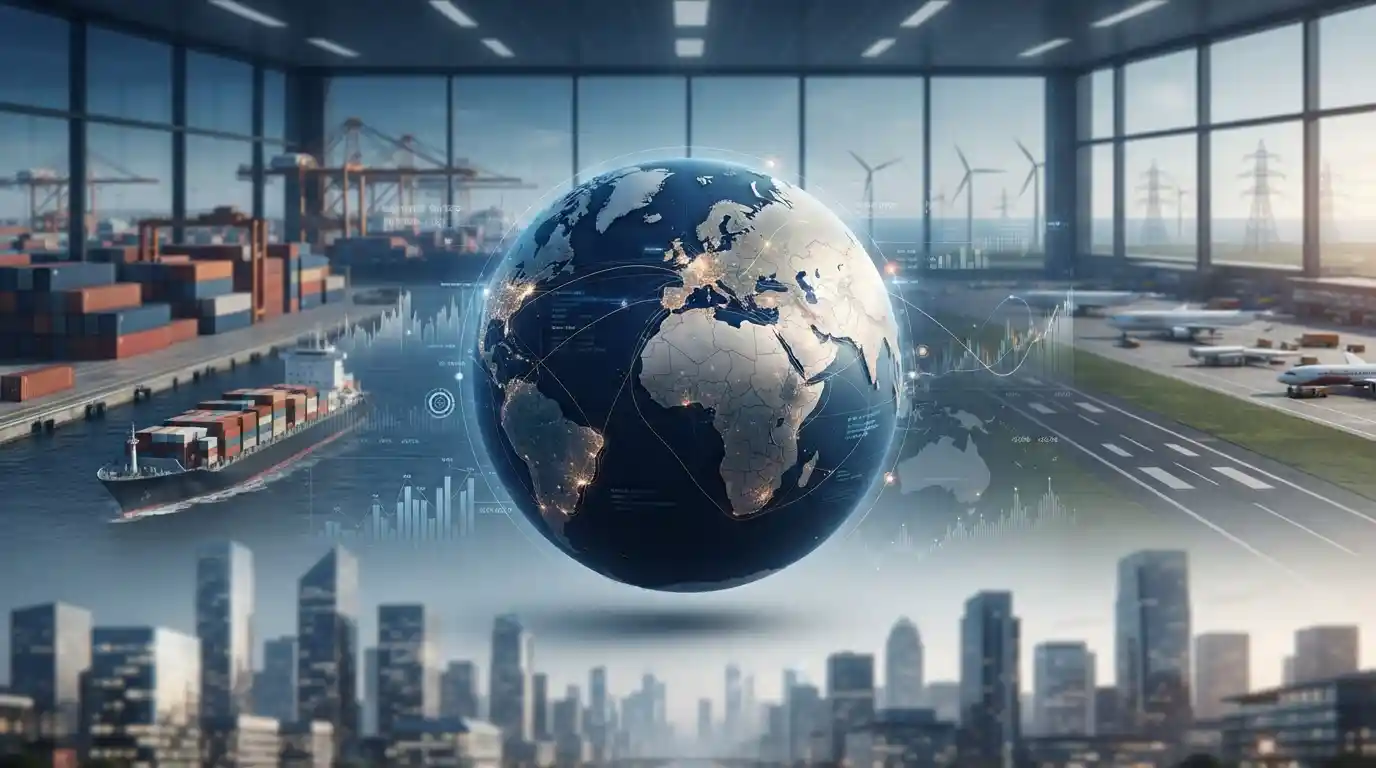
The global economy is changing in ways that affect governments, businesses, investors, workers, and households alike. From changing trade relationships and technology adoption to inflation, energy markets, financial conditions, and geopolitical uncertainty, today’s economic environment is being shaped by several forces at the same time.
Understanding these global economic shifts is important because economic changes rarely stay confined to one country or industry. A shift in consumer demand can influence international trade. Changes in energy costs can affect manufacturing and transportation. Technology can transform productivity while also changing the skills employers need.
This guide examines the major economic trends shaping the future and explains what they could mean for businesses, consumers, workers, and the wider global economy.
What Are Global Economic Shifts?
Global economic shifts are significant changes in the way economies operate, grow, trade, invest, and respond to changing conditions. These shifts can develop gradually over many years or accelerate quickly because of technological, political, environmental, or financial events.
Some changes are structural. For example, artificial intelligence and technological innovation are changing how companies approach productivity, automation, data, and decision-making.
Other changes are cyclical. Economic growth can slow, inflation can rise or fall, and financial conditions can become tighter or more supportive depending on the stage of the economic cycle.
These forces often overlap, making the modern economic environment more interconnected than ever.
1. The Global Economy Is Becoming More Interconnected
International trade, investment, supply chains, financial markets, and digital services connect economies across continents. A disruption in one major market can therefore affect businesses and consumers far beyond its original location.
Globalization has created opportunities for companies to reach new customers and source products internationally. At the same time, businesses have become more exposed to currency movements, shipping costs, geopolitical developments, and changes in international demand.
The growing importance of international markets also makes global business and digital connectivity increasingly important for companies looking to expand across borders.
2. Inflation Continues to Influence Economic Decisions
Inflation remains one of the most important economic concepts for households and businesses because it affects purchasing power. When prices rise faster than incomes, consumers may reduce discretionary spending, while businesses may need to reconsider pricing, hiring, and investment plans.
Inflation can also affect borrowing costs and financial planning. Companies may delay expansion when financing becomes more expensive, while consumers may become more cautious about large purchases.
Understanding inflation therefore requires looking beyond individual prices and considering wages, energy, housing, supply conditions, consumer demand, and monetary policy together.
3. Interest Rates Are Shaping Investment and Spending
Interest rates influence almost every part of the economy. Higher borrowing costs can reduce demand for homes, vehicles, business expansion, and other major purchases. Lower borrowing costs can have the opposite effect by making credit more accessible.
Businesses also consider interest rates when deciding whether to invest in new facilities, technology, equipment, or expansion projects.
The relationship between financial conditions and economic activity is especially important for sectors connected to economic growth and investment.
4. Supply Chains Are Being Reconsidered
The disruptions of recent years demonstrated how vulnerable highly optimized global supply chains can become. Companies that previously prioritized cost efficiency above almost everything else are increasingly considering resilience, supplier diversification, inventory planning, and regional production.
This does not necessarily mean the end of global supply chains. Instead, businesses are increasingly looking for a balance between efficiency and resilience.
The changing logistics environment can be seen in the growing importance of modern logistics solutions and specialized supply-chain infrastructure.
Cold-chain operations are another example of how sophisticated logistics networks support modern commerce, as illustrated by cold storage and supply-chain services.
5. Technology Is Reshaping Productivity
Technology is one of the strongest forces influencing the future of economic growth. Artificial intelligence, automation, cloud computing, advanced analytics, robotics, and digital platforms can help businesses perform tasks more efficiently.
However, technological progress also creates new challenges. Workers may need to develop new skills, companies may need to redesign jobs, and policymakers may need to consider how technological gains are distributed across the workforce.
The broader transformation of business through technology is also connected to digital transformation and modern business technology.
6. Artificial Intelligence Could Change the Structure of Work
Artificial intelligence is moving beyond experimentation and becoming part of everyday business operations. Organizations are exploring AI for customer service, research, marketing, software development, data analysis, forecasting, and administrative tasks.
The economic impact of AI will depend not only on automation but also on whether businesses use the technology to create new products, improve services, and increase worker productivity.
As AI adoption expands, the relationship between technology and employment will become increasingly important. Businesses may place greater value on analytical thinking, creativity, communication, technology literacy, and the ability to work effectively alongside automated systems.
Readers interested in the technology side of this transformation can explore the latest AI innovations and their wider implications.
7. Energy Markets Are Becoming Increasingly Important
Energy plays a fundamental role in economic activity. Transportation, manufacturing, construction, agriculture, technology infrastructure, and household consumption all depend on reliable energy supplies.
At the same time, countries and companies are investing in cleaner energy technologies and seeking ways to improve energy efficiency. This transition can create new industries and investment opportunities while also producing significant adjustment costs for established energy systems.
The connection between finance, energy, and sustainable business development can be seen in topics such as solar financing and sustainable business growth.
8. Climate and Extreme Weather Have Economic Consequences
Climate-related risks are increasingly relevant to economic planning. Extreme weather can damage infrastructure, interrupt supply chains, affect agriculture, increase insurance costs, and disrupt local economies.
Businesses are therefore paying greater attention to resilience, risk management, physical infrastructure, and continuity planning.
For a broader look at the connection between environmental changes and society, see extreme weather and climate change.
9. Geopolitical Tensions Are Affecting Economic Strategy
Geopolitical developments can influence trade routes, investment decisions, energy supplies, technology access, and international business relationships.
The Russia-Ukraine conflict, for example, demonstrates how geopolitical instability can have consequences beyond national borders.
Similarly, China-Taiwan tensions highlight the importance of geopolitical risk to global trade and technology supply chains.
These developments encourage companies and governments to think more carefully about economic security, supplier diversification, strategic industries, and long-term resilience.
10. Digital Marketing Is Becoming More Important to Economic Growth
The digital economy has changed how businesses reach customers. Companies of all sizes can use websites, search engines, social media, email, online marketplaces, and other digital channels to compete for attention.
This creates opportunities for small businesses as well as large organizations. Digital marketing can reduce some traditional barriers to entering new markets and allow businesses to communicate directly with customers.
The growing importance of digital channels is reflected in the broader impact of digital marketing on media and business.
Businesses can also examine digital marketing strategies for high-growth e-commerce as online commerce continues to evolve.
11. E-Commerce Continues to Reshape Consumer Behavior
Online shopping has changed consumer expectations around convenience, pricing, product discovery, delivery, and customer service.
Businesses increasingly need integrated strategies that connect physical and digital experiences. Consumers can discover products through search, social media, online communities, and personalized recommendations before making purchasing decisions through multiple channels.
This transformation makes digital marketing for e-commerce businesses an important part of modern economic competition.
12. Financial Technology Is Changing Access to Money
Financial technology is changing how people and businesses make payments, access financial products, transfer money, and manage financial information.
Digital financial services can make transactions faster and more accessible, while innovations in blockchain and cryptocurrency are creating new approaches to digital assets and financial infrastructure.
The evolving digital-asset economy is explored through topics such as quantum-resistant cryptocurrency concepts and blockchain applications in energy trading.
At the same time, businesses and individuals should recognize that emerging financial technologies can involve substantial uncertainty and changing regulatory environments.
13. Businesses Are Prioritizing Resilience
One of the clearest lessons from recent economic disruptions is that resilience matters. Companies increasingly need contingency plans for supply shortages, changing demand, financial pressure, labor challenges, cybersecurity risks, and geopolitical uncertainty.
Resilience does not mean eliminating risk. Instead, it means developing the ability to identify risks early and respond without allowing a single disruption to threaten the entire organization.
This approach is particularly important for businesses involved in logistics, manufacturing, finance, technology, and international trade.
14. Labor Markets Are Evolving
The future of work is being shaped by technology, demographic changes, remote work, changing employee expectations, and evolving skill requirements.
Employers increasingly need workers who can adapt as technologies and business models change. At the same time, workers may need to pursue continuous learning rather than relying entirely on skills acquired early in their careers.
The relationship between education and employment is particularly important as new industries emerge. Topics such as modern education and learning opportunities illustrate the broader importance of developing adaptable skills.
15. Real Estate and Housing Remain Closely Tied to Economic Conditions
Housing and real estate are strongly influenced by employment, interest rates, population changes, consumer confidence, construction costs, and access to credit.
When borrowing costs change, affordability can change as well. This can affect home purchases, commercial property investment, construction activity, and rental markets.
Anyone studying the broader economic picture should therefore consider the relationship between financial conditions and real estate markets and property opportunities.
What Do These Economic Shifts Mean for Businesses?
For businesses, the biggest lesson is that flexibility is becoming a competitive advantage.
Companies may need to monitor economic indicators, diversify suppliers, manage cash carefully, invest selectively in technology, understand changing customer behavior, and develop contingency plans.
Businesses that rely heavily on one market, one supplier, one technology platform, or one customer segment may be more exposed to unexpected disruptions.
At the same time, periods of economic change can create opportunities. New technologies can open markets, consumer habits can create new product categories, and supply-chain changes can generate demand for new services.
What Do Global Economic Trends Mean for Consumers?
Consumers experience economic shifts through prices, wages, employment opportunities, borrowing costs, housing affordability, and investment conditions.
During periods of uncertainty, households may place greater emphasis on budgeting, emergency savings, debt management, and essential spending.
Consumers can also benefit from technological changes through greater access to online services, digital marketplaces, financial tools, education, and remote work opportunities.
What Could the Global Economy Look Like in the Future?
The future global economy is unlikely to be shaped by one single trend. Instead, several forces will interact.
Technology may increase productivity while changing employment patterns. Energy transitions may create new industries while reshaping established ones. Geopolitical developments may encourage more resilient supply chains. Climate risks may influence infrastructure and investment decisions. Meanwhile, digital commerce and financial technology will continue changing how businesses and consumers interact.
The result could be an economy that is more technologically advanced, more digitally connected, and potentially more resilient—but also more complex.
How Businesses Can Prepare for Economic Change
There is no single strategy that guarantees success during periods of economic uncertainty. However, several principles can help businesses remain adaptable:
- Monitor economic conditions: Track changes in demand, costs, financing, and consumer behavior.
- Protect cash flow: Maintain financial flexibility so the business can respond to unexpected conditions.
- Diversify where practical: Avoid unnecessary dependence on a single supplier, market, or customer.
- Invest in useful technology: Focus on technology that improves productivity or customer experience rather than adopting trends without a clear purpose.
- Develop employee skills: Continuous learning can help teams adapt to changing technologies and business models.
- Strengthen digital visibility: A strong online presence can help businesses reach customers even as consumer behavior changes.
- Plan for disruption: Scenario planning can make it easier to respond to unexpected economic or geopolitical events.
The Importance of Long-Term Economic Thinking
Economic headlines often focus on short-term movements, but many of the most important changes develop over years or decades.
Businesses and consumers can therefore benefit from separating temporary fluctuations from structural changes. A short-term change in demand is different from a long-term transformation in technology, demographics, energy, or consumer behavior.
This distinction can help organizations make better decisions without reacting excessively to every economic headline.
Final Thoughts
Global economic shifts are changing the environment in which businesses, workers, governments, and consumers make decisions. Inflation, interest rates, technology, AI, supply chains, energy, climate risks, geopolitics, digital commerce, and financial innovation are all contributing to a more interconnected economic landscape.
The future will inevitably bring uncertainty, but uncertainty also creates opportunities. Organizations that understand structural trends, remain adaptable, and invest carefully in people, technology, resilience, and customer relationships will be better positioned to respond to change.
Ultimately, the most important lesson from today’s global economic environment is simple: economic change is not something businesses and individuals can completely avoid, but they can prepare for it.