
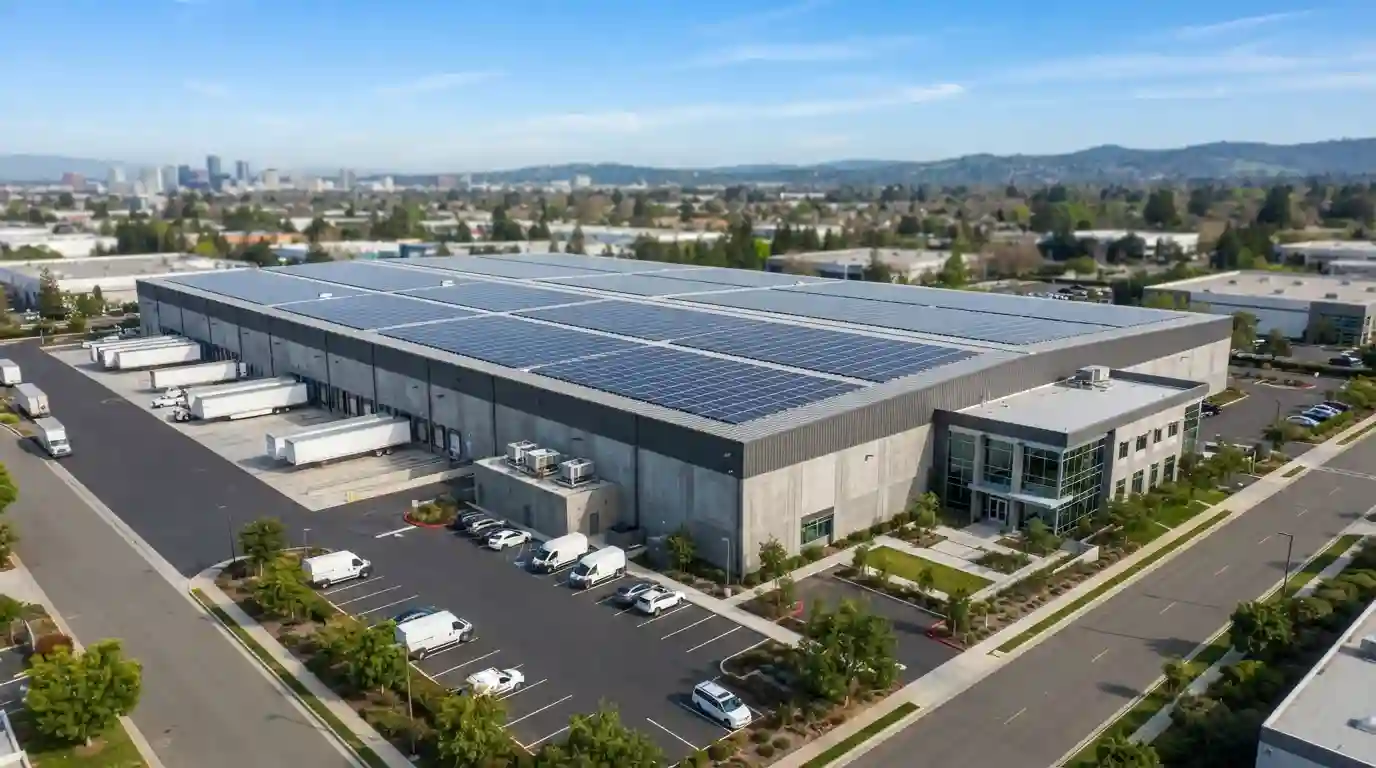
Solar energy is becoming an increasingly important consideration for businesses looking to control operating costs, improve energy resilience, and pursue more sustainable growth. However, installing a commercial solar system can require substantial upfront capital. This is where commercial financing can play an important role.
What Is Wintrust Commercial Finance Solar?
Wintrust commercial finance solar refers broadly to the use of commercial financing solutions associated with Wintrust-related financial services to support business investments in solar energy and other capital-intensive projects.
Rather than treating solar installation only as an expense, a business can evaluate it as a long-term infrastructure investment. Depending on the project, financing may help spread the cost of equipment, installation, upgrades, or related improvements over time.
Businesses evaluating financing should consider the project’s expected costs, cash-flow impact, useful life of equipment, maintenance requirements, and potential energy savings before choosing a financing structure.
Why Businesses Are Considering Solar Energy
Commercial solar can offer several potential advantages. Companies with significant electricity consumption may use solar generation to reduce dependence on conventional grid electricity. Solar can also become part of a broader strategy focused on operational efficiency and long-term cost management.
The financial case is particularly important for businesses that operate facilities with large roofs, warehouses, offices, manufacturing sites, retail properties, or other buildings with suitable solar exposure.
Businesses already evaluating economic impact and long-term growth strategies can also consider how energy costs influence operating performance. Lower or more predictable energy expenses may help management plan budgets with greater confidence.
How Commercial Solar Financing Can Support Growth
One of the biggest challenges with a solar project is the initial capital requirement. Purchasing equipment and completing installation can require a significant investment before the system begins producing energy.
Commercial financing can potentially reduce the pressure created by that upfront cost by allowing a company to structure repayment over an agreed period. This can help preserve working capital for other priorities such as hiring, inventory, technology, marketing, or expansion.
The same principle applies to businesses examining broader financial solutions. Financing should be evaluated as part of the company’s overall capital strategy rather than considered in isolation.
Key Benefits of Financing a Commercial Solar Project
1. Preserve Working Capital
A business may prefer not to use a large portion of its available cash for one infrastructure project. Financing can allow the company to retain capital for day-to-day operations and other growth opportunities.
2. Manage Project Costs Over Time
Instead of paying the entire project cost immediately, a suitable financing structure may distribute payments over time. This can make budgeting easier and allow management to compare financing costs with expected operating benefits.
3. Invest in Long-Term Infrastructure
Commercial solar systems can represent long-term infrastructure investments. Companies can evaluate the useful life of the equipment alongside the expected financing period, maintenance costs, energy production, and projected savings.
4. Support Sustainability Objectives
Solar investments can contribute to corporate sustainability goals by increasing the share of electricity generated from renewable sources. Businesses focused on modernization may also combine solar with other efficiency initiatives.
Solar Financing and Business Digital Transformation
Modern business growth is not limited to physical infrastructure. Companies are simultaneously investing in technology, automation, analytics, and digital customer experiences. Energy infrastructure can therefore become one component of a broader modernization strategy.
Businesses researching financial services digital transformation can see how financial decision-making is increasingly connected with technology and data. Similarly, companies can use financial analysis to determine whether a solar investment fits their broader transformation roadmap.
Digital tools can also help organizations monitor energy consumption, compare operating costs, track equipment performance, and evaluate whether an investment is delivering the expected results.
How to Evaluate a Commercial Solar Financing Opportunity
Before moving forward, business owners and financial managers should develop a complete project assessment. A solar project should not be approved simply because renewable energy is attractive. The numbers need to support the business case.
Estimate the Total Project Cost
Start with the complete cost rather than the equipment price alone. Consider solar panels, inverters, mounting systems, electrical work, engineering, permits, installation, monitoring equipment, and potential site preparation.
Analyze Expected Energy Savings
Estimate how much electricity the system could generate and how that production could affect future energy expenses. Actual savings will depend on factors such as electricity rates, system size, location, solar exposure, operating schedules, and system performance.
Review Cash-Flow Requirements
Financing decisions should account for payment obligations alongside existing business expenses. A project that looks attractive on paper may create unnecessary pressure if repayment requirements are not compatible with the company’s cash flow.
This is similar to the evaluation businesses make when considering financing options for major purchases: the important question is not simply whether financing is available, but whether the payment structure makes sense for the borrower.
Consider Maintenance and Equipment Life
Solar systems require ongoing monitoring and maintenance. Businesses should understand expected maintenance requirements, equipment warranties, replacement considerations, and the anticipated useful life of major components.
Solar, Commercial Real Estate, and Property Strategy
Commercial solar can also intersect with real estate decisions. A company that owns a warehouse, office building, manufacturing facility, or other commercial property may evaluate solar as part of a broader property-improvement strategy.
Companies considering commercial real estate transactions should think about how infrastructure investments could affect the property’s operating profile, future usability, and potential market appeal.
Property owners may also evaluate energy improvements alongside other upgrades. For example, businesses interested in building efficiency improvements can apply the same broader principle to commercial facilities: reducing unnecessary energy consumption can complement renewable energy generation.
Solar Financing for Warehouses and Logistics Businesses
Warehouses and logistics facilities can be particularly interesting candidates for solar projects because many have large roof areas and substantial electricity requirements.
Energy costs can be an important operational consideration for businesses managing distribution centers, storage facilities, refrigeration systems, and technology-intensive logistics operations.
For companies studying modern supply-chain infrastructure, logistics park development provides another example of how infrastructure decisions can influence long-term business operations.
Businesses can also explore topics related to modern logistics and supply-chain efficiency when developing a wider operational strategy.
The Role of Financial Planning in Sustainable Growth
Sustainable growth requires more than adopting environmentally friendly technology. Businesses must make investments that remain financially manageable while supporting long-term objectives.
This is why financial planning is central to a commercial solar decision. Management should consider financing costs, expected savings, capital requirements, operating expenses, tax considerations where applicable, and the company’s broader investment priorities.
Companies can also compare solar financing with other capital requirements. For example, an organization investing in technology may review business technology innovation alongside physical infrastructure improvements.
Combining Solar With Broader Business Efficiency
Solar works best as part of a comprehensive energy and efficiency strategy. A company may first identify where energy is being consumed unnecessarily and then determine how renewable generation can complement efficiency improvements.
Potential initiatives can include improved lighting, HVAC optimization, energy monitoring, building-envelope improvements, smart controls, efficient equipment, and renewable energy generation.
Businesses should also understand that technology can support these initiatives. Organizations exploring innovative business solutions may find opportunities to combine operational data with energy-management decisions.
Potential Risks to Consider
Commercial solar financing is not automatically the right solution for every company. Businesses should evaluate potential risks before committing to a project.
- Upfront project complexity: Installation can involve engineering, permitting, contractors, utilities, and equipment suppliers.
- Financing costs: Interest and fees can increase the total cost of the project.
- Energy-production uncertainty: Actual solar production may differ from estimates because of weather, shading, equipment performance, or other factors.
- Property considerations: Businesses should determine whether the property is suitable for installation and whether ownership or leasing arrangements create additional obligations.
- Cash-flow pressure: Financing payments must remain manageable even when business conditions change.
Risk management is especially important for businesses making major capital investments. Companies can review broader business protection and insurance considerations as part of their overall planning process.
Solar Investment and Return on Investment
Return on investment is one of the most important factors in evaluating commercial solar. A business should compare the total investment against measurable financial benefits over an appropriate period.
Potential benefits may include reduced electricity purchases, improved energy-cost predictability, and the long-term value of installed infrastructure. The precise economics depend heavily on the project and should be calculated using realistic assumptions.
Businesses already focused on measuring return on investment can apply the same disciplined approach to energy infrastructure. The goal is to understand what the company invests, what it expects to receive in return, and how long the benefits may take to materialize.
Companies should also avoid relying on a single projected figure. Sensitivity analysis can help management understand how changes in energy prices, system performance, financing costs, and operating conditions could affect the project’s outcome.
Why Sustainable Infrastructure Can Support Competitive Growth
Businesses increasingly compete on efficiency, resilience, innovation, and responsible resource management. Energy infrastructure can influence several of these areas simultaneously.
A well-planned solar project may help a company reduce exposure to changing energy costs while supporting a broader sustainability strategy. It can also demonstrate that the organization is willing to invest in long-term operational improvements.
This broader approach aligns with the principles behind business growth strategies, where individual investments are evaluated based on how effectively they contribute to the organization’s larger objectives.
Final Thoughts
Wintrust commercial finance solar represents an intersection of business financing, renewable energy, and long-term infrastructure planning. For businesses considering solar, the key is to move beyond the initial installation price and evaluate the complete financial and operational picture.
A strong decision should consider project costs, financing terms, expected energy savings, cash flow, maintenance, property requirements, risks, and long-term business objectives. When the numbers align, commercial solar can become more than an environmental initiative—it can form part of a broader strategy for efficient and sustainable business growth.