
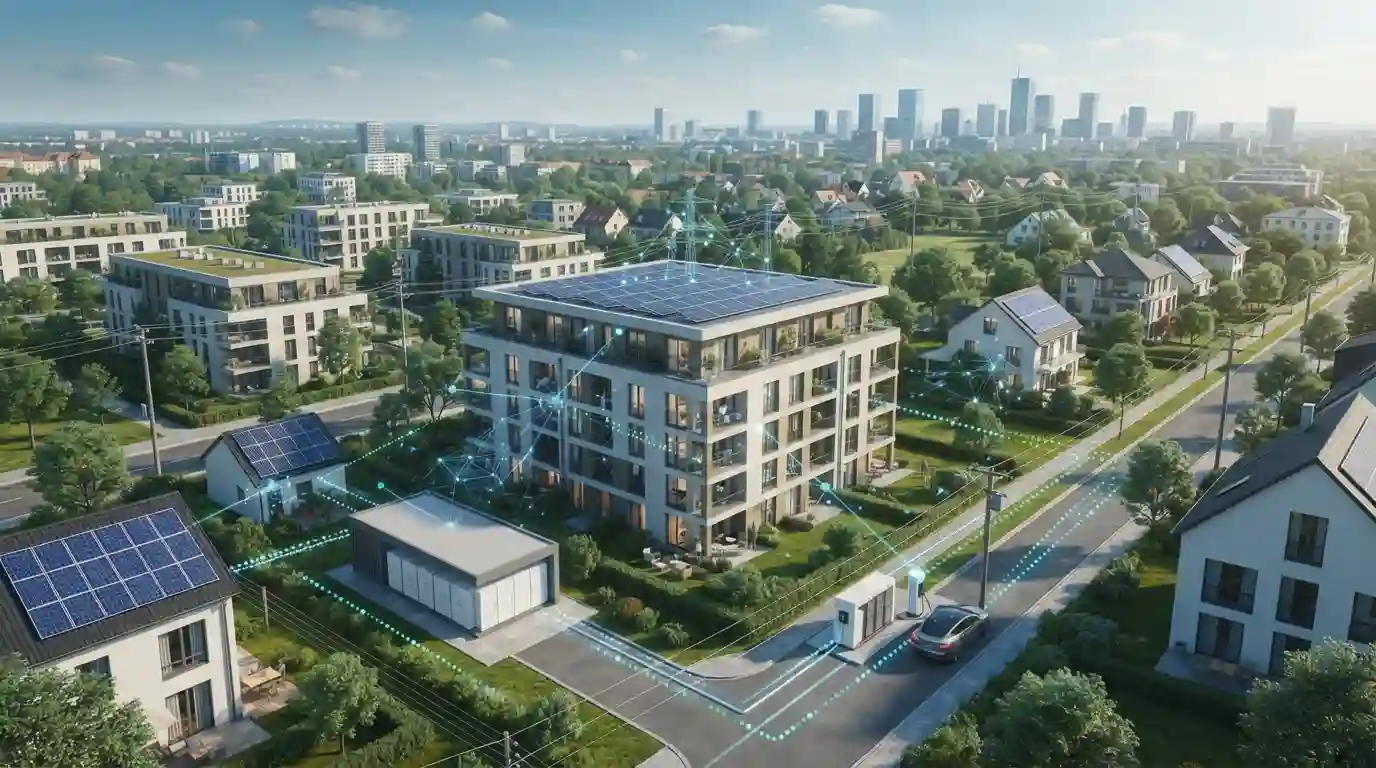
Unlike cryptocurrencies designed primarily as digital payment assets, Power Ledger is closely associated with an energy-market technology platform. Its approach focuses on areas such as peer-to-peer energy trading, renewable-energy traceability, and environmental commodity markets.
What Is Power Ledger?
Power Ledger is a blockchain-based technology company focused on renewable energy markets. Its platform is designed to help participants track, trace, and trade energy and environmental commodities.
The broader idea is straightforward: electricity generation is becoming increasingly distributed. Instead of power being produced only by large centralized plants, households, businesses, communities, and other organizations can generate electricity through solar and other renewable resources.
This creates a need for technology capable of recording energy production and consumption, matching buyers with available supply, and supporting transparent settlement. Power Ledger’s platform is designed around these requirements.
For readers researching the wider cryptocurrency market, our guide to cryptocurrency day trading strategies provides useful background on how digital assets can differ in purpose and market behavior.
How Power Ledger Connects Cryptocurrency and Energy
The connection between Power Ledger and cryptocurrency comes from the use of blockchain technology and digital tokens within its ecosystem. The project’s cryptocurrency is known as POWR.
However, it is important to distinguish the token from the company’s broader energy technology. The underlying platform addresses energy-market use cases, while the token belongs to the digital-asset side of the ecosystem.
This distinction matters because an energy-trading platform can have practical applications even when cryptocurrency markets experience significant volatility.
People researching the digital-asset side of the topic may also want to understand cryptocurrency coin logos and digital-asset branding, while those interested in legal and financial considerations can explore our guide to cryptocurrency tax attorneys.
Why Blockchain Matters for Energy Trading
Traditional electricity markets often involve multiple organizations, including generators, utilities, retailers, grid operators, regulators, and consumers. Data can move between different systems as energy is generated, distributed, purchased, and settled.
Blockchain technology offers a way to maintain a shared digital record of transactions and associated information. In an energy context, this can potentially improve the visibility of transactions and make it easier to coordinate participants operating across a distributed network.
Power Ledger’s technology is designed around this concept, with applications supporting peer-to-peer energy trading and energy traceability.
The subject also connects with broader discussions around the future of cryptocurrency and blockchain technology, particularly as blockchain networks evolve to support applications beyond conventional financial transactions.
What Is Peer-to-Peer Energy Trading?
Peer-to-peer, or P2P, energy trading allows electricity producers and consumers to participate in a more direct marketplace. A household with rooftop solar, for example, may generate more electricity than it needs at a particular time.
In a suitable market structure, that excess generation could be made available to another participant. Instead of treating all electricity as an identical commodity within a conventional retail arrangement, a digital platform can help coordinate production, consumption, pricing, and settlement.
Power Ledger’s xGrid platform is designed to support this type of energy marketplace. The company says its technology can match production and consumption while taking factors such as supply, demand, and participant pricing preferences into account.
This model becomes particularly interesting as solar panels, batteries, smart meters, and other distributed energy resources become more common.
How Solar Energy Can Benefit From Digital Energy Markets
Solar power is naturally suited to decentralized energy systems because photovoltaic panels can be installed on homes, commercial buildings, schools, industrial facilities, and community projects.
The challenge is that solar generation is variable. A property may produce substantial electricity during sunny periods while generating little or none after sunset. At the same time, electricity demand can change throughout the day.
Digital energy marketplaces can help coordinate these differences by connecting available renewable generation with consumption and storage resources.
For a broader look at the financial side of solar-related business activity, see our article on commercial finance and solar energy.
Power Ledger’s approach is therefore not simply about creating another cryptocurrency. It is also about building digital infrastructure around increasingly distributed energy systems.
Power Ledger and Renewable Energy Certificates
Energy trading is only one part of the renewable-energy ecosystem. Businesses increasingly need ways to track renewable-energy claims, environmental attributes, and related commodities.
Renewable Energy Certificates, commonly known as RECs, can represent the environmental attributes associated with renewable electricity generation. Accurate tracking becomes important when companies use renewable-energy instruments to support sustainability goals.
Power Ledger has developed technology for environmental commodity markets in addition to its energy-trading applications. Its TraceX platform is designed as a digital marketplace for environmental commodities such as renewable-energy certificates and carbon-related assets.
This creates a connection between blockchain infrastructure and corporate sustainability reporting, where reliable data and traceability can be important.
What Makes Power Ledger Different From a Traditional Cryptocurrency?
Many cryptocurrencies are primarily discussed in terms of payments, investment, decentralized finance, or digital ownership. Power Ledger is different in that its blockchain ecosystem is connected to a specific real-world industry: energy.
- Energy focus: The technology targets electricity and environmental markets.
- Renewable-energy applications: Solar generation and other renewable resources are important use cases.
- Peer-to-peer trading: The platform can support direct energy-market participation.
- Traceability: Blockchain can provide a digital record for energy and environmental commodities.
- Digital-asset component: POWR provides the cryptocurrency component of the Power Ledger ecosystem.
This makes Power Ledger an example of how blockchain technology can be applied to an industry beyond conventional cryptocurrency trading.
Potential Benefits of Blockchain-Based Energy Trading
Greater Transaction Transparency
A shared digital ledger can provide a structured record of transactions. In complex energy markets, better data visibility can help participants understand how electricity and associated environmental attributes are being traded.
More Flexible Energy Markets
Digital marketplaces can potentially allow energy buyers and sellers to respond to changing supply and demand conditions more dynamically.
Better Use of Distributed Energy Resources
Rooftop solar panels, batteries, electric vehicles, and other distributed resources can create thousands or millions of smaller energy assets. Digital coordination can help these resources participate more effectively in energy markets.
Renewable-Energy Traceability
Tracking where renewable electricity comes from and how environmental attributes are transferred can be useful for organizations with sustainability objectives.
New Participation Models
Peer-to-peer systems can create opportunities for consumers to become active participants in energy markets rather than remaining passive electricity customers.
Challenges Facing Power Ledger and Blockchain Energy Trading
Despite the potential advantages, blockchain-based energy trading still faces practical challenges.
Regulatory Requirements
Electricity is a heavily regulated industry. Energy-market rules differ between countries, states, utilities, and market structures. Blockchain applications must operate within the applicable regulatory framework.
For readers interested in the changing relationship between digital assets and financial regulation, our article on online trading regulation provides broader context.
Grid Infrastructure
Software alone cannot transform the physical electricity grid. Energy trading platforms depend on meters, distribution networks, communications infrastructure, generation assets, and other physical systems.
Market Adoption
A P2P energy market requires sufficient participation from generators, consumers, utilities, retailers, and other stakeholders. Technology becomes more useful as more compatible participants join the ecosystem.
Cryptocurrency Volatility
Digital tokens can experience substantial price movements. This means the cryptocurrency component of an energy-focused blockchain project should not automatically be treated as equivalent to the underlying utility or technology.
Anyone researching digital assets should distinguish blockchain utility from speculative market activity and understand the risks associated with cryptocurrency markets.
Power Ledger’s Real-World Energy Applications
Power Ledger has worked on energy projects in multiple markets, including projects involving peer-to-peer solar trading and renewable-energy tracking.
One example is the company’s work with Tata Power-DDL in India, where its technology was used in a peer-to-peer solar-energy trading project involving distributed solar generation.
Power Ledger also lists projects involving organizations in countries including Australia, Thailand, France, Malaysia, Japan, Vietnam, Belgium, and the United States.
These examples illustrate why blockchain energy trading is better understood as an infrastructure and market-design topic rather than simply a cryptocurrency trend.
Power Ledger, Energy Storage, and Electric Vehicles
The future of energy trading may involve much more than solar panels. Battery storage and electric vehicles can also become important components of decentralized energy systems.
A battery can store electricity when supply is abundant and release it when demand or market value is higher. Electric vehicles can potentially become flexible energy resources when supported by appropriate charging infrastructure and vehicle-to-grid technology.
When these resources are connected through digital platforms, the energy system can become more interactive.
This broader technological shift also relates to the growth of AI and emerging technology, as energy networks increasingly require sophisticated software to manage large volumes of distributed data and real-time decisions.
Power Ledger and the Future of Decentralized Energy
The long-term opportunity for blockchain-based energy trading depends on how quickly distributed energy resources grow and how electricity markets adapt.
If households and businesses continue installing solar systems, batteries, smart meters, and electric vehicles, the number of potential energy-market participants could increase significantly.
That environment creates demand for software capable of coordinating production, consumption, transactions, environmental attributes, and settlement.
Power Ledger’s technology is designed around this emerging market structure. Its role is therefore broader than the price movement of POWR as a cryptocurrency. The more important question for the energy sector is whether blockchain-enabled platforms can provide useful infrastructure for increasingly distributed electricity markets.
What Investors and Researchers Should Understand About POWR
POWR is the digital token associated with the Power Ledger ecosystem. Anyone researching it should separate three different subjects: the technology platform, the energy-market applications, and the cryptocurrency market.
The first concerns real-world software and energy infrastructure. The second concerns how utilities, businesses, generators, and consumers could use digital energy markets. The third concerns the trading and market behavior of the POWR token.
These areas are connected, but they are not identical.
Before making decisions involving any cryptocurrency, readers should research the project’s current documentation, understand market and regulatory risks, and avoid assuming that technological adoption automatically translates into token-price performance.
How Power Ledger Fits Into the Broader Blockchain Economy
Power Ledger represents one part of a broader movement toward blockchain applications with real-world use cases. Other projects explore financial services, digital identity, supply chains, environmental markets, and decentralized infrastructure.
The energy sector is particularly interesting because electricity is becoming increasingly distributed while consumers are gaining access to technologies that allow them to generate, store, and manage energy themselves.
At the same time, broader economic conditions can influence investment in renewable infrastructure and emerging technologies. Our coverage of global economic shifts offers additional context on how economic trends can affect technology and investment environments.
For businesses interested in digital transformation more generally, our resources on digital transformation and the global impact of digital marketing provide related perspectives on how technology changes established industries.
Frequently Asked Questions About Power Ledger Cryptocurrency
What is Power Ledger cryptocurrency?
Power Ledger cryptocurrency refers primarily to POWR, the digital token associated with the Power Ledger ecosystem. Power Ledger itself is a blockchain technology company focused on renewable-energy trading, traceability, and environmental commodity markets.
What is POWR used for?
POWR is associated with the Power Ledger ecosystem and its blockchain-based energy-market infrastructure. Its exact role and technical implementation can evolve as the platform develops.
Does Power Ledger trade electricity?
Power Ledger develops software infrastructure that supports energy trading rather than functioning as a conventional electricity utility. Its technology can facilitate peer-to-peer energy trading and related market processes.
Can solar power be traded using blockchain?
Yes. Blockchain-based platforms can be designed to record and coordinate transactions involving distributed solar generation. Power Ledger has developed technology specifically for peer-to-peer solar and renewable-energy trading applications.
Is Power Ledger only a cryptocurrency project?
No. Power Ledger’s broader activities include energy trading, energy traceability, and environmental commodity markets. The POWR token is one component of its wider blockchain ecosystem.
Is POWR a safe investment?
No cryptocurrency can be described as risk-free. POWR is a digital asset and can be affected by market volatility, regulation, liquidity, technology developments, and broader cryptocurrency-market conditions. Investors should conduct independent research before making financial decisions.
Final Thoughts
Power Ledger demonstrates how blockchain technology can be applied to a real-world infrastructure challenge: coordinating increasingly distributed energy generation and consumption.
Its focus on peer-to-peer energy trading, renewable-energy traceability, and environmental commodities gives the project a different profile from cryptocurrencies designed primarily for payments or financial speculation.
The future of blockchain-based energy trading will depend on regulation, grid modernization, renewable-energy adoption, market participation, and the ability of technology providers to integrate with existing energy systems.
For anyone researching Power Ledger cryptocurrency, the most useful approach is to examine both sides of the ecosystem: the practical energy technology and the separate risks and characteristics of the POWR digital asset.