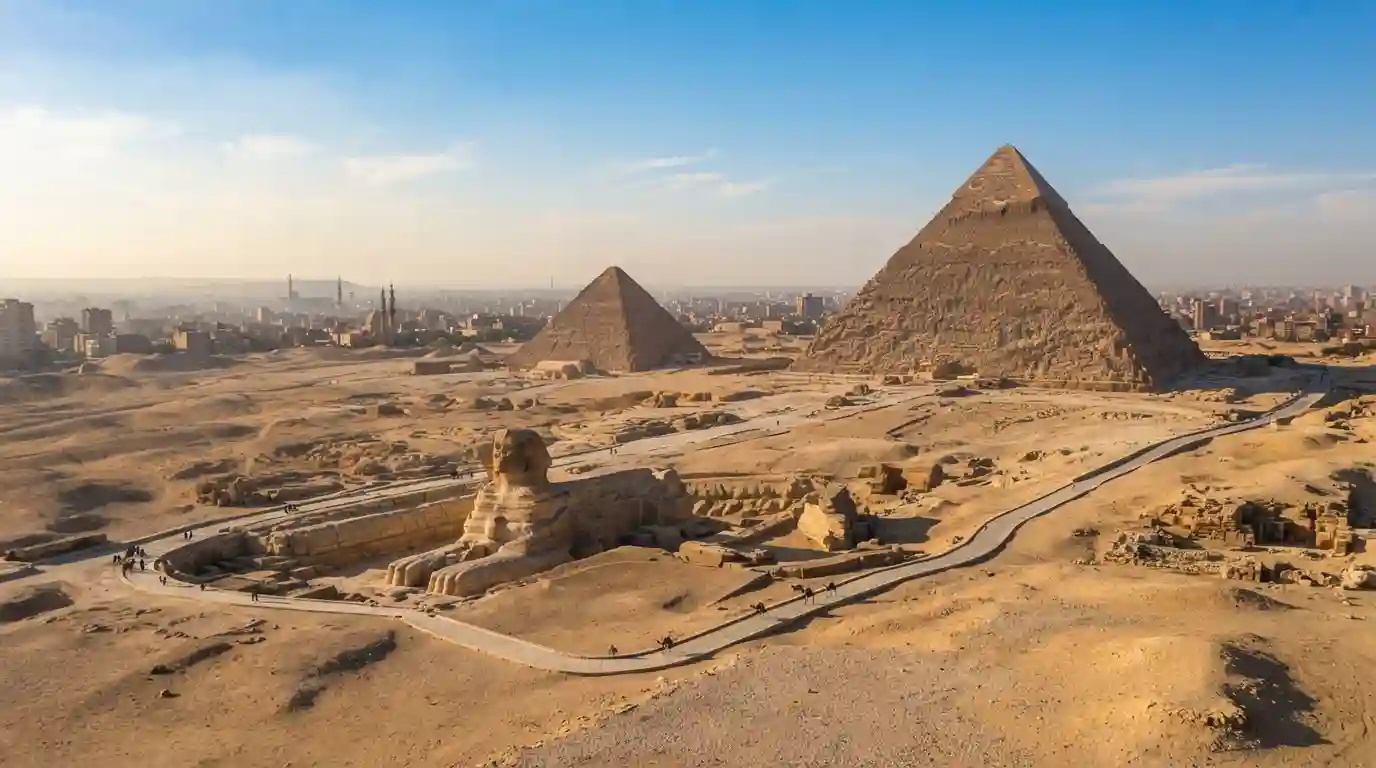
If you are exploring the latest travel inspiration on WayfareHub, Egypt deserves a place on your itinerary. The country has enough variety to support a short city break, a cultural journey, or a longer trip that combines archaeological sites with beaches and desert adventures.
Why Egypt Is Worth Visiting
Egypt stands apart because its attractions span thousands of years of history while remaining connected to everyday modern life. Visitors can spend a morning walking among ancient monuments, enjoy a traditional meal in Cairo, cruise along the Nile, and finish the day beside the Red Sea.
The best places to visit in Egypt also offer different types of travel experiences. Cairo is ideal for museums, markets, and major historical landmarks. Luxor is a natural choice for ancient temples and royal tombs, while Sharm El Sheikh and Hurghada appeal to travelers interested in beaches, snorkeling, and diving.
1. Cairo
Cairo is the natural starting point for many Egypt itineraries and one of the country’s most rewarding destinations. The enormous capital combines ancient history, Islamic architecture, museums, markets, restaurants, and modern neighborhoods.
One of Cairo’s biggest attractions is its proximity to the Giza Plateau. Travelers can also explore historic areas of the city, visit museums, walk through traditional markets, and experience Egyptian cuisine.
Cairo works particularly well for travelers who want to experience several sides of Egypt in one destination. It is also a useful base for exploring Giza and nearby historical attractions.
2. Pyramids of Giza
The Pyramids of Giza are among the most recognizable ancient monuments in the world and remain one of the defining experiences of an Egypt trip. The complex includes the Great Pyramid of Giza, the pyramids associated with Khafre and Menkaure, and the Great Sphinx.
Visitors can walk around the plateau, admire the enormous stone structures, explore viewpoints across the complex, and learn about the civilization that constructed these monuments thousands of years ago.
For first-time visitors, the pyramids are an essential part of an Egypt itinerary. Early visits can also make it easier to enjoy the archaeological landscape before the busiest part of the day.
3. Luxor
Luxor is one of the most important destinations for travelers interested in ancient Egyptian history. Often described as an open-air museum, the city sits along the Nile and provides access to temples, archaeological sites, and ancient burial grounds.
Luxor Temple and Karnak Temple are among the major attractions on the city’s eastern side. Across the Nile, visitors can explore the West Bank, where several important ancient sites are located.
Travelers who enjoy archaeological destinations may also want to compare Egypt with other historic travel experiences, such as places to visit in Greece, another destination known for ancient sites and cultural heritage.
4. Valley of the Kings
The Valley of the Kings is one of the most memorable places to visit near Luxor. The valley contains ancient tombs created for Egyptian rulers and is particularly associated with the pharaohs of the New Kingdom.
The tombs provide an opportunity to see ancient wall paintings, inscriptions, chambers, and burial architecture. The experience is different from visiting the pyramids because the focus is on underground tomb complexes rather than enormous monuments rising above the landscape.
Allow enough time to explore the area rather than treating the Valley of the Kings as a quick stop. Its historical significance makes it one of the highlights of a longer Luxor itinerary.
5. Karnak Temple
Karnak Temple is another major attraction in Luxor. The complex contains monumental columns, courtyards, statues, obelisks, and sacred spaces developed over many generations of ancient Egyptian history.
The scale of Karnak makes it easy to appreciate why Luxor is such an important destination for travelers interested in ancient civilizations. Walking through the complex provides a sense of the architectural ambition of ancient Egypt.
6. Sharm El Sheikh
Sharm El Sheikh offers a completely different side of Egypt. Located on the Red Sea, the resort destination is known for beaches, warm waters, snorkeling, diving, and marine scenery.
It is a useful choice for travelers who want to combine sightseeing with relaxation. After exploring archaeological sites in Cairo or Luxor, a few days around the Red Sea can provide a slower pace.
Travelers interested in combining cultural attractions with coastal experiences can also explore other destination guides on WayfareHub, including places to visit in Saudi Arabia.
7. Hurghada
Hurghada is another popular Red Sea destination and a strong option for travelers interested in beaches and water activities. The city has access to coral reefs and marine environments that make snorkeling and diving major parts of the local tourism experience.
Hurghada can also work well as part of a longer Egypt vacation. Visitors may choose to spend time relaxing on the coast before or after visiting historical destinations farther inland.
If you enjoy comparing coastal destinations around the world, you can also explore places to visit in the Florida Keys and places to visit on the Big Island of Hawaii for additional travel inspiration.
8. Alexandria
Alexandria sits along Egypt’s Mediterranean coast and offers a different atmosphere from Cairo and Luxor. The city has a long connection with Mediterranean history, culture, architecture, and maritime life.
Visitors can explore the waterfront, historical landmarks, museums, and traditional neighborhoods while enjoying the city’s coastal character. Alexandria is particularly appealing for travelers who want to add a Mediterranean dimension to an Egypt itinerary.
Its combination of history and coastal scenery makes Alexandria an interesting extension to a trip focused primarily on Cairo and the Nile Valley.
9. Siwa Oasis
For travelers looking for a quieter experience, Siwa Oasis provides a striking contrast to Egypt’s major tourist centers. Located in the Western Desert, Siwa is known for its oasis landscape, salt lakes, palm groves, traditional architecture, and distinctive local culture.
The remote setting makes Siwa suitable for travelers who want to experience a slower side of Egypt. Desert scenery, natural pools, traditional settlements, and sunset views create a very different travel experience from the busy streets of Cairo.
Travelers who enjoy less conventional destinations may also find inspiration in guides such as less crowded places to visit.
10. Abu Simbel
Abu Simbel is one of Egypt’s most impressive archaeological destinations. The site is famous for its monumental rock-cut temples and enormous statues associated with Ramesses II.
Although Abu Simbel is farther from Cairo and Luxor than many other attractions, its scale and historical importance make it a worthwhile consideration for travelers planning an extended Egypt itinerary.
The destination is particularly appealing to visitors who want to move beyond the country’s most commonly visited attractions and explore another remarkable chapter of ancient Egyptian history.
11. Aswan
Aswan offers a more relaxed atmosphere along the Nile and is an important destination for travelers exploring southern Egypt. The city is surrounded by river scenery, islands, traditional communities, and historical attractions.
A Nile experience from Aswan can provide a peaceful contrast to the energy of Cairo. Travelers can enjoy views of the river, explore nearby sites, and use the city as part of a broader journey through southern Egypt.
12. Nile River Experiences
The Nile is more than a geographical feature of Egypt; it is central to understanding the country’s history and culture. A Nile cruise allows travelers to experience the landscape between major destinations while visiting historic sites along the way.
Depending on the itinerary, travelers may combine Luxor, Aswan, temples, archaeological sites, and river scenery in one journey. This makes the Nile particularly attractive for visitors who want to connect several destinations instead of spending their entire vacation in one city.
If you are interested in travel experiences centered around scenic landscapes, you may also enjoy Queenstown travel experiences and nature destinations in Norway.
13. Egyptian Desert Landscapes
Egypt’s desert environment provides another dimension to the country’s tourism appeal. Beyond the major archaeological cities, travelers can find dramatic desert scenery, remote oases, rocky landscapes, and expansive horizons.
Desert excursions can be especially appealing to adventurous travelers who want something different from traditional sightseeing. Depending on the destination and local arrangements, activities may include guided desert trips, photography, cultural experiences, and sunset excursions.
14. Egyptian Museums and Cultural Attractions
Egypt’s museums help visitors understand the history behind the monuments they see throughout the country. Cairo has long been an important center for Egyptian antiquities, while other cities and archaeological destinations provide additional opportunities to explore the country’s heritage.
Museums are particularly useful for travelers who want more context about pharaohs, ancient Egyptian religion, art, burial traditions, writing, and everyday life.
15. Egyptian Markets and Local Cuisine
An Egypt trip should not be limited to monuments and archaeological sites. Local markets and food provide another way to experience the country’s culture.
Traditional dishes, fresh bread, legumes, grilled foods, spices, desserts, and street-food experiences can all become part of the journey. Markets also offer opportunities to see everyday life beyond the country’s major tourist attractions.
Travelers who enjoy building trips around food and local culture can also explore international food and cultural experiences while planning future journeys.
How to Plan a Trip to Egypt
The best itinerary depends on how much time you have. A short trip can focus on Cairo and Giza, while a longer vacation can combine Cairo, Luxor, Aswan, and a Red Sea destination.
Travelers with more time can add Alexandria, Siwa Oasis, Abu Simbel, or other destinations based on their interests. History-focused itineraries naturally require more time around Luxor and the Nile Valley, while beach vacations may dedicate more days to Sharm El Sheikh or Hurghada.
For a Short Trip
For a short visit, consider concentrating on Cairo and Giza. This provides access to major historical attractions without requiring extensive travel between regions.
For a One-Week Trip
A week can allow travelers to combine Cairo with Luxor or a Red Sea destination. The right balance depends on whether your priority is ancient history, cultural exploration, relaxation, or outdoor activities.
For a Longer Egypt Vacation
With additional time, you can combine Cairo, Luxor, Aswan, Abu Simbel, and the Red Sea. Adding Siwa or Alexandria can create an even broader picture of Egypt’s landscapes and cultural regions.
When to Visit Egypt
Egypt can be visited throughout much of the year, but weather should play an important role in planning. Cooler periods are generally more comfortable for extensive sightseeing around archaeological sites, especially when spending long periods outdoors.
Coastal destinations have a different appeal because travelers may prioritize warm water and beach conditions. Desert excursions also require thoughtful planning because temperatures can vary significantly between day and night.
If you are comparing seasonal travel opportunities in different destinations, explore guides such as spring travel destinations, winter destinations, and summer travel in California.
Egypt Travel Tips
- Plan your route before arriving so you can avoid unnecessary long-distance travel.
- Allow enough time for major archaeological sites instead of rushing through them.
- Carry water when exploring outdoor attractions.
- Choose comfortable clothing and footwear for walking.
- Keep your schedule flexible when traveling between different regions.
- Use reputable local transportation and tour providers.
- Respect local customs and dress appropriately when visiting religious and cultural sites.
- Keep digital and physical copies of important travel documents.
More Travel Inspiration
Egypt is only one part of a much larger world of destinations. If you are planning future international trips, WayfareHub also covers destinations across North America, Europe, Asia, and other regions.
For travelers comparing international itineraries, explore places to visit in Europe, places to visit in Japan, places to visit in Brazil, and Eastern Europe destinations.
For North American travel ideas, you can also explore places to visit in the United States and Nashville travel ideas.
Frequently Asked Questions About Visiting Egypt
What are the best places to visit in Egypt?
Popular destinations include Cairo, Giza, Luxor, the Valley of the Kings, Aswan, Abu Simbel, Alexandria, Sharm El Sheikh, Hurghada, and Siwa Oasis. The right combination depends on whether you prefer history, beaches, culture, nature, or adventure.
How many days are enough for Egypt?
A short trip can cover Cairo and Giza, while a longer itinerary allows you to combine the capital with Luxor, Aswan, and a Red Sea destination. More time gives you greater flexibility to include Alexandria, Siwa Oasis, or Abu Simbel.
Is Egypt suitable for families?
Yes. Families can combine educational historical attractions with beaches, boat trips, cultural experiences, and outdoor activities. Planning shorter sightseeing sessions and allowing breaks can make the itinerary more comfortable for children.
What is Egypt most famous for?
Egypt is especially famous for its ancient pyramids, pharaohs, temples, tombs, the Nile River, archaeological sites, and Red Sea destinations.
Should you visit Cairo or Luxor?
Both offer different experiences. Cairo combines major historical attractions with museums, markets, and urban culture, while Luxor is particularly focused on temples, tombs, and ancient Egyptian archaeological sites.
Final Thoughts
The best places to visit in Egypt offer far more than a single collection of ancient monuments. Cairo introduces travelers to the country’s modern energy and historic heritage, Giza delivers its most recognizable archaeological experience, Luxor and the Valley of the Kings provide remarkable insight into ancient Egypt, while Sharm El Sheikh and Hurghada offer a completely different Red Sea experience.
Whether you are interested in history, culture, beaches, desert landscapes, photography, food, or river journeys, Egypt can be shaped around your travel style. By combining a few major destinations with enough time to explore them properly, you can experience several distinct sides of this remarkable country in one journey.