
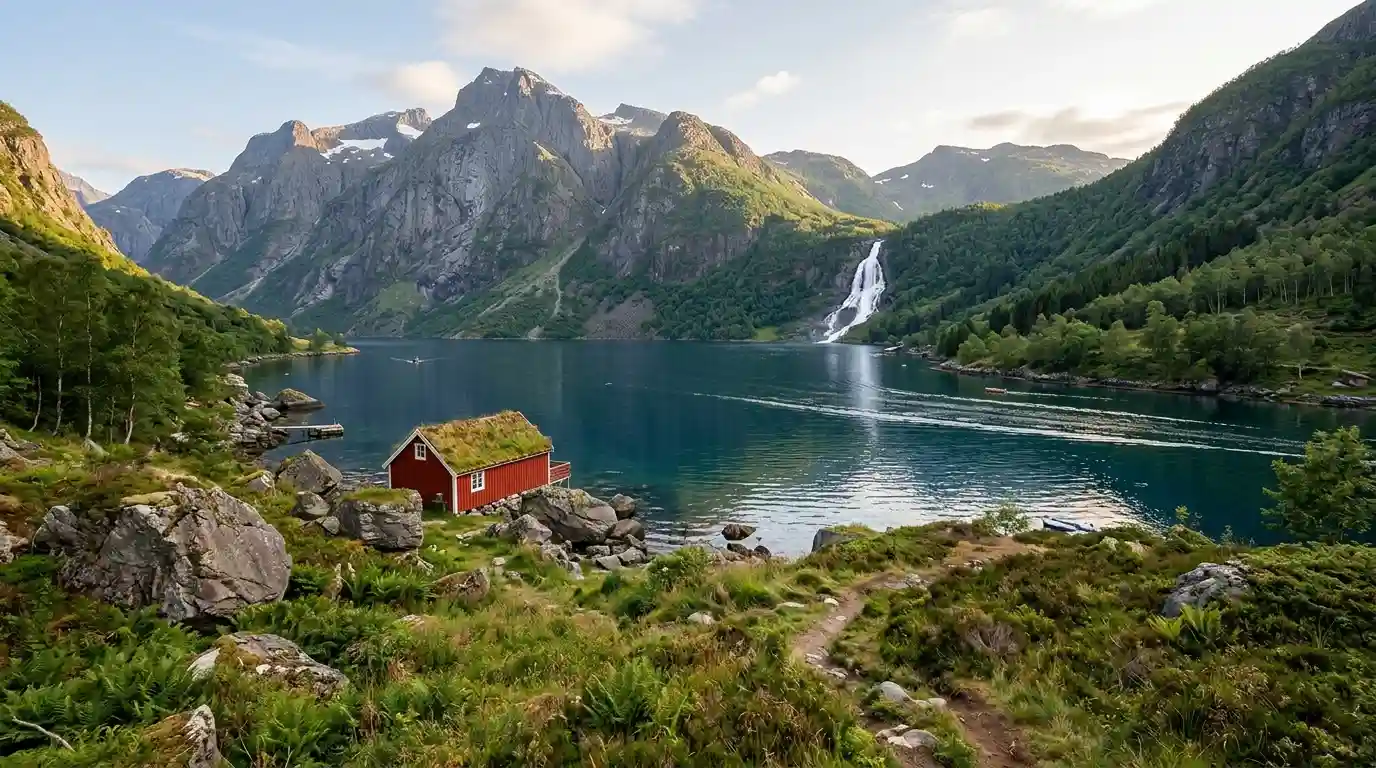
The best nature places to visit in Norway are spread across a vast landscape, from the rugged Lofoten Islands in the north to the fjords and mountain ranges of western and southern Norway. Each region offers something different, making it important to choose destinations that match your interests, travel dates, and preferred activities.
This guide explores ten remarkable Norwegian natural destinations, what makes each one special, the best activities to consider, and practical tips for planning a memorable trip. If you are comparing international destinations, you can also explore our guide to the best places to visit in Europe for more travel inspiration.
1. Lofoten Islands: Dramatic Mountains and Arctic Beaches
The Lofoten Islands are among the most photogenic natural destinations in Norway. Located above the Arctic Circle, this archipelago combines jagged mountain peaks, sheltered bays, white-sand beaches, deep-blue water, and colorful fishing villages. The contrast between steep mountains and coastal scenery makes the islands especially appealing to photographers and outdoor enthusiasts.
Reine is one of the best-known villages in the region, offering beautiful views of traditional red fishing cabins surrounded by mountains and water. Nearby villages, quiet coves, and coastal roads provide plenty of opportunities to experience the landscape at a relaxed pace.
Best things to do in Lofoten
- Hike designated trails for panoramic views of the islands.
- Visit beaches such as Haukland and Uttakleiv.
- Photograph traditional fishing villages and mountain reflections.
- Explore the coastline by kayak with a suitable local operator.
- Look for the Northern Lights during the darker months when conditions are favorable.
Best time to visit: Late spring through early autumn is popular for hiking and longer daylight hours. Winter offers a different experience, with snowy scenery and opportunities to see the aurora when skies are clear.
Travel tip: Mountain weather can change quickly, and some hikes are steep or exposed. Check trail conditions before setting out and choose routes appropriate for your experience.
2. Geirangerfjord: Towering Cliffs and Spectacular Waterfalls
Geirangerfjord is one of Norway’s most famous natural landmarks. Its deep blue water winds between steep mountains, green slopes, and waterfalls that descend from high rock faces. The surrounding landscape is recognized for its exceptional natural scenery and is part of a UNESCO World Heritage area.
The Seven Sisters waterfall is one of the fjord’s best-known sights. Visitors can appreciate the scenery from a boat, a roadside viewpoint, or selected hiking routes overlooking the water. The village of Geiranger also makes a convenient base for exploring the surrounding mountains and valleys.
Best things to do in Geirangerfjord
- Take a fjord cruise to see the cliffs and waterfalls from the water.
- Visit the Flydalsjuvet viewpoint for sweeping landscape views.
- Explore suitable marked trails around the fjord.
- Photograph the Seven Sisters waterfall when water flow and visibility are favorable.
- Enjoy scenic drives through the surrounding mountain region when roads are open.
Best time to visit: Late spring and summer generally offer the broadest access to seasonal transport, viewpoints, and outdoor activities. Waterfall flow, road access, and weather vary throughout the year.
For travelers who enjoy dramatic landscapes in other parts of the world, our guide to scenic places and outdoor activities in Queenstown, New Zealand offers another destination to consider.
3. Jotunheimen National Park: Norway’s High Mountain Wilderness
Jotunheimen National Park is a leading destination for travelers who want to experience Norway’s mountain scenery on foot. Its landscape includes high peaks, glaciers, alpine lakes, rocky valleys, and extensive hiking terrain. The park contains Galdhøpiggen, the highest mountain in Norway, and attracts experienced hikers as well as visitors seeking shorter walks in suitable areas.
One of the region’s best-known routes is the Besseggen Ridge hike, which offers striking views of contrasting mountain lakes. It is a demanding route in places and requires proper preparation, suitable footwear, and favorable conditions. Visitors who prefer a less strenuous trip can explore easier trails and scenic areas around established mountain bases.
Best things to do in Jotunheimen
- Explore marked mountain trails suited to your fitness and experience.
- Plan a hike near Gjende Lake for classic alpine scenery.
- Stay in a mountain lodge or designated cabin where available.
- Enjoy landscape photography in valleys and beside alpine lakes.
- Consider a guided mountain excursion for more challenging routes.
Best time to visit: Summer is generally the main hiking season, but snow, wind, and rapidly changing weather can affect high routes even then. Some trails and facilities operate seasonally.
Travel tip: Do not treat a popular mountain route as an easy walk simply because it appears frequently in photographs. Check elevation gain, estimated hiking time, daylight, and current trail conditions before committing.
4. Nærøyfjord: A Peaceful Journey Through Narrow Fjord Scenery
Nærøyfjord is known for its narrow waterways, towering mountains, waterfalls, and small settlements tucked between steep slopes. Located in western Norway, it forms part of the UNESCO-listed West Norwegian Fjords landscape and offers an especially immersive way to experience the country’s glacially shaped scenery.
A boat journey is one of the most convenient ways to appreciate the scale of the surrounding cliffs. Travelers can also explore the nearby Flåm and Gudvangen areas, where fjord excursions, rail journeys, village walks, and outdoor activities can be combined into a wider itinerary.
Best things to do around Nærøyfjord
- Take a boat trip through the narrow fjord.
- Explore the villages and viewpoints around Flåm and Gudvangen.
- Combine the fjord with a scenic train journey.
- Look for suitable walking routes with views over the surrounding valleys.
- Photograph waterfalls and mountain reflections when conditions allow.
Best time to visit: Spring through autumn is popular for boat trips and outdoor sightseeing. Check seasonal schedules in advance, particularly if you are coordinating transport connections.
5. Hardangervidda National Park: Vast Plateaus and Open Landscapes
Hardangervidda National Park protects a vast mountain plateau characterized by open horizons, lakes, rivers, rocky terrain, and wide expanses of tundra-like vegetation. The landscape feels very different from Norway’s narrow fjords: instead of towering cliffs, visitors encounter broad skies, quiet wilderness, and long stretches of open terrain.
The plateau is also known for wild reindeer and offers opportunities for hiking, fishing where permitted, wildlife observation, and scenic drives around its accessible edges. Because distances can be substantial and weather unpredictable, visitors should plan routes carefully rather than assuming facilities will be available everywhere.
Best things to do in Hardangervidda
- Walk marked trails suited to the season and your experience.
- Stop at accessible viewpoints along the surrounding scenic roads.
- Photograph lakes, rivers, and the open mountain plateau.
- Learn about the area’s wildlife and conservation landscape.
- Plan a longer hiking trip only after checking conditions and accommodation availability.
Best time to visit: Summer is generally the most practical period for many hiking plans. Shoulder seasons can bring cold temperatures, snow, and limited services.
Hardangervidda is also a rewarding area for travelers who appreciate scenic road trips. Explore our guide to scenic nature and cultural destinations in Saskatchewan for inspiration on another region with expansive outdoor landscapes.
6. Jostedalsbreen National Park: Glaciers and Glacial Valleys
Jostedalsbreen National Park protects Jostedalsbreen, the largest glacier on mainland Europe by area. The surrounding landscape includes ice fields, steep valleys, waterfalls, rivers, and mountain scenery shaped by glacial processes. It is an excellent destination for travelers interested in geology, dramatic landscapes, and guided outdoor adventures.
Glacial arms such as Nigardsbreen attract visitors who want to see ice formations and learn how glaciers shape the environment. However, glaciers are dynamic and potentially dangerous. Access conditions can change, and walking on glacier ice should be undertaken only with an appropriately qualified guide and suitable equipment.
Best things to do in Jostedalsbreen
- Visit accessible glacier viewpoints.
- Explore nearby valleys and marked walking routes.
- Join a guided glacier experience when conditions and age requirements permit.
- Learn about glacier movement and the effects of a changing climate.
- Photograph rivers, waterfalls, and mountain landscapes around the park.
Best time to visit: Late spring through early autumn is commonly preferred for sightseeing and guided activities, although availability depends on the specific glacier and weather.
Travel tip: Never approach unstable ice fronts or enter restricted glacier areas. Meltwater channels, falling ice, and hidden crevasses can pose serious hazards.
7. Vøringsfossen: One of Norway’s Most Impressive Waterfalls
Vøringsfossen is a spectacular waterfall in the Måbødalen valley, near the Hardangervidda plateau. Water plunges into a steep gorge surrounded by rugged rock walls, creating one of western Norway’s most memorable natural sights.
Designated viewing areas and bridges allow visitors to appreciate the waterfall from different perspectives. The combination of the open plateau, winding valley, and dramatic drop makes this a worthwhile stop on a road trip through the Hardanger region.
Best things to do at Vøringsfossen
- Visit designated viewpoints for views of the waterfall and gorge.
- Photograph the surrounding rock formations and valley.
- Combine the stop with a scenic drive through Hardanger.
- Allow time to enjoy the landscape rather than rushing between viewpoints.
Best time to visit: Warmer months are generally more convenient for road access and sightseeing, but conditions vary. Winter ice, wind, and snow can affect access and safety.
Safety tip: Stay behind barriers and use marked viewing areas. Wet rock, strong winds, and steep drops make informal approaches dangerous.
8. Senja: Rugged Peaks, Fjords, and Coastal Scenery
Senja is a large island in northern Norway with an extraordinary variety of landscapes. Its coastline features dramatic mountain peaks, deep fjords, small fishing communities, rocky headlands, and beaches that look especially striking against the surrounding Arctic scenery.
The island’s scenic road connects many of its most memorable viewpoints and makes it possible to experience different coastal environments in one trip. Popular stops include the viewpoints around Bergsbotn and the rocky coastline near Tungeneset. Short walks and longer hikes are available, although difficulty varies significantly.
Best things to do on Senja
- Drive sections of the Norwegian Scenic Routes network.
- Stop at designated viewpoints overlooking fjords and mountain peaks.
- Explore coastal villages and nearby beaches.
- Choose marked hikes that match your experience and current conditions.
- Look for the Northern Lights in the darker season when skies are clear.
Best time to visit: Summer is ideal for long daylight hours and many outdoor activities. Autumn and winter bring a different atmosphere, but driving and hiking require more careful planning.
For another island-focused nature trip, see our guide to places to visit on Hawaii’s Big Island, where volcanic terrain and coastal landscapes create a very different outdoor experience.
9. Rondane National Park: Quiet Trails and Mountain Views
Rondane National Park is a strong choice for travelers who want a quieter mountain experience. Its landscape features rounded peaks, open valleys, rocky slopes, and extensive hiking terrain. Compared with some of Norway’s more famous fjord destinations, Rondane can feel spacious and peaceful, particularly when visitors explore beyond the busiest trailheads.
The park is associated with wild reindeer habitat, making responsible behavior especially important. Visitors should keep their distance from wildlife, follow local guidance, and avoid disturbing animals or entering restricted areas.
Best things to do in Rondane
- Walk marked routes through the mountain landscape.
- Enjoy photography in broad valleys and beneath rugged peaks.
- Choose shorter nature walks or longer hikes according to your ability.
- Stay in designated accommodation near trail access where available.
- Learn about mountain ecology and wildlife conservation.
Best time to visit: Summer and early autumn are popular for hiking, subject to weather and trail conditions. Snow can affect access outside the main season.
If peaceful scenery is your priority, you may also enjoy our collection of less crowded places to visit in summer for additional ideas for quieter holidays.
10. Vesterålen: Coastal Wilderness and Whale-Watching Opportunities
The Vesterålen archipelago offers a compelling mix of mountains, open sea, fishing villages, beaches, and wildlife experiences. Located in northern Norway, it is an excellent alternative for travelers who want Arctic coastal scenery without limiting their itinerary to the best-known areas of Lofoten.
Vesterålen is particularly associated with whale-watching excursions, seabirds, and dramatic coastal views. Wildlife sightings are never guaranteed, however, and responsible operators should prioritize safe distances and animal welfare. On land, visitors can enjoy selected coastal walks, scenic drives, and quiet villages.
Best things to do in Vesterålen
- Join a responsible whale-watching tour with a local operator.
- Explore accessible beaches and coastal viewpoints.
- Look for seabirds from suitable observation areas.
- Drive through fishing villages and changing coastal landscapes.
- Photograph the sea, mountains, and long Arctic summer evenings.
Best time to visit: Summer offers long daylight hours and convenient conditions for many coastal activities. The most suitable time for whale-watching depends on the species, location, and operator schedule.
When Is the Best Time to Visit Norway for Nature?
Norway’s seasons influence daylight, road access, hiking conditions, wildlife experiences, and the type of scenery you will encounter. There is no single best time for every destination, so choose your dates according to your priorities.
Summer: June to August
Summer is a popular time for hiking, fjord cruises, mountain viewpoints, and scenic road trips. Long daylight hours make it easier to spend more time outdoors, particularly in northern Norway. However, popular destinations can be busy, and advance reservations may be useful.
Autumn: September to October
Autumn brings changing foliage, cooler weather, and quieter conditions in many areas. It can be a beautiful season for fjord photography and mountain scenery, although daylight decreases and some seasonal services begin to close. For broader seasonal inspiration, explore our guide to places to visit in Greece during fall.
Winter: November to March
Winter offers snow-covered landscapes, winter sports, and opportunities to see the Northern Lights in suitable locations. It also brings limited daylight in northern regions, icy roads, and restricted access to some mountain areas. Build flexibility into your plans and check local conditions before traveling.
Spring: April to May
Spring can bring powerful waterfalls as snow melts at lower elevations, greener valleys, and a gradual return of longer days. High mountain routes may still be snow-covered, and opening dates for roads, trails, and activities vary. Our guide to places to visit in spring offers additional seasonal travel inspiration.
How to Plan a Nature Trip Around Norway
Norway is a long country with substantial distances between many major natural attractions. Rather than trying to visit every region in a single trip, choose a practical route and allow enough time to enjoy the landscapes.
Choose a region before booking
For fjords, waterfalls, and glacier scenery, concentrate on western Norway. For rugged Arctic coastlines and northern lights opportunities, consider Lofoten, Senja, and Vesterålen. For high mountain hiking, look at Jotunheimen and Rondane. Hardangervidda is worth considering if you prefer broad mountain landscapes and open terrain.
Allow time for changing weather
Weather can change quickly in the mountains and along the coast. Avoid building a trip around one narrow weather window, particularly if you plan to hike a demanding trail or join a boat excursion. Keep an alternative activity available for rainy or windy days.
Check transportation and seasonal access
Some areas are easier to reach by car, while others can be explored through a combination of trains, buses, ferries, and guided tours. Check departure schedules, road openings, and seasonal service availability before finalizing your itinerary.
Pack for outdoor conditions
Bring layers, waterproof outerwear, suitable walking shoes, and navigation tools appropriate for your planned activities. Remote trails may have limited mobile coverage, and daylight can be restricted in winter. More demanding hikes may require specialist equipment and local guidance.
Respect nature and local communities
Stay on marked trails where required, take your rubbish with you, respect wildlife, and follow local access rules. Do not assume every open-looking area is safe for camping, swimming, or off-trail exploration. Responsible travel helps preserve Norway’s landscapes for future visitors.
More Scenic Nature Destinations to Explore
Norway can be part of a wider travel plan for anyone who enjoys mountains, coastlines, national parks, and outdoor adventures. These existing WayfareHub guides offer additional destination ideas for future trips:
- Scenic places to visit in Alberta, Canada for mountain landscapes and outdoor exploration.
- The best places to visit in the Amazon rainforest for tropical biodiversity and rainforest experiences.
- Why Fiji is a memorable travel destination for island scenery and coastal escapes.
- Places to visit in California during summer for coastlines, parks, and outdoor trips.
- Places to visit near Olympic National Park for forest, mountain, and coastal scenery.
- Best places to visit in Ireland with a map for planning a scenic European trip.
- Top places to visit in Eastern Europe for more regional travel inspiration.
- Places to visit in the Midwest during summer for seasonal outdoor travel ideas.
- Must-visit places around the world for inspiration when planning future adventures.
- Best places to visit in Nova Scotia in summer for coastal scenery and maritime landscapes.
- Places to visit in the Philippines for island landscapes and tropical nature.
- Places to visit in Southern California during summer for coastal and outdoor excursions.
- Best places to visit in the Mekong Delta for river landscapes and nature-focused travel.
- Places to visit in Kerala with family for green landscapes and nature-oriented trips.
- Top ten places to visit in the Philippines for more island and coastal destinations.
Frequently Asked Questions
What are the most beautiful natural places in Norway?
Lofoten, Geirangerfjord, Nærøyfjord, Jotunheimen National Park, Hardangervidda, and Jostedalsbreen National Park are among the country’s standout natural destinations. The best choice depends on whether you prefer fjords, glaciers, mountains, beaches, or wildlife.
What is the best month to visit Norway for nature?
June, July, and August are popular for hiking, road trips, and fjord sightseeing. September can be attractive for autumn colors in suitable regions. Winter is better suited to snow scenery and northern lights opportunities, provided you plan around weather and limited daylight.
Can you see the Northern Lights in Norway?
Yes. Northern Norway, including areas around Lofoten, Senja, and Vesterålen, offers opportunities to see the aurora during the darker season. Sightings depend on solar activity, cloud cover, darkness, and location, so they cannot be guaranteed.
Is Norway suitable for travelers who do not hike?
Absolutely. Fjord cruises, scenic roads, accessible viewpoints, village walks, and selected visitor areas allow travelers to enjoy Norway’s landscapes without undertaking strenuous hikes. Check accessibility and seasonal transport before visiting.
How many days are needed to explore Norway’s natural attractions?
Three to five days can provide a useful introduction to one region, while a week or longer allows more time for fjords, mountains, and outdoor activities. Because distances are considerable, it is usually more practical to explore a few nearby destinations than to cross the entire country on a short trip.
Are Norway’s nature destinations family-friendly?
Many are suitable for families, particularly scenic drives, boat trips, accessible viewpoints, and shorter marked walks. However, steep trails, cold water, exposed cliffs, and remote mountain terrain require additional care. Choose activities based on children’s ages and abilities.
Final Thoughts
The best nature places to visit in Norway showcase a remarkable range of landscapes, from the dramatic fjords of western Norway to the Arctic beaches of Lofoten, the glaciers of Jostedalsbreen, and the open mountain terrain of Hardangervidda and Rondane. Each destination offers a different way to experience the country’s natural beauty.
For a first trip, consider combining one fjord region with a few nearby scenic viewpoints and outdoor activities. If you have more time, add a national park or an Arctic island destination. Plan around seasonal access, prepare for changing weather, and travel responsibly to make the most of Norway’s extraordinary wilderness.
For more travel guides and destination inspiration, visit the WayfareHub travel and blog collection.
As you immerse yourself in Norway’s breathtaking landscapes, it’s essential to recognize that such natural splendor can be found in diverse forms across the globe. While Norway boasts some of the most iconic natural wonders, travelers seeking budget-friendly options may also explore the Midwest, where charming towns and tranquil parks offer a different yet equally enriching experience. Whether you’re drawn to the bustling streets of Chicago or the serene lakes of small towns, there are numerous cheap weekend getaways Midwest that allow you to enjoy nature without straining your wallet. Balancing explorations of majestic fjords with affordable escapes can provide a well-rounded appreciation of the world’s varied landscapes.