
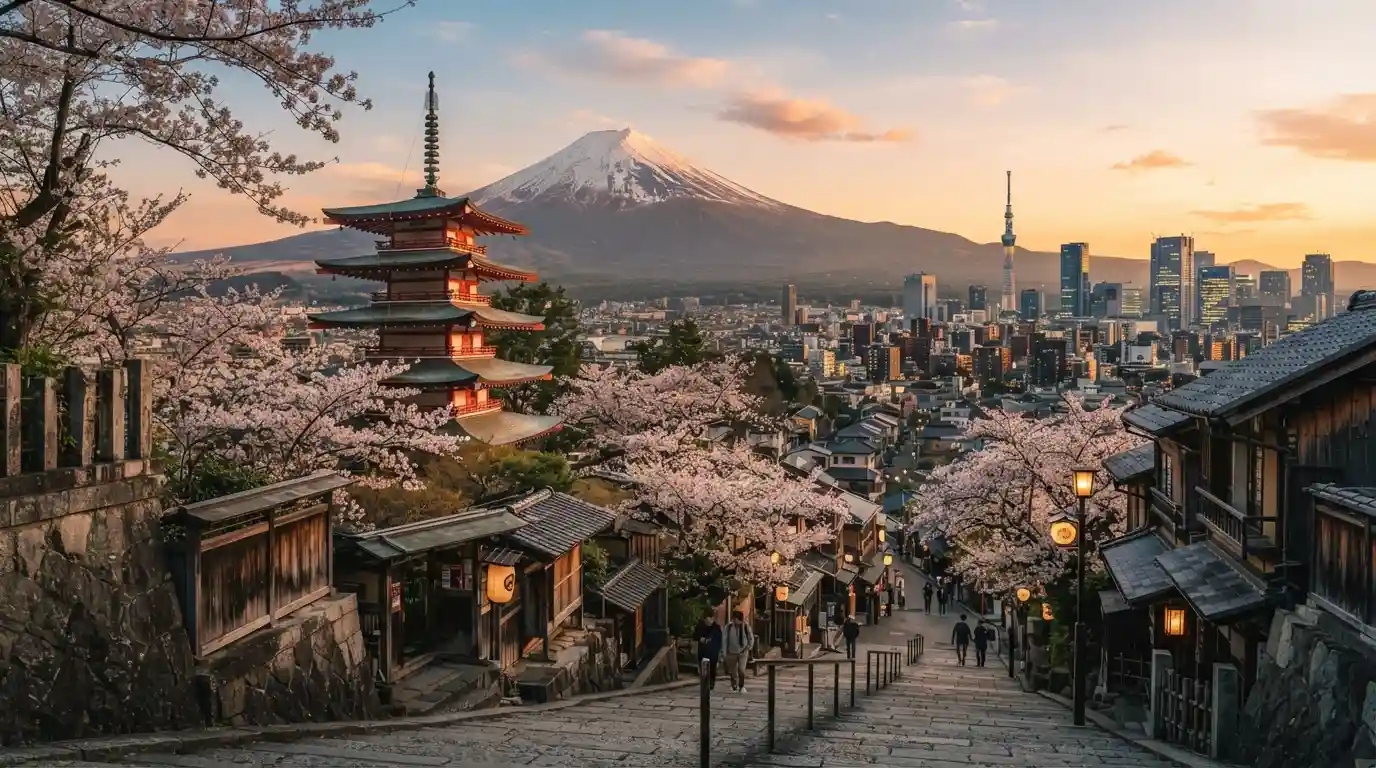
If you are planning your first trip or looking for new destinations beyond the usual highlights, this guide covers the top 25 places to visit in Japan. The list includes major cities, historic destinations, scenic regions, cultural attractions, and island escapes so you can build an itinerary around your interests.
Top 25 Places to Visit in Japan
- Tokyo
- Kyoto
- Osaka
- Mount Fuji
- Nara
- Hiroshima
- Hokkaido
- Okinawa
- Kamakura
- Nikko
- Hakone
- Kanazawa
- Takayama
- Shirakawa-go
- Fukuoka
- Nagasaki
- Sapporo
- Miyajima
- Yokohama
- Sendai
- Matsumoto
- Naoshima
- Kobe
- Wakayama
- Oita and Beppu
1. Tokyo
Tokyo is the natural starting point for many Japan itineraries and one of the best places to experience the country’s combination of tradition and modern life. The enormous metropolitan area offers historic shrines, contemporary architecture, shopping districts, museums, gardens, entertainment, and some of Japan’s most recognizable city views.
First-time visitors can explore Asakusa and Senso-ji, experience the energy of Shibuya, visit Meiji Shrine, browse Akihabara, and enjoy panoramic city views from one of Tokyo’s observation decks. Food lovers can also spend days exploring ramen shops, sushi restaurants, izakayas, markets, and neighborhood specialties.
For seasonal ideas, our guide to places to visit in Tokyo Japan during winter can help you plan a colder-season itinerary.
2. Kyoto
Kyoto is one of the best destinations in Japan for travelers interested in traditional culture and historic architecture. The former imperial capital is known for Buddhist temples, Shinto shrines, gardens, wooden machiya houses, tea culture, and historic districts.
Popular highlights include Fushimi Inari Taisha, Kinkaku-ji, Kiyomizu-dera, Arashiyama, and the historic streets around Gion. Kyoto is particularly rewarding when you slow down rather than trying to see everything in a single day.
Travelers interested in Japanese pop culture can also combine Kyoto with ideas from our guide to places to visit in Japan if you love anime.
3. Osaka
Osaka is a lively destination famous for food, nightlife, shopping, entertainment, and its relaxed atmosphere. It is an excellent choice for travelers who want a more energetic urban experience after exploring Kyoto’s historic neighborhoods.
Visit Dotonbori for its famous illuminated streets and food culture, explore Osaka Castle, shop around Shinsaibashi, and consider spending time in Umeda. Osaka also works well as a base for exploring nearby destinations in the Kansai region.
4. Mount Fuji
Mount Fuji is Japan’s most iconic mountain and one of the country’s most recognizable natural landmarks. Its symmetrical volcanic profile is especially impressive when viewed from nearby lakes, towns, and scenic observation areas.
Visitors do not necessarily need to climb the mountain to enjoy the area. The Fuji Five Lakes region offers opportunities for photography, sightseeing, cycling, walking, and relaxing while taking in views of Fuji.
Mount Fuji can also be combined with a Tokyo itinerary because several scenic destinations around the mountain are accessible from the capital.
5. Nara
Nara is an excellent destination for travelers who want historic temples, traditional Japanese culture, and peaceful green spaces. The city was one of Japan’s early permanent capitals and contains important cultural landmarks.
Nara Park is particularly famous for its free-roaming deer. Visitors can also explore Todai-ji, home to a monumental Buddha statue, as well as Kasuga Taisha and other historic sites.
Nara is easy to combine with Kyoto or Osaka, making it a convenient addition to a first-time Kansai itinerary.
6. Hiroshima
Hiroshima is a meaningful destination for travelers interested in history, peace, and modern Japan. The city is home to the Hiroshima Peace Memorial Park and the Peace Memorial Museum, which help visitors understand the impact of the atomic bombing and the city’s continuing message of peace.
Hiroshima also provides access to Miyajima, making it possible to combine historical sightseeing with one of Japan’s most scenic island destinations.
7. Hokkaido
Hokkaido offers a very different experience from the densely populated cities of central Japan. The northern island is known for mountains, national parks, open landscapes, skiing, hot springs, seafood, and seasonal scenery.
Winter attracts visitors looking for snow and winter sports, while summer brings comfortable weather, hiking opportunities, flower fields, and outdoor adventures. Travelers interested in seasonal travel can also explore our broader guide to the best places to visit in spring.
8. Okinawa
Okinawa is the place to consider when your ideal Japan vacation includes beaches, warm weather, clear water, and island culture. The Okinawa Islands offer a tropical side of Japan that feels very different from Tokyo, Kyoto, and the mountainous mainland.
Visitors can explore beaches, coral reefs, historic Ryukyu sites, local markets, and smaller islands. Okinawa works especially well for travelers who want to combine cultural exploration with a slower coastal getaway.
9. Kamakura
Kamakura is a historic coastal destination within easy reach of Tokyo. It is known for temples, shrines, traditional streets, and the famous Great Buddha.
The city is a strong choice for a day trip when you want to escape Tokyo’s busy urban environment without traveling too far. Its combination of cultural sites and seaside scenery makes it appealing to both first-time visitors and repeat travelers.
10. Nikko
Nikko is surrounded by mountains, forests, lakes, and waterfalls and is particularly well known for its ornate historic shrines and temples. Toshogu Shrine is the most famous cultural attraction in the area.
The destination is also a good choice for nature lovers. Travelers can combine cultural sightseeing with scenic drives, hiking, waterfalls, and views around Lake Chuzenji.
11. Hakone
Hakone is one of Japan’s best-known hot-spring destinations and a popular escape from Tokyo. It is especially appealing to travelers who want mountain scenery, traditional ryokan experiences, museums, and relaxing onsen.
On clear days, the area can also provide beautiful views of Mount Fuji. Hakone’s combination of nature, wellness, art, and traditional hospitality makes it suitable for couples, families, and solo travelers.
12. Kanazawa
Kanazawa is an excellent alternative for travelers who want historic Japan without limiting their itinerary to Kyoto. The city has preserved traditional neighborhoods, gardens, samurai heritage, crafts, and distinctive food culture.
Kenroku-en Garden, one of Japan’s celebrated landscape gardens, is a major highlight. Visitors can also explore the Higashi Chaya district and learn about traditional crafts that remain important to the region.
13. Takayama
Takayama is located in the Japanese Alps and is known for its beautifully preserved old town. Its traditional wooden buildings, morning markets, local food, and mountain setting make it a rewarding stop between major cities.
Takayama is particularly attractive to travelers who want to experience a slower pace and a more regional side of Japan.
14. Shirakawa-go
Shirakawa-go is famous for traditional gassho-zukuri farmhouses with steeply pitched roofs. The historic villages are surrounded by mountains and look especially striking in winter when snow covers the landscape.
The destination is ideal for photographers and travelers interested in traditional Japanese architecture. It can also be combined with Takayama and Kanazawa to create a scenic central Japan route.
15. Fukuoka
Fukuoka is one of the most appealing cities in southern Japan. It combines a modern urban environment with easy access to food, beaches, parks, temples, and nearby destinations in Kyushu.
The city is particularly famous for its food culture, including Hakata-style ramen. Evening food stalls, known as yatai, are another experience that gives Fukuoka a distinctive atmosphere.
16. Nagasaki
Nagasaki has a unique international history shaped by centuries of contact with foreign traders and communities. The city’s hills, harbor, historic architecture, and cultural landmarks give it a character unlike many other Japanese cities.
Nagasaki is also an important destination for learning about the history of the atomic bombing and the city’s subsequent commitment to peace. Travelers should allow enough time to explore both its historical and scenic sides.
17. Sapporo
Sapporo is the capital of Hokkaido and a major destination for winter travel. It is known for snow, winter events, food, beer culture, parks, and access to nearby ski areas.
The city is also worth visiting outside winter. Summer provides opportunities to explore Hokkaido’s landscapes and nearby destinations while enjoying generally comfortable conditions.
18. Miyajima
Miyajima, officially known as Itsukushima, is one of Japan’s most memorable island destinations. The island is famous for the large torii gate associated with Itsukushima Shrine and its scenic relationship with the surrounding water and mountains.
Beyond the famous shrine, visitors can explore walking trails, temples, viewpoints, traditional streets, and local food. Miyajima is particularly convenient as a side trip from Hiroshima.
19. Yokohama
Yokohama is a major port city located close to Tokyo and offers a different urban experience. The waterfront, historic port district, parks, shopping areas, and Chinatown make it an easy addition to a Tokyo-area itinerary.
Visitors can spend a full day exploring the harbor and surrounding neighborhoods before returning to Tokyo in the evening.
20. Sendai
Sendai is the largest city in the Tohoku region and provides access to both urban attractions and scenic areas. The city is associated with Date Masamune and offers museums, historic sites, parks, and local cuisine.
Sendai is also a useful base for exploring nearby coastal and mountainous destinations, making it worthwhile for travelers who want to move beyond Japan’s most heavily visited tourist routes.
21. Matsumoto
Matsumoto is best known for its striking historic castle, often called Matsumoto Castle. The city is surrounded by mountains and can serve as a gateway to the Japanese Alps.
Travelers can combine the castle with traditional streets, museums, local food, and excursions into nearby mountain areas.
22. Naoshima
Naoshima is a standout destination for contemporary art lovers. The small island in the Seto Inland Sea is known for museums, galleries, architecture, outdoor installations, and art-focused accommodations.
Its island setting makes the experience very different from sightseeing in Tokyo or Kyoto. Naoshima is especially appealing to travelers who enjoy combining art, architecture, and peaceful coastal landscapes.
23. Kobe
Kobe is a sophisticated port city known for its waterfront, international influences, mountain views, and famous local cuisine. The city sits between the Rokko mountain range and Osaka Bay.
Visitors can explore the harbor, Chinatown, historic districts, and mountain viewpoints. Kobe is also close enough to Osaka and Kyoto to work well within a wider Kansai itinerary.
24. Wakayama
Wakayama is an excellent choice for travelers seeking coastal scenery, castles, temples, and access to the Kii Peninsula. It is less commonly included in first-time Japan itineraries, which makes it attractive for visitors looking for a quieter experience.
The wider region also provides access to the Kumano area, where historic pilgrimage routes and forested mountain landscapes create opportunities for walking and cultural exploration.
25. Oita and Beppu
Beppu, in Oita Prefecture on Kyushu, is one of Japan’s best-known hot-spring destinations. The area is famous for its extensive geothermal activity, bathing culture, and distinctive Beppu Hells, a collection of striking hot-spring sites designed primarily for viewing rather than bathing.
For travelers interested in relaxation and traditional Japanese onsen culture, Beppu offers an experience that is difficult to replicate in Japan’s major metropolitan areas.
How to Choose the Best Places to Visit in Japan
The best destinations depend on what you want from your trip. First-time visitors often prioritize Tokyo, Kyoto, Osaka, Mount Fuji, and Nara because these destinations provide a strong introduction to Japanese culture, food, history, and modern life.
If you prefer nature, consider Hokkaido, Hakone, Nikko, Mount Fuji, Takayama, or Shirakawa-go. Beach lovers may prefer Okinawa, while history-focused travelers can spend more time in Kyoto, Nara, Hiroshima, Kanazawa, and Nagasaki.
Anime and manga fans can build a different itinerary around Tokyo, Osaka, and Kyoto using our guide to Japan destinations for anime lovers.
Best Time to Visit Japan
Japan can be visited throughout the year, but the best season depends on your itinerary.
- Spring: Popular for cherry blossoms, comfortable temperatures, and gardens in bloom.
- Summer: Good for northern Japan, mountain areas, festivals, and coastal destinations, although many cities can be hot and humid.
- Autumn: Excellent for colorful foliage, comfortable sightseeing conditions, and scenic mountain destinations.
- Winter: Ideal for skiing, snow scenery, hot springs, and winter experiences in Hokkaido and mountain regions.
If you are comparing seasonal travel ideas, our guide to the best places to visit in spring offers additional inspiration.
How Many Days Do You Need in Japan?
A one-week trip can provide a useful introduction to Japan, especially if you focus on Tokyo, Kyoto, Osaka, and one nearby destination. With 10 to 14 days, travelers can create a more balanced itinerary and add destinations such as Nara, Hakone, Hiroshima, Mount Fuji, or Kanazawa.
Two to three weeks allows more time to explore regional Japan, including Hokkaido, Kyushu, the Japanese Alps, Tohoku, or Okinawa. Rather than trying to visit all 25 places, choose destinations that fit your interests and group nearby locations into logical travel routes.
Tips for Planning a Japan Trip
Japan’s extensive rail and public transportation network makes multi-city travel practical, but good planning can save time. Avoid changing hotels every night when possible, and group destinations by region.
- Build your first itinerary around a few major regions rather than the entire country.
- Reserve popular accommodations and activities early during busy travel periods.
- Allow extra time for major cities because attractions can be spread across large areas.
- Check seasonal weather before choosing mountain, beach, or outdoor destinations.
- Respect local customs, especially at temples, shrines, traditional neighborhoods, and public baths.
- Use luggage-forwarding services or lighter luggage when moving frequently between cities.
- Keep some flexibility for weather-related changes, especially in mountain and island destinations.
Japan Beyond the Main Tourist Route
One of the best ways to make a Japan trip memorable is to combine famous destinations with at least one less-visited region. Tokyo and Kyoto provide iconic experiences, but places such as Wakayama, Sendai, Matsumoto, Naoshima, and regional Kyushu can reveal another side of the country.
Travelers planning wider international trips can also browse WayfareHub’s 52 Places to Visit guide for broader destination inspiration, or compare other international city guides such as Madrid and Barcelona.
Frequently Asked Questions
What are the top 5 places to visit in Japan?
Tokyo, Kyoto, Osaka, Mount Fuji, and Nara are among the strongest choices for a first Japan trip because they combine major attractions, cultural experiences, food, history, and convenient transportation.
What is the most beautiful place in Japan?
There is no single answer because beauty depends on the type of scenery you prefer. Mount Fuji, Kyoto, Hokkaido, Shirakawa-go, Miyajima, and Okinawa are all strong choices for different reasons.
Is Japan good for first-time travelers?
Yes. Japan offers extensive public transportation, a wide variety of attractions, excellent food, and destinations suitable for different travel styles. First-time visitors can simplify the experience by focusing on a few connected destinations.
Is Tokyo or Kyoto better for a first visit?
They offer very different experiences. Tokyo is better for modern city life, shopping, entertainment, technology, and contemporary culture, while Kyoto is better for temples, gardens, traditional neighborhoods, and historic experiences. Many first-time travelers visit both.
How long should I stay in Japan?
Seven days can work for a focused itinerary, while 10 to 14 days provides more flexibility. Travelers with two or three weeks can explore additional regions beyond the standard Tokyo-Kyoto-Osaka route.
Final Thoughts
The top 25 places to visit in Japan are not limited to Tokyo and Kyoto. Japan offers an extraordinary range of experiences, from historic temples and traditional villages to modern cities, mountain landscapes, tropical islands, art destinations, and relaxing hot springs.
For a first trip, Tokyo, Kyoto, Osaka, Mount Fuji, and Nara make an excellent foundation. After that, choose destinations based on your interests. Add Hokkaido or Hakone for nature and hot springs, Okinawa for beaches, Hiroshima and Nagasaki for history, or Kanazawa, Takayama, and Shirakawa-go for traditional culture.
The most rewarding Japan itinerary is not necessarily the one that checks off the most destinations. Give yourself enough time to explore neighborhoods, try regional food, experience local traditions, and enjoy the journey between major stops. With thoughtful planning, Japan can offer a memorable travel experience in almost any season.
Related Travel Guides
- What Are the Places to Visit in Japan
- Places to Visit in Japan If You Love Anime
- Places to Visit in Tokyo Japan During Winter
- Best Places to Visit in Spring
- 52 Places to Visit
- Best Places to Visit in Saudi Arabia
- Places to Visit in Madrid and Barcelona
- Places to Visit in Ladakh and Leh
- Places to Visit in Mumbai With Friends
- Places to Visit Near Jim Corbett Park
- Places to Visit Near Fort Lauderdale Airport
- Places to Visit Near Tri Cities WA
- COVID-19 and Travel Updates
- Top 25 Places to Visit in Japan
- WayfareHub Travel Guides
As you embark on your journey through Japan’s diverse landscapes and rich cultural tapestry, meticulous planning becomes essential to ensure a smooth and enjoyable experience. Whether you’re navigating the bustling streets of Tokyo or exploring the serene temples of Kyoto, having the right essentials at your fingertips can make all the difference. Consider incorporating effective strategies to maximize your luggage space and streamline your travel preparations. For invaluable guidance, refer to these comprehensive packing tips that will not only help you pack efficiently but also allow you to focus more on the wonders that await you in each unique destination across Japan.
As travelers embark on their Japanese adventure, it is essential to consider not only the breathtaking sights and rich cultural experiences but also the logistics of travel, including accommodation. While Japan boasts a wide range of lodging options, from luxurious ryokans to budget-friendly hostels, savvy travelers should also be aware of strategies to manage their travel expenses effectively. For those planning subsequent journeys, particularly in the USA, understanding how to secure cheap hotels in USA can enhance their overall travel experience. By leveraging proven booking techniques and remaining vigilant about hidden fees, travelers can ensure that their budget allows for more immersive experiences, whether savoring the delicacies of Osaka or exploring the serene temples of Kyoto.