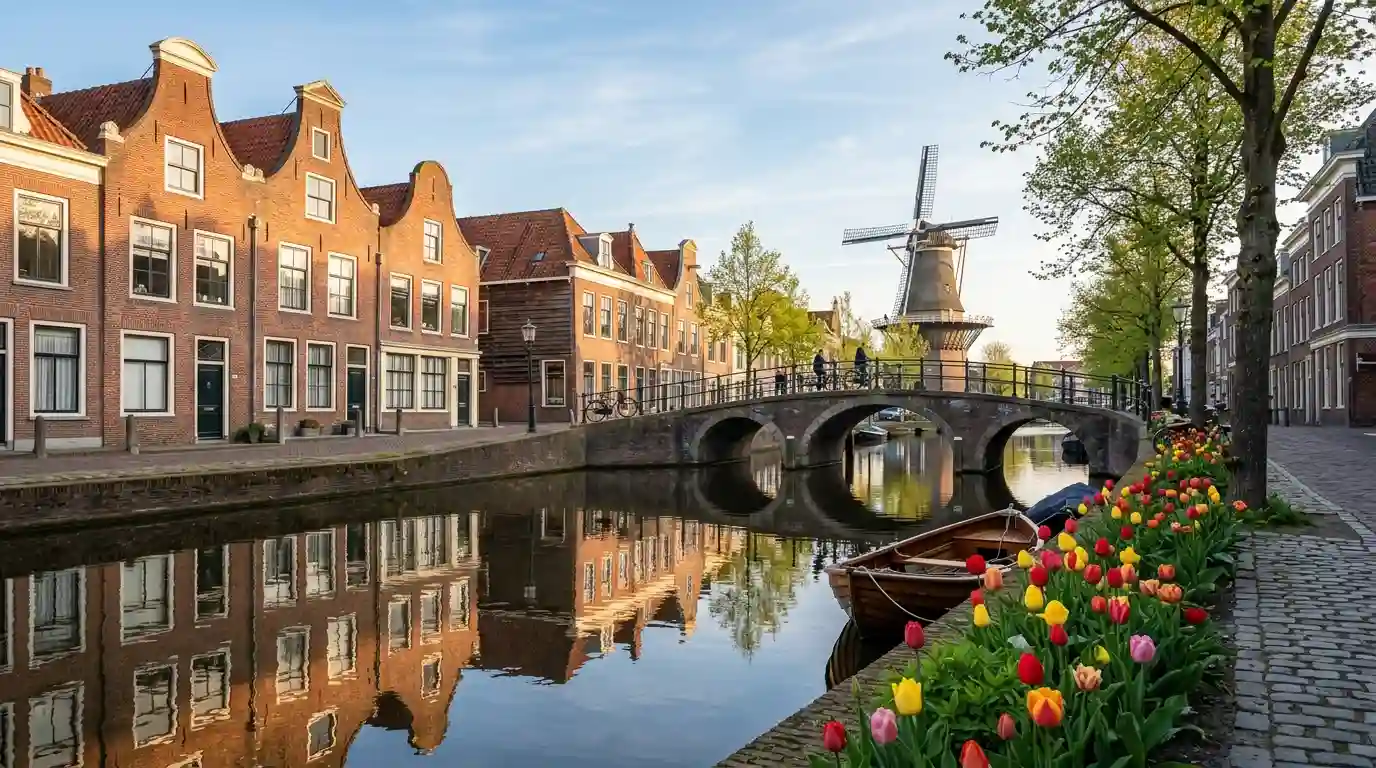
The Netherlands is a wonderful destination for travelers who love historic cities, scenic canals, colorful tulip fields, traditional windmills, charming villages, and world-class museums. Although the country is relatively small, it offers an impressive variety of experiences, from the lively streets of Amsterdam to the peaceful countryside of Friesland and the sandy beaches along the North Sea.
1. Amsterdam: The Netherlands’ Iconic Capital
Amsterdam is an excellent starting point for exploring the Netherlands. Its picturesque canals, narrow historic houses, independent shops, museums, and lively neighborhoods create an atmosphere that is both historic and modern.
Take a canal cruise to see the city from the water, explore the Rijksmuseum for Dutch art and history, or visit the Van Gogh Museum to learn about the artist’s life and work. The Anne Frank House offers a deeply moving historical experience, although tickets should be arranged in advance when possible.
For a more relaxed experience, wander through the Jordaan neighborhood, browse local markets, or enjoy a coffee beside a canal. Amsterdam also works well as a base for day trips to nearby towns and countryside attractions.
2. Keukenhof and the Dutch Flower Fields
For travelers visiting in spring, Keukenhof is one of the country’s most memorable attractions. Located near Lisse, this celebrated garden displays millions of flowering bulbs, including tulips, daffodils, and hyacinths, in carefully designed landscapes.
The surrounding bulb-growing region is equally attractive, with colorful fields stretching across the countryside during the flowering season. Peak bloom varies with weather and growing conditions, so check the garden’s seasonal opening dates before planning your visit.
Keukenhof is particularly appealing to photographers, couples, and families. Visit early in the day when possible, and remember that the flower fields are working agricultural land. Enjoy their beauty from designated paths and public viewing areas rather than walking into private fields.
3. Rotterdam: Modern Architecture and Waterfront Culture
Rotterdam offers a striking contrast to the traditional streets of Amsterdam. Much of the city center was rebuilt after World War II, creating a modern skyline filled with innovative buildings, contemporary design, and creative public spaces.
Explore the unusual Cube Houses, visit the Markthal for food stalls and restaurants, and admire the Erasmus Bridge across the Nieuwe Maas River. The city’s maritime heritage is also worth discovering through its waterfront and harbor attractions.
Rotterdam is a good choice for visitors interested in architecture, urban photography, international cuisine, and a more contemporary side of Dutch life. Its major attractions and transport connections also make it easy to combine with other destinations in the western Netherlands.
4. Utrecht: Canals, Cafés, and Historic Streets
Utrecht combines the charm of a historic Dutch city with a lively student atmosphere. Its central canals are distinctive because many have lower-level wharves that now accommodate cafés, restaurants, and waterside terraces.
Climb or admire the Dom Tower, explore the old town, and take a leisurely walk along the Oudegracht canal. Small boutiques, bookshops, and cozy cafés make the city especially enjoyable for travelers who prefer exploring on foot.
Utrecht is also a convenient alternative to Amsterdam for visitors who want historic architecture and canal scenery without spending their entire trip in the capital. Allow enough time to explore the smaller streets beyond the busiest central areas.
5. The Hague: Royal Heritage and Seaside Attractions
The Hague is known for its government institutions, royal connections, international organizations, museums, and elegant neighborhoods. It offers a different atmosphere from Amsterdam, with broad avenues, historic buildings, and easy access to the coast.
Visit the Mauritshuis to see celebrated Dutch paintings, including Vermeer’s Girl with a Pearl Earring, and explore the Binnenhof area from publicly accessible viewpoints while checking for any construction-related restrictions.
For a seaside break, head to Scheveningen, where a long beach, promenade, restaurants, and seasonal activities create a lively coastal setting. The Hague is a strong choice for travelers who want to combine culture with time by the sea.
6. Delft: Traditional Dutch Charm
Delft is famous for its blue-and-white pottery, historic squares, canals, and connections to the painter Johannes Vermeer. Its compact center makes it easy to explore at a relaxed pace.
Start at the Markt square, where historic buildings and outdoor cafés create a welcoming setting. Visit the Nieuwe Kerk and Oude Kerk to discover the city’s religious and historical heritage, and look for Delft Blue ceramics in local shops and workshops.
Delft is especially appealing to travelers who enjoy architecture, craftsmanship, and quieter city breaks. It can also be combined with Rotterdam or The Hague in a wider itinerary through the western Netherlands.
7. Giethoorn: A Peaceful Village of Canals
Giethoorn is one of the Netherlands’ most distinctive countryside destinations. Located in Overijssel, the village is known for its waterways, small bridges, thatched-roof houses, and green surroundings.
Visitors can explore by small boat, join a guided canal tour, or follow walking and cycling routes through the area. The experience is very different from a busy city visit, offering a slower way to appreciate Dutch landscapes and village life.
Giethoorn can become crowded during peak travel periods, particularly around the main waterways. Consider visiting on a weekday or arriving earlier in the day. Respect residential areas and keep noise low while exploring the village.
8. Zaanse Schans: Windmills and Traditional Crafts
Zaanse Schans provides an accessible introduction to traditional Dutch architecture and industrial heritage. Its historic windmills, wooden houses, workshops, and riverside setting create the classic landscape many visitors associate with the Netherlands.
Depending on seasonal schedules, you may be able to see working windmills, learn about traditional cheese-making, or watch demonstrations of wooden-clog production. The area also offers attractive viewpoints for photography.
Because Zaanse Schans is popular with day-trippers, an early visit can provide a calmer experience. It is easy to include in a trip based in Amsterdam, making it a practical choice for travelers with limited time.
9. Maastricht: Historic Streets and Southern Dutch Culture
Located in the southern province of Limburg, Maastricht feels distinct from many other Dutch cities. Its historic squares, old churches, stone streets, and lively restaurant scene reflect a blend of regional influences.
Explore Vrijthof square, walk along the River Maas, and discover the old town’s cafés and independent shops. The city’s cultural calendar and food scene make it appealing for a weekend getaway, while nearby countryside offers opportunities for cycling and scenic walks.
Maastricht is a particularly good destination for travelers who want to explore beyond the country’s best-known western cities. It also provides a useful base for discovering the rolling landscapes of southern Limburg.
10. Leiden: Museums and Historic Canals
Leiden is a historic university city with canals, courtyards, museums, and an attractive old center. Its scholarly atmosphere and compact streets make it a rewarding stop for travelers interested in Dutch history and culture.
Walk through the historic center, discover the city’s old university buildings, and visit museums that explore subjects ranging from archaeology to natural history. Leiden’s botanical garden is another appealing stop for visitors who enjoy peaceful green spaces.
The city is also well placed for exploring the western Netherlands. During spring, it can be included in a wider trip through the nearby flower-growing region, depending on transport connections and seasonal conditions.
11. Haarlem: Art, Markets, and Small-City Atmosphere
Haarlem offers historic architecture and a relaxed atmosphere within easy reach of Amsterdam. Its central square, Grote Markt, is surrounded by notable buildings, cafés, and shops that make it a natural starting point for a walking tour.
Visit the impressive St. Bavo Church, browse independent stores, or explore local museums and art collections. On market days, the central streets become particularly lively, providing a glimpse of everyday life in the city.
Haarlem is ideal for travelers who want a cultural excursion without the intensity of a large tourist center. Its location also makes it a useful addition to an itinerary that includes the Dutch coast or spring flower attractions.
12. The Wadden Islands: Beaches and Open Landscapes
The Dutch Wadden Islands offer wide beaches, dunes, cycling routes, wildlife, and open coastal scenery. Texel is one of the best-known islands and is popular with travelers looking for outdoor activities and a slower pace.
Depending on the island, visitors can enjoy birdwatching, beach walks, cycling, nature reserves, and small villages. The landscape changes with the tides, weather, and season, giving the region a distinctive character.
Ferry schedules and transport arrangements vary by island, so plan connections before traveling. If your ideal Netherlands trip includes nature rather than museums and city streets, the Wadden Islands deserve serious consideration.
13. Kinderdijk: UNESCO-Recognized Windmill Landscapes
Kinderdijk is one of the most recognizable places to experience the Netherlands’ historic relationship with water management. Its group of traditional windmills stands beside waterways and low-lying land, illustrating how communities worked to manage water over centuries.
Walking and cycling routes provide excellent views of the landscape, while visitor facilities explain the role of windmills and pumping systems. The area is particularly photogenic in soft morning or late-afternoon light.
Kinderdijk is a rewarding destination for travelers interested in engineering, heritage, photography, and rural scenery. Check access arrangements and seasonal opening details before visiting individual windmills or indoor exhibits.
14. Eindhoven: Design, Technology, and Creative Energy
Eindhoven is known for design, technology, innovation, and contemporary culture. Its modern identity makes it an interesting contrast to the country’s historic canal cities and traditional villages.
Explore creative districts, discover design exhibitions when available, and look for cultural events and contemporary architecture. The city’s industrial history has also influenced its urban character, with former industrial spaces repurposed for creative and community activities.
Eindhoven suits travelers who enjoy modern culture, design, and a less traditional city experience. Before visiting, check event schedules to see whether exhibitions, festivals, or design-related activities align with your travel dates.
15. Hoge Veluwe National Park: Forests, Heathland, and Wildlife
For a change from canals and historic streets, visit Hoge Veluwe National Park in the eastern Netherlands. The landscape includes forests, open heathland, sand drifts, and habitats that support a range of wildlife.
Cycling is one of the best ways to explore the park, with routes passing through different natural environments. The park also contains the Kröller-Müller Museum, known for its art collection and sculpture garden, making it attractive to visitors interested in both nature and culture.
Conditions vary through the year: heathland colors change by season, and wildlife sightings are never guaranteed. Check park access, bicycle availability, and museum opening arrangements before setting out.
Best Time to Visit the Netherlands
The best time to visit depends on the experiences you want. Spring is especially popular for tulips and flowering gardens, while summer brings longer days, outdoor dining, cycling, and beach activities. Autumn offers colorful parks and a quieter atmosphere in many destinations, while winter is suited to museums, cozy cafés, seasonal markets, and atmospheric city walks.
- Spring: Choose this season for flower gardens, bulb fields, and mild-weather sightseeing. Flowering dates depend on the weather.
- Summer: Ideal for canal cruises, cycling, coastal trips, and outdoor events, although popular places can be busy.
- Autumn: Enjoy changing foliage, cultural attractions, and potentially fewer crowds outside major holiday periods.
- Winter: Focus on museums, historic centers, cafés, and seasonal events while preparing for colder, wetter weather.
How to Plan a Netherlands Trip
For a first visit of three to five days, consider using Amsterdam as a base and adding nearby destinations such as Haarlem, Utrecht, Delft, or Zaanse Schans. With a week or longer, you can travel farther to Maastricht, the Wadden Islands, or Hoge Veluwe National Park.
Trains connect many major Dutch cities, while local buses, trams, bicycles, and ferries help travelers reach specific attractions. Check current timetables and local transport options before departure, especially when visiting islands or rural destinations.
Accommodation in popular areas can book up quickly during major holidays, summer, and the spring flower season. Reserve early when your dates are fixed, and group nearby attractions together to avoid unnecessary travel time.
For more destination inspiration, explore our guides to the best places to visit in Amsterdam, the best places to visit in Europe, and places to visit in Greece in fall. Travelers planning a wider European journey can also discover Madrid and Barcelona, Amsterdam attractions, and destinations in Eastern Europe.
More Travel Inspiration
If you are building a longer itinerary, these destination guides can help you compare landscapes, seasons, and travel styles across Europe and beyond:
- Places to visit in the Alicante region
- Places to visit on the south coast of France
- Amsterdam travel inspiration
- Places to visit in Ireland with a map
- Nature destinations in Norway
- European destinations for New Year’s
- Places to visit in Brazil
- Greece in autumn
- Things to see in Vienna in one day
- Places to visit in Japan
- Top places to visit in Japan
- Places to visit in the Philippines
Final Thoughts
The Netherlands offers far more than its famous capital. Amsterdam’s canals, Keukenhof’s spring flowers, Rotterdam’s bold architecture, Giethoorn’s waterways, Kinderdijk’s windmills, and the Wadden Islands’ coastal landscapes all reveal different sides of the country.
Choose destinations that match your interests, allow enough time to explore at a comfortable pace, and consider traveling beyond the busiest tourist areas. With a thoughtful itinerary, you can experience the Netherlands’ history, culture, nature, and everyday charm in one memorable trip.