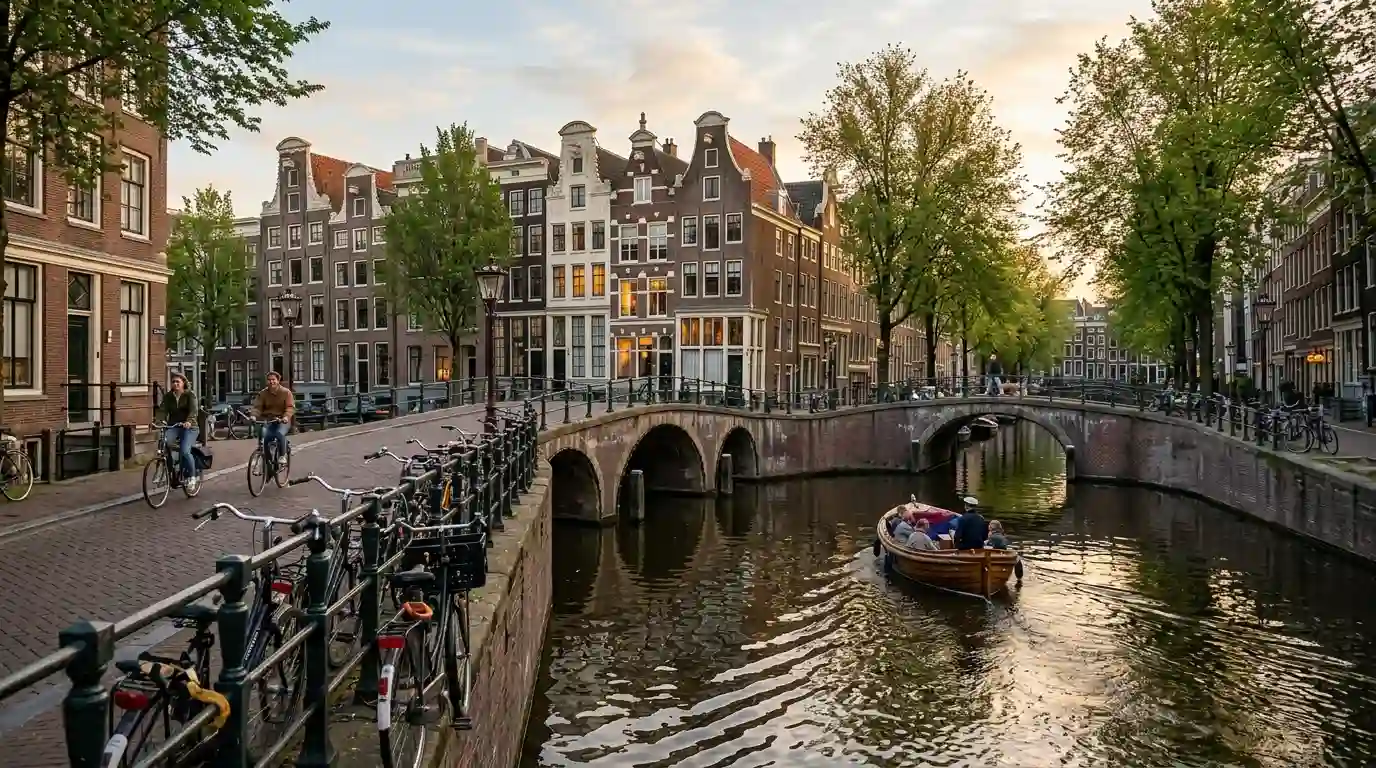
The best places to visit in Amsterdam include the Rijksmuseum, Van Gogh Museum, Anne Frank House, historic Canal Ring, Jordaan, Vondelpark, and lively De Pijp neighborhood. Beyond the famous landmarks, visitors can discover peaceful courtyards, independent shops, local markets, and waterfront areas that reveal a different side of the city.
This guide covers Amsterdam’s essential attractions, what makes each place special, practical planning tips, and ways to organize your time so you can experience more without rushing.
1. Amsterdam Canal Ring
The historic Canal Ring is one of Amsterdam’s defining attractions. Its waterways, arched bridges, elegant townhouses, and narrow streets create the postcard views that make the city instantly recognizable. The canal district reflects Amsterdam’s development during the Dutch Golden Age and is a wonderful place to explore on foot.
Take a leisurely walk along Herengracht, Keizersgracht, and Prinsengracht to admire the architecture and watch boats pass beneath the bridges. A guided canal cruise offers another perspective, especially when the water reflects the surrounding buildings in the late afternoon or after sunset.
Best for: First-time visitors, photographers, couples, and architecture enthusiasts.
Travel tip: Explore on foot before or after a boat trip. Walking allows you to stop at small bridges, independent cafés, and quiet streets that a cruise may pass too quickly.
2. Rijksmuseum
The Rijksmuseum is one of the Netherlands’ most important cultural attractions. Its collections cover Dutch art and history, with celebrated works by Rembrandt, Johannes Vermeer, Frans Hals, and other artists. The museum is particularly well known for Rembrandt’s The Night Watch.
Even visitors who do not usually spend much time in museums can appreciate the impressive building, grand galleries, decorative details, and carefully presented collections. Allow enough time to explore a selection of highlights rather than attempting to see everything in one visit.
The museum is located on Museumplein, making it convenient to combine with other major cultural attractions in the surrounding district.
Best for: Art lovers, history enthusiasts, families with older children, and cultural travelers.
Travel tip: Check current admission arrangements and reserve a timed entry if required. Choose a few priority galleries in advance to make your visit more manageable.
3. Van Gogh Museum
The Van Gogh Museum offers an opportunity to explore the life and work of Vincent van Gogh through paintings, drawings, letters, and related collections. Its exhibitions help visitors understand the artist’s changing techniques, artistic influences, and personal experiences.
Rather than focusing only on famous paintings, take time to notice the use of color, expressive brushwork, and changes in style across different periods of Van Gogh’s career. The museum provides a rewarding experience for both dedicated art enthusiasts and casual visitors.
Because the museum is near the Rijksmuseum and Stedelijk Museum, art lovers can plan a dedicated Museum Quarter itinerary without spending much of the day traveling across the city.
Best for: Art enthusiasts, couples, solo travelers, and visitors interested in European art.
Travel tip: Check the official visitor information before your trip and book ahead when advance reservations are required.
4. Anne Frank House
The Anne Frank House is one of Amsterdam’s most significant historical sites. The museum preserves the hiding place where Anne Frank and her family lived during the Nazi occupation of the Netherlands. Through the preserved rooms, historical documents, photographs, and personal context, visitors learn about persecution during World War II and the enduring importance of remembrance.
This is a reflective experience rather than a conventional sightseeing stop. Visitors should allow time to read the exhibits and approach the subject with sensitivity. The museum is particularly meaningful for those interested in European history, human rights, and the story behind Anne Frank’s diary.
Best for: History enthusiasts, educational visits, and travelers interested in World War II history.
Travel tip: Tickets are subject to specific booking arrangements, so check availability well before your visit. Do not assume that walk-in admission will be possible.
5. Jordaan Neighborhood
Jordaan is one of Amsterdam’s most appealing neighborhoods for travelers who enjoy exploring at a slower pace. Its narrow streets, small canals, independent galleries, specialty shops, courtyard gardens, and cozy cafés create an atmosphere that feels different from the busier tourist areas.
Spend an afternoon wandering without following a rigid itinerary. Browse local boutiques, stop for coffee, and look for the distinctive architecture and hidden courtyards tucked between traditional canal houses. The area is also a convenient place to enjoy lunch or an early evening meal.
Jordaan’s location makes it easy to combine neighborhood exploration with a visit to the Anne Frank House and nearby canal streets.
Best for: Couples, photographers, independent travelers, and visitors who enjoy local character.
Travel tip: Visit earlier in the day for a quieter walk, or come in the late afternoon to enjoy the cafés and neighborhood atmosphere.
6. Dam Square and the Royal Palace
Dam Square is a central meeting point surrounded by prominent buildings, shops, restaurants, and historic landmarks. The Royal Palace Amsterdam stands beside the square and provides a striking example of the city’s architectural heritage.
The square is a useful starting point for exploring the historic center. From here, visitors can walk toward the canal district, browse nearby shopping streets, or continue toward other central attractions. The area can be busy, but its location makes it easy to include in almost any Amsterdam itinerary.
Best for: First-time visitors, architecture enthusiasts, shoppers, and travelers exploring the city center.
Travel tip: Check whether the Royal Palace is open to visitors on your chosen date, as public access may vary according to official events and its operating schedule.
7. Vondelpark
Vondelpark is one of Amsterdam’s best-known green spaces and a welcome break from busy streets and museum galleries. Its paths, lawns, ponds, bridges, and shaded areas invite visitors to walk, cycle, relax, or enjoy a picnic when the weather is pleasant.
The park is especially appealing in spring and summer, when the greenery and outdoor atmosphere make it a popular place for residents and visitors. You can stop for a drink, watch local cyclists pass, or simply enjoy a slower part of your sightseeing day.
Vondelpark also works well as a break between visits to the Museum Quarter and nearby neighborhoods.
Best for: Families, couples, cyclists, outdoor enthusiasts, and budget-conscious travelers.
Travel tip: Bring comfortable walking shoes and allow extra time if you want to explore the park rather than cross it quickly.
8. De Pijp and Albert Cuyp Market
De Pijp is a lively neighborhood known for its international food scene, cafés, bars, and everyday city life. One of its main attractions is Albert Cuyp Market, a popular street market where visitors can browse food stalls, fresh produce, clothing, accessories, and other goods.
The neighborhood is a good place to discover Dutch snacks alongside cuisines from different parts of the world. Try a freshly prepared stroopwafel, sample local cheese, or stop at a café to watch the neighborhood go about its day.
Market stalls and opening days can vary, so check local information before planning your visit around a specific vendor or product.
Best for: Food lovers, shoppers, young travelers, and visitors seeking a lively local atmosphere.
Travel tip: Visit earlier in the day for a more relaxed browsing experience, and bring a reusable bag if you plan to shop.
9. Begijnhof
Begijnhof is a peaceful historic courtyard hidden behind an entrance in the busy central area. Its enclosed garden, traditional houses, and quiet pathways offer a striking contrast to the surrounding shopping streets.
The courtyard is associated with the Beguines, a community of religious women who lived in a semi-monastic setting. Visitors can appreciate the historic architecture and tranquil atmosphere while respecting the fact that this is a sensitive heritage site and a residential environment.
Best for: History lovers, architecture enthusiasts, and travelers looking for quieter places in central Amsterdam.
Travel tip: Keep your voice low, follow posted visitor rules, and avoid disturbing residents while taking photographs.
10. Stedelijk Museum
The Stedelijk Museum focuses on modern and contemporary art and design. Its collections and exhibitions provide a contrast to the historical works at the Rijksmuseum and the artist-centered experience at the Van Gogh Museum.
Visitors interested in contemporary painting, sculpture, design, and changing artistic movements will find plenty to explore. Temporary exhibitions can also make repeat visits worthwhile, depending on the program.
The museum’s location in the Museum Quarter makes it a practical addition to a day dedicated to art and culture.
Best for: Contemporary art fans, design enthusiasts, students, and curious cultural travelers.
Travel tip: Review current exhibitions before visiting so you can decide how much time to set aside.
11. NEMO Science Museum
NEMO Science Museum is a hands-on attraction where visitors can explore scientific ideas through interactive exhibits, experiments, and demonstrations. Its distinctive building near the waterfront is easy to recognize, and the museum offers a different kind of experience from Amsterdam’s traditional art and history institutions.
Children can enjoy learning through play, while adults can take part in activities that demonstrate concepts related to science, technology, and everyday life. Families should check the age suitability and program details before arriving.
Best for: Families, children, school-age visitors, and anyone interested in interactive learning.
Travel tip: Allow several hours if you are visiting with children, and check ticket availability and opening times in advance.
12. ARTIS Amsterdam Royal Zoo
ARTIS combines animal exhibits, landscaped grounds, and educational experiences in a historic urban setting. It is a useful option for families and travelers who want to balance museums and city walks with an outdoor attraction.
Depending on the areas open during your visit, you may be able to explore animal habitats, gardens, and educational displays. Plan around the interests and pace of your group, especially if visiting with younger children.
Best for: Families, animal lovers, and visitors looking for a full or half-day activity.
Travel tip: Review current opening hours, admission options, and visitor guidelines before setting out.
13. Amsterdam Noord and the NDSM Wharf
Amsterdam Noord offers a different perspective on the city, with modern architecture, creative spaces, waterfront views, and former industrial areas that have been adapted for cultural use. The NDSM Wharf is particularly interesting for travelers who enjoy street art, design, events, and alternative urban environments.
Getting there can be part of the experience: public ferries connect the area with locations near Amsterdam Centraal. Once across the water, you can explore the waterfront and discover cafés, creative venues, and changing public art displays.
Best for: Art lovers, photographers, repeat visitors, and travelers interested in contemporary urban culture.
Travel tip: Check ferry routes and any event schedules before visiting, as individual venues and markets operate on different timetables.
14. Hortus Botanicus Amsterdam
Hortus Botanicus Amsterdam is a historic botanical garden where visitors can explore a diverse collection of plants in outdoor gardens and greenhouse environments. It offers a calmer alternative to the city’s busy commercial streets and provides an opportunity to learn about plant diversity and botanical history.
The greenhouse collections can be particularly appealing when the weather is cool or rainy. If you enjoy photography, take time to notice the differences in leaf shapes, plant structures, and the atmosphere created by the glasshouse setting.
Best for: Nature lovers, plant enthusiasts, photographers, and visitors seeking a quiet break.
Travel tip: Check the garden’s current schedule and any seasonal restrictions before planning your visit.
15. Amsterdamse Bos
Amsterdamse Bos is a large recreational woodland on the outskirts of the city. It provides a refreshing change from historic streets and offers space for walking, cycling, picnicking, and enjoying nature. Its scale makes it especially appealing to travelers who want to spend time outdoors beyond the compact city center.
Depending on the season, visitors can enjoy leafy paths, open spaces, water features, and family-friendly activities. The area is worth considering if you have several days in Amsterdam or want a more relaxed outdoor day.
Best for: Families, cyclists, nature lovers, and travelers seeking a break from city sightseeing.
Travel tip: Check transport options and the distances between activities before arriving, as the woodland covers a broad area.
16. A’DAM Lookout
A’DAM Lookout is an observation attraction across the water from Amsterdam’s central station area. It provides elevated views over the city, waterways, rooftops, and surrounding landscape. On a clear day, the panorama can help visitors understand how Amsterdam’s historic center connects with newer districts.
The attraction may also offer additional experiences, depending on current operations. Travelers who prefer a quiet visit can simply focus on the views and photography opportunities.
Best for: Photographers, couples, skyline enthusiasts, and visitors seeking a different city perspective.
Travel tip: Check visibility and weather conditions before booking a visit focused on panoramic views.
17. Oude Kerk
Oude Kerk, or the Old Church, is one of Amsterdam’s most historically significant buildings. Located in the old city center, it offers a glimpse into the city’s religious, architectural, and social history.
The surrounding streets are among Amsterdam’s oldest, making this a useful stop for visitors interested in how the city developed over time. The building and its current exhibitions may also appeal to travelers interested in the relationship between historic spaces and contemporary art.
Best for: History enthusiasts, architecture lovers, and visitors exploring the old city center.
Travel tip: Check current access arrangements and exhibition information before visiting, as the site may host special programs.
18. Bloemenmarkt
Amsterdam’s Bloemenmarkt is a well-known flower market along the Singel canal. It offers a colorful place to browse flower-related goods, bulbs, souvenirs, and gardening products. Its central location makes it easy to include during a walking route through the shopping streets and canal district.
The market can be especially interesting to visitors who associate the Netherlands with tulips and horticulture. However, flower displays and products vary with the season, and not every item is suitable for international transport.
Best for: Garden enthusiasts, souvenir shoppers, and visitors exploring central Amsterdam.
Travel tip: If you plan to take bulbs or plants home, check the import rules that apply to your destination before purchasing them.
19. Heineken Experience
The Heineken Experience is a branded visitor attraction in a former brewery building. It explores the company’s brewing history and presents an interactive experience for visitors interested in beer production, industrial heritage, and the history of a globally recognized Dutch brand.
It is different from a traditional museum, with an experience designed around the brand and its production story. Visitors should check the admission conditions and age requirements before booking.
Best for: Adult travelers interested in brewing history and interactive attractions.
Travel tip: Book ahead when needed and confirm the experience details, available languages, and visitor restrictions.
20. Museumplein
Museumplein is a broad public square surrounded by some of Amsterdam’s best-known cultural institutions. It is a natural meeting point for visitors planning to see the Rijksmuseum, Van Gogh Museum, and Stedelijk Museum.
Even if you do not enter every museum, the open space provides room to pause between visits, enjoy the surrounding architecture, and plan the rest of the day. Seasonal events and public activities may also take place here.
Best for: Museum visitors, families, art enthusiasts, and travelers building a cultural itinerary.
Travel tip: Group nearby attractions together to reduce travel time and avoid spending too much of the day moving between districts.
Best Day Trips from Amsterdam
If you have three or more days in Amsterdam, consider exploring destinations beyond the city. The wider Netherlands offers historic towns, traditional windmills, coastal landscapes, and seasonal flower displays. The best choice depends on the time of year, your interests, and how much travel time you want to add to your itinerary.
- Zaanse Schans: Known for traditional windmills, historic buildings, and Dutch craft demonstrations.
- Haarlem: A historic city with attractive streets, museums, cafés, and a relaxed center.
- Utrecht: An appealing option for canals, historic architecture, and a lively city atmosphere.
- Keukenhof and the surrounding flower fields: Seasonal choices for visitors traveling during the spring flower period. Check opening dates before planning.
- Rotterdam: Worth considering for modern architecture, contemporary design, and a different urban character.
For more ideas beyond the capital, explore our guide to the top places to visit in the Netherlands. It can help you compare Amsterdam with other destinations across the country.
Best Time to Visit Amsterdam
Amsterdam is a year-round destination, but the experience changes with the seasons. The right time to visit depends on whether you prefer flowers, outdoor cafés, quieter museums, festive winter streets, or longer daylight hours.
- Spring: A popular period for gardens, flower displays, and walks along the canals. Weather can change quickly, so bring layers and a waterproof jacket.
- Summer: Longer days make it easier to combine museums, boat trips, parks, and outdoor dining. Popular attractions can be busy, so advance planning is helpful.
- Autumn: Canal-side walks, museums, cafés, and cultural activities remain appealing as temperatures cool. Pack for rain and changing conditions.
- Winter: The city offers a cozy atmosphere, indoor cultural attractions, and seasonal events. Shorter days and colder weather make it useful to plan indoor and outdoor activities together.
If you are planning a seasonal European trip, our guide to the best places to visit in spring can help you compare options. Travelers planning a winter holiday can also browse the best places to visit in Europe for New Year’s.
How Many Days Do You Need in Amsterdam?
Two full days are enough for a first introduction to Amsterdam if you prioritize the main attractions. Three days provide more flexibility for museums, neighborhood walks, parks, and a canal cruise. Four or more days allow you to slow down and consider a day trip beyond the city.
One-Day Amsterdam Itinerary
- Start with a walk through the historic Canal Ring.
- Choose either the Rijksmuseum or Van Gogh Museum for a focused cultural visit.
- Explore Jordaan and the surrounding canal streets.
- Finish with a canal cruise or an evening meal in a neighborhood café.
Two-Day Amsterdam Itinerary
- Day one: Visit the Rijksmuseum or Van Gogh Museum, enjoy Museumplein, and spend the late afternoon in Vondelpark.
- Day two: Visit the Anne Frank House if you have a confirmed booking, explore Jordaan, browse central streets, and take a canal cruise.
Three-Day Amsterdam Itinerary
- Day one: Explore the canal district, Dam Square, and the historic center.
- Day two: Focus on museums and the Museum Quarter, with time for Vondelpark.
- Day three: Explore De Pijp and Albert Cuyp Market, then visit Amsterdam Noord or choose a day trip.
For travelers extending their trip around Europe, our guide to the best places to visit in Europe offers broader destination inspiration.
Getting Around Amsterdam
Amsterdam’s central neighborhoods are well suited to walking, and cycling is a major part of local transport. Trams, buses, metro services, and ferries can help you reach attractions farther from the center.
- Walk for short distances: Many central attractions are close enough to combine in a single route.
- Use public transport when practical: Check current routes, fares, and ticket options before traveling.
- Cycle responsibly: Follow local traffic rules, use designated cycling areas correctly, and remain alert around intersections.
- Plan ferry connections: Ferries are useful for reaching parts of Amsterdam Noord and the waterfront.
- Allow extra time: Crowds, weather, and museum entry times can affect your schedule.
Practical Tips for Visiting Amsterdam
- Book popular attractions early: Some museums and historic sites use timed tickets or have limited availability.
- Wear comfortable shoes: Cobblestones, bridges, and long walking routes make supportive footwear useful.
- Carry a rain layer: Weather can change throughout the day, even in warmer months.
- Respect cycling lanes: Avoid standing in bike lanes while taking photos or checking directions.
- Be considerate in residential areas: Keep noise down and respect private homes and courtyards.
- Check seasonal schedules: Markets, gardens, attractions, and special events may have different hours at different times of year.
- Keep your itinerary realistic: Choose a few major attractions each day and leave room for spontaneous discoveries.
- Check accessibility information: Historic buildings and canal-side routes may have steps, uneven surfaces, or limited access.
Plan a Wider European Journey
Amsterdam is a useful starting point for a wider European itinerary. If you have extra time, you can combine the Dutch capital with other cities or choose destinations based on architecture, food, museums, landscapes, and seasonal experiences.
For travelers comparing city breaks, our guide to places to visit in Madrid and Barcelona offers ideas for exploring Spain. If you prefer a compact cultural stop, consider the suggestions in places to visit in Vienna in one day.
Travelers interested in coastlines and warmer weather can browse the places to visit along the south coast of France or discover the best places to visit in the Alicante region. For a different seasonal experience, our guide to the best places to visit in Greece in fall may help with autumn planning.
Other options include the scenic landscapes covered in our guide to the best nature places to visit in Norway, the cultural highlights in top places to visit in Eastern Europe, and the destinations featured in our guide to places to visit in Ireland.
If your journey continues to the United Kingdom, explore places to visit in London for Harry Potter fans or discover places to visit in the West Midlands. For a broader bucket-list approach, our roundup of must-visit places around the world offers further inspiration.
Frequently Asked Questions
What are the best places to visit in Amsterdam for first-time visitors?
Start with the Canal Ring, Rijksmuseum, Van Gogh Museum, Anne Frank House, Jordaan, and Dam Square. Add Vondelpark or De Pijp if you have extra time.
Is Amsterdam worth visiting for two days?
Yes. Two days can cover several major attractions, a neighborhood walk, and a canal cruise. Book popular museums ahead of time and group nearby sights together.
What can you do in Amsterdam for free?
You can walk along the canals, explore many public streets and neighborhoods, relax in Vondelpark, admire exterior architecture, and enjoy the atmosphere of public squares. Check current access rules for gardens, courtyards, and special sites.
Is Amsterdam a good destination for families?
Yes. Families can enjoy parks, canal cruises, interactive attractions such as NEMO Science Museum, and the city’s zoo. Choose activities that suit the ages and interests of your group.
What is the best time of year to visit Amsterdam?
Spring and summer are popular for gardens, outdoor activities, and longer daylight hours. Autumn can suit travelers who prefer cooler weather, while winter offers indoor cultural attractions and seasonal events.
Should I book Amsterdam attractions in advance?
Advance booking is advisable for popular museums and attractions that use timed entry or have limited capacity. Check each venue’s current ticket rules before traveling.
Can I explore Amsterdam without renting a car?
Yes. Walking, cycling, public transport, and ferries make it possible to visit many major attractions without a car. For day trips, compare train, bus, and organized excursion options.
Final Thoughts
The best places to visit in Amsterdam combine history, art, architecture, neighborhood culture, and outdoor relaxation. From the historic Canal Ring and world-famous museums to Jordaan’s small streets, De Pijp’s market atmosphere, and the green spaces beyond the center, the city offers experiences for a wide range of travelers.
For the most rewarding visit, choose attractions that match your interests, reserve popular tickets early, and leave enough time to explore between major stops. Whether you have one day or a full week, Amsterdam offers plenty of ways to experience the character of the Netherlands and begin planning your next European adventure.