
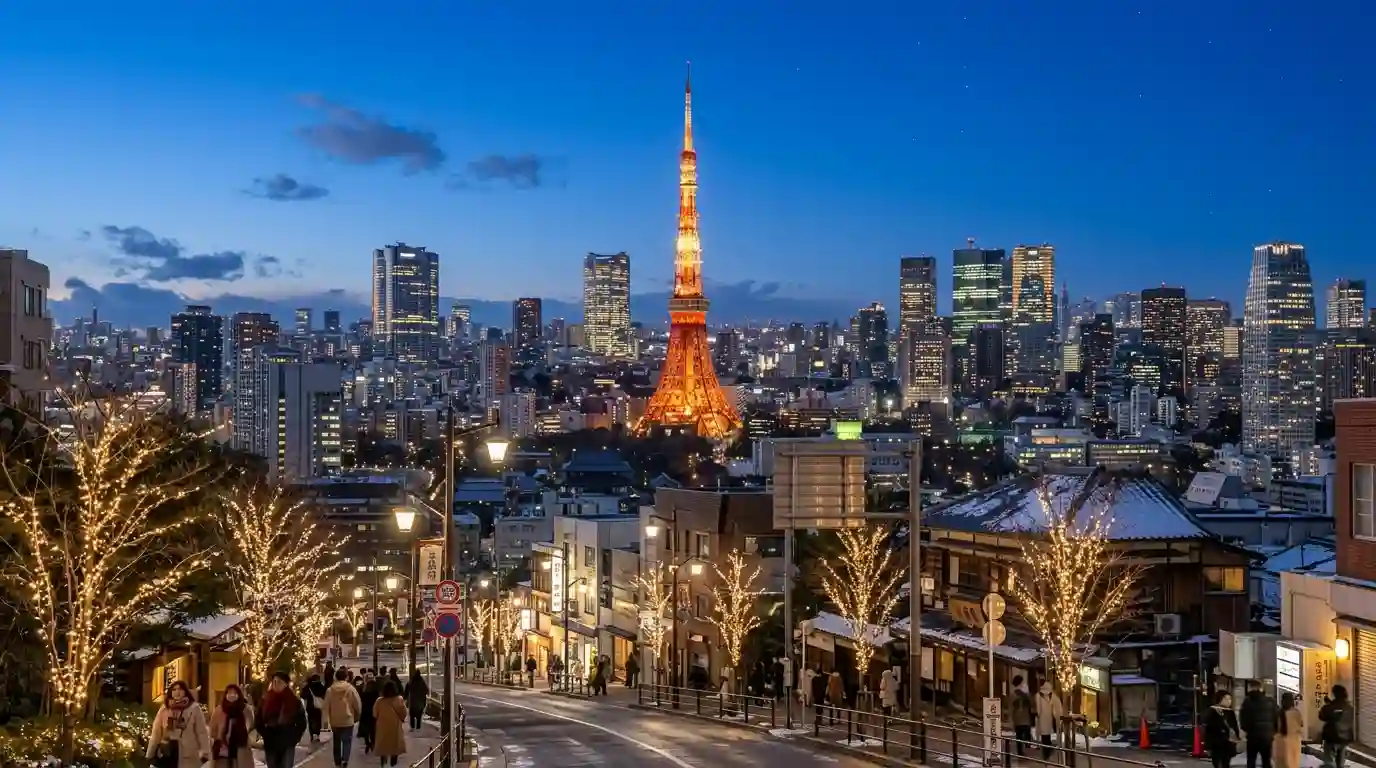
Tokyo becomes a fascinating destination during winter, offering a combination of sparkling city illuminations, traditional Japanese celebrations, peaceful gardens, seasonal food, and exciting cultural attractions. From December through February, the Japanese capital provides plenty of opportunities to explore its modern neighborhoods and historic landmarks without the intense summer heat.
Winter is also a wonderful time to experience Tokyo’s quieter outdoor spaces, enjoy traditional hot dishes, visit famous temples, and discover seasonal events. Although snowfall is uncommon in central Tokyo, the colder months bring crisp weather and clear skies that can make sightseeing especially enjoyable.
Whether you are planning a romantic getaway, a family holiday, or a cultural adventure, there are numerous places to visit in Tokyo Japan during winter. The following destinations and experiences can help you organize a memorable winter itinerary.
1. Tokyo Midtown: Experience Beautiful Winter Illuminations
Tokyo Midtown in Roppongi is one of the city’s popular destinations for winter illuminations. During the holiday season, the surrounding buildings, gardens, and walkways feature decorative lighting that creates an attractive evening atmosphere.
Visitors can explore the illuminated outdoor areas, enjoy seasonal decorations, and visit nearby restaurants and shopping facilities. Depending on the annual event schedule, an ice-skating rink may also be available.
Evening visits are particularly enjoyable because the lighting displays become more noticeable after sunset. Check the seasonal event calendar before visiting because installation dates and activities change each year.
2. Roppongi Hills: Enjoy Winter Views and City Lights
Roppongi Hills offers a combination of shopping, dining, entertainment, and impressive city views. During winter, the Keyakizaka area is especially attractive because its seasonal illuminations create a beautiful setting for evening walks.
Visitors can also explore the surrounding shopping complex, enjoy restaurants, and visit observation facilities for panoramic views of Tokyo. On clear winter evenings, the city’s skyline can look particularly impressive.
Couples and photography enthusiasts will find this neighborhood an enjoyable place to spend a winter evening.
3. Meiji Jingu Shrine: Experience Japanese New Year Traditions
Meiji Jingu is one of Tokyo’s most important Shinto shrines and an excellent destination for travelers interested in Japanese culture. Surrounded by a large forested area, the shrine provides a peaceful atmosphere despite being located near some of the city’s busiest neighborhoods.
Winter is an especially meaningful time to visit because of hatsumode, the traditional first shrine visit of the New Year. Many people visit Meiji Jingu during the opening days of January to pray for happiness, health, and good fortune.
The shrine becomes extremely busy during this period, but the experience provides an opportunity to observe an important Japanese cultural tradition. Visitors should allow additional time for queues and follow local instructions.
4. Senso-ji Temple: Explore Historic Asakusa
Senso-ji Temple in Asakusa is one of Tokyo’s most recognizable historic attractions. Its traditional architecture, colorful entrance gate, and surrounding shopping streets make it an interesting destination throughout the year.
During winter, visitors can explore the temple grounds, walk along Nakamise Shopping Street, and discover traditional Japanese snacks and souvenirs. The area is particularly lively around New Year, when many people visit for prayers and seasonal celebrations.
Early morning visits can provide a quieter sightseeing experience outside major holiday periods. Winter also offers an opportunity to enjoy the historic neighborhood without the uncomfortable heat of summer.
5. Tokyo Skytree: See the City from Above
Tokyo Skytree is an impressive landmark that offers panoramic views across the Japanese capital. Its observation decks provide an excellent opportunity to see Tokyo’s extensive urban landscape from above.
Winter can be a rewarding season for visiting because clear weather sometimes provides better visibility across the surrounding region. On particularly clear days, visitors may even see Mount Fuji from suitable viewing areas.
The shopping, dining, and entertainment facilities around Tokyo Skytree make it a convenient destination for families and travelers who want to combine sightseeing with indoor activities.
6. Shibuya: Discover Tokyo’s Modern Winter Atmosphere
Shibuya is one of Tokyo’s most energetic neighborhoods and an excellent destination for shopping, entertainment, and urban photography. Its famous pedestrian crossing becomes especially interesting during the evening when surrounding buildings illuminate the busy streets.
During winter, visitors can explore shopping centers, enjoy Japanese restaurants, and discover seasonal decorations throughout the district. The nearby Shibuya Blue Cave illumination, when scheduled, provides another attractive seasonal experience.
Shibuya is also a convenient starting point for exploring neighboring areas such as Harajuku and Omotesando.
7. Omotesando: Walk Along Beautiful Illuminated Streets
Omotesando is known for its stylish architecture, designer boutiques, cafes, and attractive tree-lined avenue. During the winter holiday season, selected sections of the street may feature decorative lighting that creates a festive atmosphere.
The neighborhood is ideal for travelers who enjoy shopping, architecture, and relaxed city walks. Its cafes and restaurants also provide comfortable places to take a break from the colder outdoor temperatures.
Consider visiting in the late afternoon and staying into the evening to experience both the shopping district and its seasonal lighting.
8. Shinjuku Gyoen National Garden: Enjoy a Peaceful Winter Landscape
Shinjuku Gyoen National Garden offers a refreshing contrast to Tokyo’s crowded commercial neighborhoods. Its landscaped gardens, walking paths, and open spaces provide an excellent opportunity to enjoy nature during winter.
Although the famous cherry blossoms appear in spring, the garden has its own appeal during the colder months. Visitors can appreciate the seasonal scenery, enjoy peaceful walks, and photograph the garden’s different landscapes.
Check the garden’s official visitor information before planning your visit, particularly around the New Year holiday when operating schedules may change.
9. Tokyo Tower: Enjoy an Iconic Winter City View
Tokyo Tower is another landmark worth including in a winter sightseeing itinerary. Its distinctive red-and-white structure is particularly attractive after sunset when the surrounding area becomes illuminated.
Visitors can explore its observation areas and enjoy views of Tokyo’s modern skyline. The nearby Zojoji Temple also makes it possible to combine contemporary architecture with a historic cultural attraction.
For an enjoyable evening, explore the surrounding area, take photographs of the illuminated tower, and visit nearby restaurants.
10. Odaiba: Explore Waterfront Attractions and Entertainment
Odaiba is a popular waterfront district offering shopping centers, entertainment facilities, modern architecture, and scenic views across Tokyo Bay.
Winter is a convenient time to explore its indoor attractions, particularly on colder or windy days. Visitors can enjoy shopping, discover entertainment venues, and admire the Rainbow Bridge from selected waterfront locations.
The district is also suitable for families because it offers a mixture of activities that appeal to different age groups. Spending part of the day indoors and enjoying the waterfront before sunset can make for a comfortable winter outing.
11. Ueno Park: Discover Museums and Seasonal Scenery
Ueno Park is an important cultural and recreational area in Tokyo. It contains museums, cultural institutions, walking paths, and several attractions that make it suitable for visitors with different interests.
During winter, travelers can enjoy outdoor walks while also having access to indoor museums and exhibitions. This combination is particularly useful when temperatures become uncomfortable.
Ueno is also a convenient area for discovering traditional markets and local restaurants. Visitors interested in Japanese history and art can easily spend several hours exploring its cultural attractions.
12. Ginza: Enjoy Winter Shopping and Dining
Ginza is one of Tokyo’s best-known shopping districts, offering department stores, luxury boutiques, restaurants, and impressive modern architecture.
During winter, the neighborhood becomes especially attractive with seasonal window displays and holiday decorations. Visitors can explore major shopping complexes, discover Japanese fashion brands, and enjoy traditional or international dining experiences.
Ginza is also a useful destination for travelers searching for winter gifts and souvenirs. Its indoor shopping facilities provide a comfortable alternative when the weather is particularly cold.
13. Yebisu Garden Place: Experience a Festive Winter Setting
Yebisu Garden Place is a popular destination for winter visitors looking for a relaxed atmosphere and attractive seasonal decorations. Its European-inspired architecture and open plaza create a different visual experience from Tokyo’s busier shopping districts.
The area is particularly known for its seasonal illumination displays and impressive Baccarat crystal chandelier presentation during the winter event period.
Visitors can explore the surrounding restaurants, take photographs, and enjoy a pleasant evening. The venue is also a convenient option for couples seeking a relaxed winter outing.
14. Imperial Palace East Gardens: Explore Japanese History
The Imperial Palace East Gardens provide an opportunity to explore the historic grounds associated with Japan’s imperial heritage. The gardens contain landscaped areas, stone walls, historic remains, and peaceful walking routes.
Winter can be a comfortable time to explore the outdoor grounds, especially on clear days. The seasonal landscape provides an interesting setting for photography and learning about Tokyo’s history.
Visitors should check the garden’s opening calendar before arriving because it has scheduled closing days and may have special arrangements during holiday periods.
15. Hakone: Take a Winter Day Trip from Tokyo
Travelers who want to experience a different side of Japan can consider a winter day trip to Hakone. Located outside central Tokyo, Hakone is known for its hot springs, mountain scenery, museums, and views of Mount Fuji when weather conditions allow.
Winter is an appealing season for enjoying a traditional Japanese hot spring bath. The contrast between cold outdoor temperatures and warm mineral-rich water creates a relaxing experience.
Visitors can also explore Lake Ashi, travel through scenic mountain areas, and discover local attractions. Allow enough time for transportation because weather and seasonal conditions can affect some mountain routes and sightseeing services.
Best Winter Experiences to Include in Your Tokyo Trip
Beyond visiting individual attractions, Tokyo offers several seasonal experiences that can make a winter holiday more memorable.
Experience Traditional Japanese Winter Food
Winter is an excellent time to discover Japanese comfort food. Dishes such as nabe hot pot, sukiyaki, oden, and steaming bowls of ramen are popular choices during colder weather.
Many restaurants offer seasonal menus, allowing travelers to experience traditional Japanese flavors while taking a break from sightseeing.
Attend a Setsubun Celebration
Setsubun is a traditional seasonal celebration generally held around February 3. Shrines and temples organize bean-throwing ceremonies known as mamemaki, which symbolize driving away bad fortune and welcoming good luck.
Temples such as Senso-ji and Zojoji are among the places where visitors may find seasonal celebrations. Event arrangements can vary, so check the local schedule before attending.
Enjoy Winter Illuminations
Tokyo’s winter illuminations are among the city’s most attractive seasonal experiences. Neighborhoods such as Roppongi, Marunouchi, Omotesando, and Ebisu feature decorative lighting during selected periods.
Walking through illuminated streets after sunset is a memorable way to experience the city. Since displays have different operating dates, check the current year’s schedule before making plans.
Explore Japanese Hot Springs
A visit to a traditional onsen can be a relaxing addition to a winter holiday. Travelers can find hot spring experiences in Tokyo and nearby destinations, including Hakone.
Before visiting, review bathing rules and facility requirements. Some establishments have specific policies concerning tattoos, reservations, and the use of shared bathing areas.
When Is the Best Time to Visit Tokyo During Winter?
Tokyo’s winter season generally runs from December through February, and each month offers a slightly different experience.
December: Holiday Decorations and Illuminations
December is an excellent choice for travelers interested in Christmas decorations, shopping, and winter illumination events. The city develops a festive atmosphere, especially in major commercial districts.
January: Traditional New Year Celebrations
January is ideal for experiencing Japanese New Year traditions. Shrine visits, seasonal food, and cultural activities provide opportunities to understand local customs. However, some attractions, shops, and restaurants may close temporarily around the New Year holiday.
February: Winter Events and Early Spring Scenery
February is suitable for travelers who want to experience the final part of winter. Setsubun celebrations, occasional plum blossoms toward the end of the month, and remaining seasonal illumination events can add variety to a sightseeing itinerary.
Practical Tips for Visiting Tokyo in Winter
- Pack warm clothing: Bring a winter coat, sweaters, gloves, and a scarf for outdoor activities.
- Wear comfortable shoes: Tokyo involves considerable walking, so comfortable footwear is essential.
- Plan around New Year: Check attraction opening schedules and restaurant availability during the holiday period.
- Use public transportation: Tokyo’s extensive train and subway network makes exploring different neighborhoods convenient.
- Check illumination dates: Seasonal lighting events do not all follow the same calendar.
- Carry some cash: Although cashless payments are widely accepted, smaller establishments may still prefer cash.
- Plan outdoor activities during daylight: Winter days are shorter, so visit gardens and outdoor attractions earlier.
Planning More Seasonal Travel Adventures
Tokyo is only one of many destinations worth considering when planning a seasonal holiday. Travelers comparing international winter experiences can also explore our guides to places to visit in winter for couples, places to visit in Minnesota during winter, and East Coast winter destinations.
For additional seasonal inspiration, discover places to visit in New York during fall, the best places to visit in Greece in fall, and Midwest summer destinations.
International travelers can also explore the best places to visit in Europe, Eastern Europe’s top destinations, places to visit in the UK, and places to visit in Madrid and Barcelona.
Other travel ideas include places to visit in Vienna in one day, Toronto’s summer attractions, the Philippines’ popular destinations, and family destinations in Kerala.
For more international holiday inspiration, consider Malaysia honeymoon destinations, places to visit near the Tri-Cities in Washington, and attractions near Olympic National Park.
Conclusion: Make the Most of Winter in Tokyo
Tokyo offers an exciting combination of modern attractions, traditional culture, seasonal food, and beautiful winter scenery. From the illuminated streets of Roppongi and Omotesando to the historic atmosphere of Senso-ji and Meiji Jingu, the city provides plenty of memorable experiences throughout the colder months.
Visitors can also explore peaceful gardens, enjoy panoramic city views, discover Japanese winter cuisine, and take a relaxing trip to nearby Hakone. With thoughtful planning and suitable clothing, winter can be an excellent time to discover Tokyo.
Whether you are visiting for the seasonal illuminations, Japanese New Year traditions, shopping, or cultural attractions, Tokyo has something to offer every type of traveler.
Frequently Asked Questions
1. Is Tokyo worth visiting during winter?
Yes. Tokyo is worth visiting during winter because of its seasonal illuminations, cultural celebrations, shopping opportunities, traditional food, and generally clear weather.
2. Does it snow in Tokyo during winter?
Snow is possible in Tokyo, particularly during January and February, but significant snowfall is uncommon. Travelers should generally expect cold weather rather than consistently snowy streets.
3. What are the best places to visit in Tokyo during winter?
Popular options include Tokyo Midtown, Roppongi Hills, Meiji Jingu Shrine, Senso-ji Temple, Tokyo Skytree, Shibuya, Shinjuku Gyoen, and Odaiba.
4. Is December a good month to visit Tokyo?
December is an excellent month for enjoying holiday decorations, winter illuminations, shopping, and seasonal dining. Early planning is recommended for popular attractions and restaurants.
5. What should I wear in Tokyo during winter?
Wear a warm coat, sweaters, comfortable walking shoes, and accessories such as gloves and scarves. Layered clothing is useful because indoor facilities and public transportation are heated.
6. Are there family-friendly places to visit in Tokyo during winter?
Yes. Families can explore Tokyo Skytree, Odaiba, Ueno Park, shopping and entertainment complexes, and seasonal ice-skating facilities where available.
7. Can I take a winter day trip from Tokyo?
Yes. Hakone and Nikko are popular day-trip options. Both offer scenic landscapes and cultural attractions, while Hakone is particularly well known for its hot springs.