
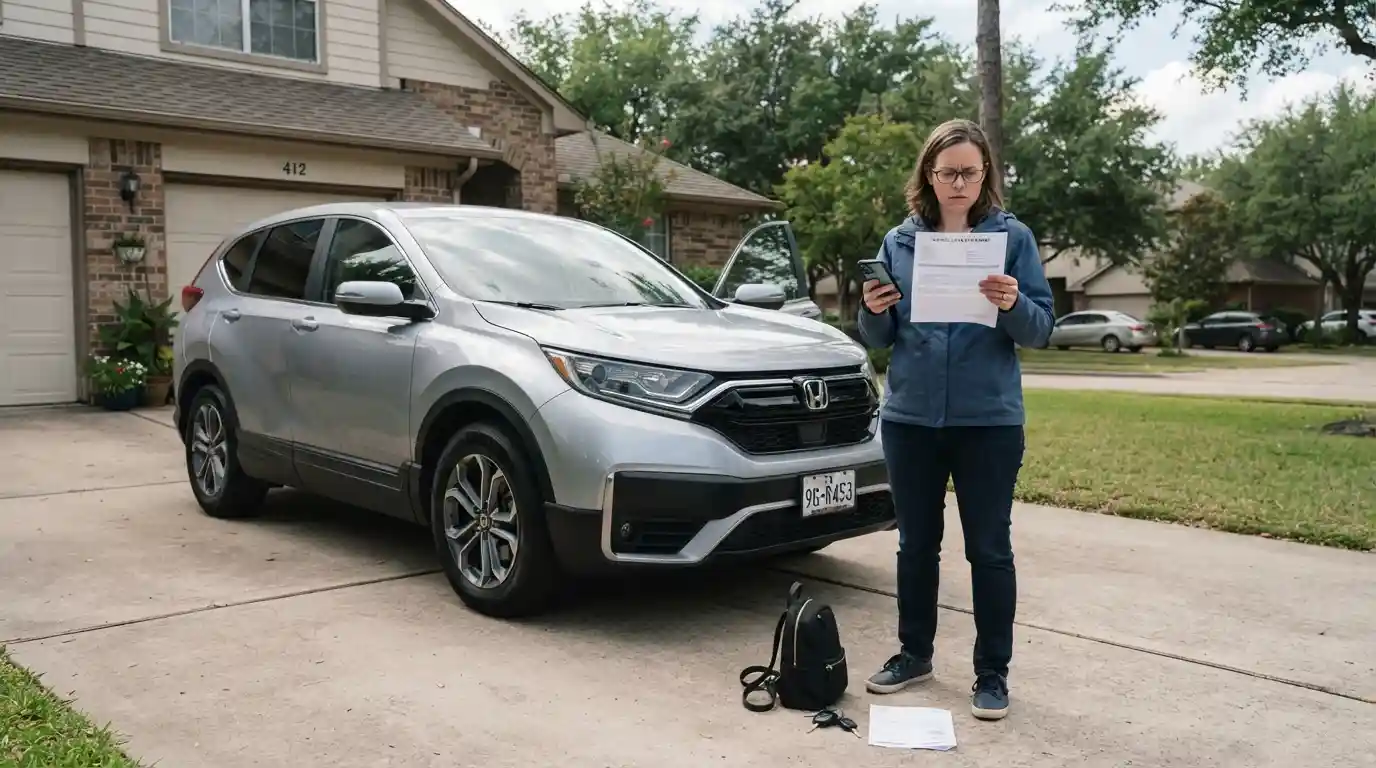
If you finance a vehicle through Exeter Finance and are having trouble keeping up with payments, the most important step is to understand your account and communicate with the lender as early as possible. Depending on your circumstances and eligibility, options may be available before a vehicle reaches the repossession stage.
This guide explains how vehicle repossession generally works, what missed payments can mean, what to do if you are contacted about a past-due account, and what may happen after a vehicle is repossessed.
What Is Exeter Finance Repossession?
Vehicle repossession occurs when a lender or its authorized recovery provider takes possession of a vehicle used as collateral for an auto loan after the borrower has defaulted under the applicable loan agreement.
Because repossession rules vary by state, there is no single nationwide timetable that applies to every Exeter Finance customer. Your contract and the laws where the vehicle is located can affect when repossession may occur, what notices are required, and what rights you have after the vehicle is taken.
This is why borrowers should not rely on informal claims such as “three missed payments always means repossession” or “a lender must always give 30 days’ notice.” The actual requirements can depend on the contract and applicable state law.
When Can a Financed Vehicle Be Repossessed?
A vehicle may become subject to repossession after a borrower defaults on the financing agreement. A missed or late payment can be one way a borrower enters default, but the exact definition of default is determined by the contract and applicable law.
For someone struggling with an auto loan, it is useful to distinguish between a payment being late and an account being seriously delinquent. The consequences can become more significant as an account remains unpaid, particularly when the borrower does not communicate with the lender or establish an alternative payment arrangement.
Borrowers should therefore review their loan documents rather than assume that every Exeter Finance account follows an identical repossession timeline.
Does Exeter Finance Repossess After One Missed Payment?
There is no universal rule that says every Exeter Finance customer will lose a vehicle after exactly one missed payment. A missed payment can place an account into a delinquent status, but repossession depends on the circumstances of the account, the contract, and applicable law.
If you realize that you cannot make your scheduled payment, do not simply ignore the account. Contact Exeter Finance as soon as possible and ask what options may be available for your specific situation.
Borrowers researching other financial topics can also review global economic shifts and financial trends and the site’s broader economic impact coverage for additional financial context.
What Should You Do If You Cannot Make an Exeter Finance Payment?
The earlier you address a payment problem, the more information you have available to make a plan. Start by determining exactly how much is past due, whether additional fees have been added, and what your next contractual payment date is.
Then contact Exeter Finance directly and explain your situation. Ask whether your account is eligible for a payment extension or another available arrangement.
Do not assume that an extension automatically eliminates the cost of missed payments. Any agreement should be reviewed carefully so you understand how it affects interest, future payments, the loan maturity date, and the total amount you may ultimately pay.
For broader information about financing and financial obligations, related resources on financial solutions, financing options and credit considerations, and commercial finance can provide additional context.
Can Exeter Finance Offer a Payment Extension?
Payment extensions may be available to eligible Exeter Finance customers. Eligibility is not automatic, so borrowers should contact Exeter Finance to determine whether their account qualifies.
An extension can provide temporary relief, but it does not necessarily make the missed payment disappear. Interest may continue to accrue during a payment extension, which can affect the amount owed later in the loan.
Before agreeing to an extension, ask questions such as:
- How much will be due after the extension?
- Will interest continue to accrue?
- Will the loan maturity date change?
- Will the extension affect future payment amounts?
- Are there additional fees or conditions?
- What happens if another payment is missed?
What Happens Before a Vehicle Is Repossessed?
The steps leading to repossession can vary. Depending on the account and state, a lender may communicate with the borrower about overdue payments, attempt to collect the past-due amount, or discuss available payment arrangements.
However, borrowers should not assume that communication always means repossession cannot occur. Once an account is in default, the lender’s rights are governed by the financing agreement and applicable law.
Keep copies of payment confirmations, emails, letters, account messages, and any written agreements. Good documentation can make it easier to understand what happened if there is later a disagreement about the account.
Vehicle owners dealing with other automobile-related concerns may also find the site’s guides to vehicle care, professional auto service, and family auto service useful when managing the broader cost of vehicle ownership.
Can a Car Be Repossessed Without Warning?
Whether advance notice is required depends heavily on state law and the terms of the financing agreement. In some states, a lender may be able to repossess a vehicle after default without first obtaining a court order or providing a specific warning. Other situations may involve notice requirements.
There are also legal restrictions on how a vehicle can be recovered. Repossession generally cannot be carried out through conduct that violates applicable restrictions, such as certain forms of force, threats, or a breach of the peace.
If you believe a recovery agent acted unlawfully, document what happened and consider obtaining advice from a qualified attorney or contacting the appropriate state consumer-protection authority.
What Happens When Exeter Finance Repossesses a Vehicle?
After a vehicle is repossessed, the situation is not necessarily finished. The lender may determine whether the borrower has a legal opportunity to recover the vehicle before it is sold or otherwise disposed of.
Depending on state law and the loan agreement, the borrower may have options such as:
- Paying the required amount to bring the account current.
- Redeeming the vehicle by paying the amount required under applicable law.
- Working with the lender regarding the post-repossession balance.
- Reviewing notices concerning the vehicle’s sale.
- Recovering personal property left inside the vehicle.
The exact rights and deadlines can vary significantly by state, so borrowers should act quickly after a repossession.
What Happens to Personal Items Left in a Repossessed Car?
A repossessed vehicle may contain important personal property such as documents, electronic devices, clothing, tools, or other belongings.
Contact the lender or recovery company promptly to determine how and when you can retrieve personal property. Do not assume that personal belongings become the lender’s property simply because they were inside the vehicle.
Make a written list of anything you believe was inside the vehicle and preserve photographs, receipts, or other evidence when available.
What Is a Deficiency Balance After Repossession?
A repossession does not necessarily eliminate the underlying debt. If the lender sells the vehicle and the amount received is less than the balance owed plus allowable expenses, the remaining amount may be called a deficiency balance.
For example, suppose a borrower owes $18,000 and the vehicle is sold for $13,000. If $5,000 remains after accounting for the applicable loan balance and allowable expenses, that amount could potentially become a deficiency balance, subject to the contract and state law.
The actual calculation can include additional permitted costs, so borrowers should request a detailed accounting rather than relying on a simple estimate.
If the vehicle sells for more than the amount owed and applicable costs, a surplus may exist. Whether and how that surplus is handled depends on applicable law and the circumstances of the sale.
Can a Deficiency Balance Be Collected?
In many states, a lender may be able to pursue a deficiency balance after a vehicle is sold, provided the lender complied with applicable repossession and sale requirements. The rules differ by state.
This is one reason voluntary surrender should not automatically be viewed as a way to eliminate an auto loan. Returning the vehicle can change the repossession process, but it does not necessarily erase the remaining debt.
If you are considering surrendering a vehicle, ask the lender in writing whether the proposed arrangement fully satisfies the debt. Do not assume that handing over the vehicle means the loan balance becomes zero.
How Does Repossession Affect Your Credit?
Late or missed auto loan payments can negatively affect credit reporting, and a repossession can create an additional negative event. The impact may make future borrowing more difficult or more expensive.
The precise credit-reporting consequences depend on the account history and applicable credit-reporting rules. If information