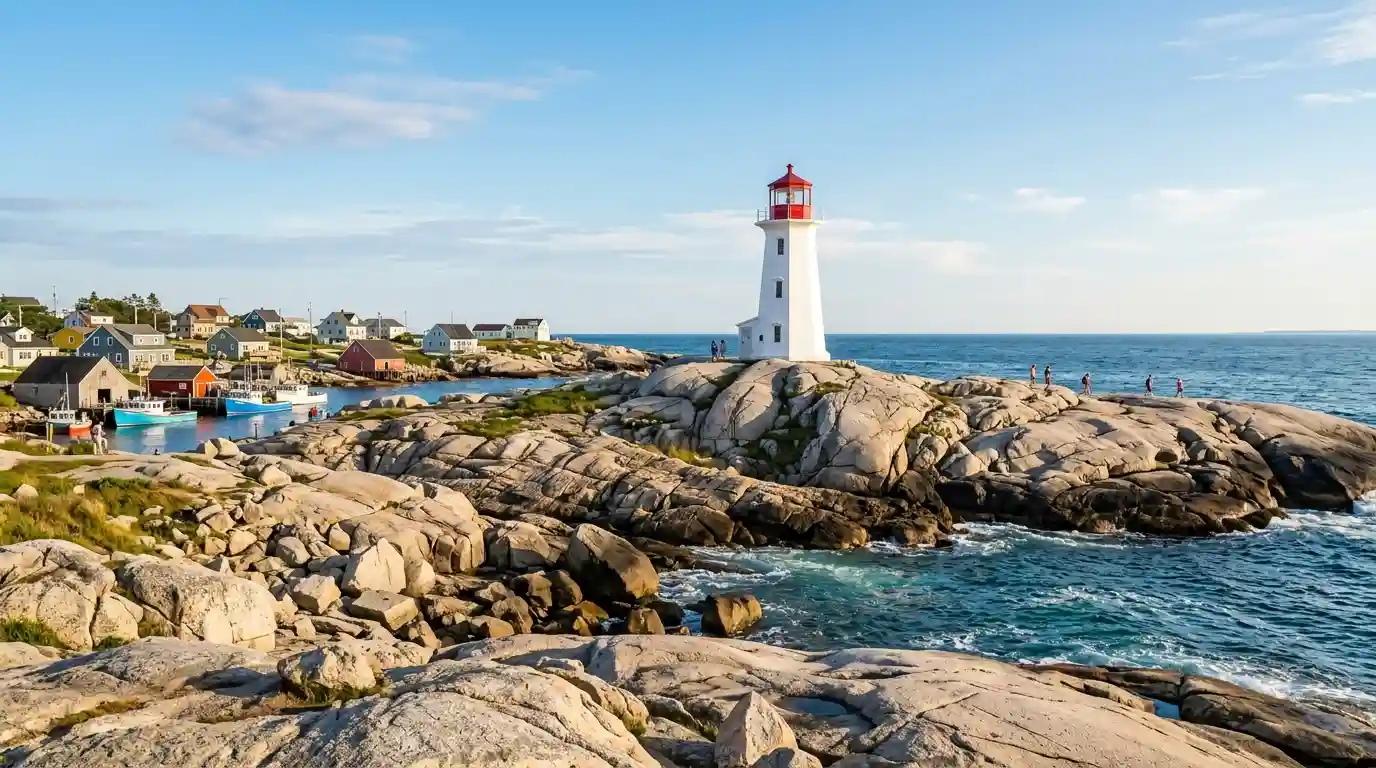
Whether you are planning a family vacation, a romantic getaway, or a road trip with friends, the best places to visit in Nova Scotia in summer offer something for every travel style. You can explore Halifax’s waterfront, photograph the famous lighthouse at Peggy’s Cove, drive the Cabot Trail on Cape Breton Island, or spend a relaxed afternoon in the colorful streets of Lunenburg.
This guide highlights 12 destinations worth considering, along with practical advice to help you plan your route, choose the right beaches, and make the most of your summer vacation.
Why Visit Nova Scotia in Summer?
Summer brings a lively atmosphere to Nova Scotia. Coastal communities welcome visitors, outdoor attractions offer more opportunities for exploration, and local restaurants feature seafood and seasonal ingredients. The province’s combination of ocean scenery, heritage towns, forests, and beaches makes it especially appealing to travelers who enjoy a varied itinerary.
- Coastal scenery: Discover lighthouses, rocky shorelines, fishing harbors, and panoramic ocean viewpoints.
- Beach escapes: Relax on sandy beaches, enjoy a seaside picnic, or try surfing where conditions and local guidance permit.
- Outdoor activities: Choose from hiking, kayaking, cycling, wildlife watching, and scenic drives.
- History and culture: Visit historic waterfronts, museums, forts, galleries, and communities shaped by Mi’kmaw, Acadian, African Nova Scotian, and other cultural traditions.
- Local food: Sample lobster, scallops, seafood chowder, fresh berries, and regional wines.
If you are comparing seasonal trips across Canada, you can also explore our guides to the best places to visit in Toronto in summer and top places to visit in Alberta.
12 Best Places to Visit in Nova Scotia in Summer
1. Halifax: Waterfront Walks, History, and City Life
Halifax is an excellent starting point for a Nova Scotia summer vacation. The provincial capital combines a lively harbor, historic landmarks, museums, restaurants, and easy access to nearby coastal attractions. Its walkable waterfront is a natural place to begin exploring, with harbor views, public spaces, shops, and places to stop for a meal.
Visit the Halifax Waterfront Boardwalk for a relaxed stroll, explore the exhibits at the Canadian Museum of Immigration at Pier 21, or head to Halifax Citadel National Historic Site to learn about the city’s military history. Public gardens and neighborhood cafés offer quieter breaks between sightseeing stops.
Best for: First-time visitors, families, history lovers, and travelers who enjoy restaurants and cultural attractions.
Summer tip: Spend at least one full day in Halifax before driving to the coast. This gives you time to explore the city without squeezing every attraction into a single afternoon.
2. Peggy’s Cove: An Iconic Lighthouse and Rugged Coastline
Peggy’s Cove is one of Nova Scotia’s best-known coastal destinations. Its working fishing village, granite shoreline, and distinctive Peggy’s Point Lighthouse create a classic maritime landscape. In summer, visitors come for the scenery, photography, coastal atmosphere, and nearby places to enjoy local seafood.
Walk through the village, admire the lighthouse from designated viewing areas, and take time to observe the waves rolling against the granite coast. The landscape is beautiful but potentially dangerous: exposed rocks can become slippery, and powerful waves may sweep farther inland than expected.
Best for: Photographers, couples, sightseeing tours, and anyone visiting Nova Scotia for the first time.
Summer tip: Arrive early in the day when possible. Stay within designated safe areas, follow warning signs, and never walk onto dark, wet rocks near the water.
3. Lunenburg: Colorful Streets and Maritime Heritage
Lunenburg is a standout destination on Nova Scotia’s South Shore. This historic waterfront town is known for its colorful buildings, preserved architecture, harbor views, and strong connection to the region’s fishing and shipbuilding history. Its Old Town is recognized as a UNESCO World Heritage Site.
Spend time walking the historic streets, browsing independent shops and galleries, visiting maritime attractions, and enjoying a meal overlooking the harbor. If you appreciate local craftsmanship and heritage architecture, Lunenburg rewards a slower pace rather than a quick photo stop.
Best for: Couples, architecture enthusiasts, cultural travelers, and relaxed weekend getaways.
Summer tip: Allow several hours to explore the town on foot. If you want to stay overnight, reserve accommodation well ahead for popular summer weekends.
4. Mahone Bay: Harbor Views and a Relaxed Coastal Atmosphere
Mahone Bay offers a quieter South Shore experience, with a picturesque waterfront, small shops, galleries, cafés, and historic buildings. The town is especially recognizable for the three churches that stand along its harbor, making the waterfront a popular photography stop.
Explore local craft stores, take a leisurely walk beside the water, and enjoy a coffee or lunch before continuing along the coast. Mahone Bay is easy to combine with Peggy’s Cove and Lunenburg on a broader South Shore road trip, although the distance between stops means you should allow time for driving.
Best for: Couples, day-trippers, shoppers, and travelers who prefer small coastal towns.
Summer tip: Visit in the morning for a quieter walk, then continue to another South Shore destination for the afternoon.
5. Cape Breton Island: A Scenic Summer Road Trip
Cape Breton Island is one of the province’s most memorable regions for outdoor exploration. Its appeal comes from dramatic coastal views, forested highlands, small communities, cultural experiences, and winding roads that make the journey part of the attraction.
Plan time for coastal viewpoints, local restaurants, short hikes, and stops in communities such as Baddeck and Chéticamp. The island is large enough that trying to see everything in one day can make the experience feel rushed. A multi-day visit gives you more flexibility when weather changes or you discover a place worth exploring longer.
Best for: Road-trippers, hikers, photographers, and travelers who enjoy nature and scenic drives.
Summer tip: Build an overnight stay into your route rather than treating Cape Breton as a quick detour from Halifax.
6. Cabot Trail: One of Canada’s Great Scenic Drives
The Cabot Trail is a highlight of Cape Breton Island, winding through coastal communities and the landscapes around Cape Breton Highlands National Park. The drive is known for sweeping ocean views, mountain scenery, forested slopes, and roadside lookoffs where you can pause to appreciate the landscape.
Rather than driving the entire route without stopping, allow time for viewpoints, village visits, picnic breaks, and selected hiking trails. The Skyline Trail is particularly popular for its elevated views, but trail access, parking arrangements, weather conditions, and reservation requirements can change. Check current park information before setting out.
Best for: Scenic drivers, hikers, photographers, and travelers planning a longer Cape Breton visit.
Summer tip: Drive cautiously on winding sections, allow extra time for stops, and check the forecast. Fog can reduce visibility, and mountain weather may differ from conditions elsewhere on the island.
7. Cape Breton Highlands National Park: Hiking and Coastal Views
For visitors who want to spend more time outdoors, Cape Breton Highlands National Park offers hiking trails, forest landscapes, coastal lookoffs, wildlife viewing opportunities, and access to beaches. It is one of the strongest choices for travelers who want to combine a scenic road trip with time on foot.
Choose a trail that matches your fitness and experience, carry water, and bring layers even on a sunny summer morning. If you hope to hike the Skyline Trail or another popular route, check trail notices and any parking or access rules before visiting.
Best for: Hikers, nature lovers, photographers, and active families with age-appropriate plans.
Summer tip: Start popular hikes early, remain on marked trails, and allow time to return before changing weather or fading daylight becomes a concern.
8. Wolfville and the Annapolis Valley: Food, Farms, and Vineyards
The Annapolis Valley provides a different perspective on Nova Scotia. Instead of focusing entirely on the coast, visitors can explore agricultural landscapes, farm markets, vineyards, historic communities, and scenic countryside. Wolfville is a convenient base for exploring the valley’s food and wine scene.
Spend time browsing local shops, visiting seasonal markets, and sampling regional produce. Wine experiences can make a memorable addition to a summer itinerary, while nearby historic sites provide opportunities to learn about the area’s past. Arrange transportation in advance if wine tasting is part of your plans.
Best for: Food lovers, couples, wine enthusiasts, and travelers seeking a countryside break.
Summer tip: Check opening hours and tasting availability before visiting individual farms or wineries, since schedules vary by business and season.
9. Bay of Fundy: Dramatic Tides and Coastal Landscapes
The Bay of Fundy is famous for its exceptionally high tidal range. Around the bay, visitors can discover coastal viewpoints, tidal flats, shoreline communities, and places where the changing water reveals a very different landscape throughout the day.
Look for suitable guided experiences, coastal walks, and designated viewpoints where you can observe the tides safely. Depending on the location, the scenery may include exposed mudflats, rocky shores, sea cliffs, or broad coastal views.
Best for: Nature lovers, geology enthusiasts, photographers, and travelers interested in distinctive coastal environments.
Summer tip: Check local tide tables and follow access guidance. Tides can rise quickly, and mudflats or narrow shoreline routes may become hazardous when the water returns.
10. Kejimkujik National Park and National Historic Site: Forests, Lakes, and Canoeing
Kejimkujik offers a nature-focused alternative to the province’s famous coastal stops. Its inland landscapes include forest, lakes, waterways, and opportunities for hiking, canoeing, camping, and wildlife observation. The area also has important Mi’kmaw cultural heritage, including petroglyph sites that visitors should approach respectfully.
Choose a walking trail, arrange a suitable paddle, or plan a camping trip if you want to spend more than a few hours outdoors. Conditions and available services vary, so review current park guidance before choosing an activity.
Best for: Families who enjoy the outdoors, campers, paddlers, and travelers seeking a quieter natural setting.
Summer tip: Bring insect protection, water, sun protection, and appropriate footwear. Follow park rules around wildlife, fire safety, and culturally significant sites.
11. Lawrencetown Beach: Surfing and Atlantic Ocean Views
Lawrencetown Beach, east of Halifax, is a popular destination for visitors interested in surfing and rugged Atlantic scenery. It provides an easy way to add a coastal outdoor activity to a Halifax-based vacation without committing to a long drive across the province.
Watch the waves, enjoy a beach walk, or consider a lesson with a qualified local surf provider. Ocean conditions can change quickly, and a beach that looks inviting from shore may not be suitable for inexperienced swimmers.
Best for: Surfers, outdoor enthusiasts, photographers, and travelers staying in the Halifax area.
Summer tip: Check surf conditions and local safety guidance before entering the water. Do not assume every beach is supervised or suitable for swimming.
12. Northumberland Shore: Sandy Beaches and Warm-Weather Relaxation
The Northumberland Shore is a strong choice for a slower summer vacation. The region includes coastal communities and sandy beaches along the Northumberland Strait, with opportunities for swimming when conditions permit, picnicking, beach walks, and relaxed family outings.
Melmerby Beach Provincial Park is one option to consider for a classic beach day. Nearby communities can also make pleasant stops for local food and a look at the region’s maritime character. Water temperatures and beach conditions vary, so check local information rather than assuming every location will be equally comfortable or safe.
Best for: Families, beach lovers, casual road-trippers, and travelers who want a less hurried itinerary.
Summer tip: Bring sun protection, drinking water, towels, and a change of clothing. Check the availability of parking, facilities, and lifeguard services before leaving.
Best Beaches in Nova Scotia for a Summer Vacation
Nova Scotia has a varied coastline, so the right beach depends on whether you want to swim, surf, photograph the landscape, or simply relax by the water.
- Melmerby Beach: Consider this Northumberland Shore destination for a sandy beach day and warm-season swimming when conditions are suitable.
- Lawrencetown Beach: A popular option for surfing and observing the Atlantic coast near Halifax.
- Ingonish Beach: A scenic Cape Breton stop that combines beach scenery with access to the surrounding highlands.
- Carters Beach: A South Shore option known for pale sand and striking coastal scenery.
- Crystal Crescent Beach: A beach and coastal walking destination within reach of Halifax.
Before swimming, check posted warnings, water conditions, weather, and the availability of supervision. Atlantic waters can remain cold even during warm weather, and rip currents or strong waves may create risks.
Suggested Nova Scotia Summer Road Trip Itinerary
A road trip is one of the most flexible ways to experience Nova Scotia. The following seven-day outline combines urban attractions, the South Shore, inland nature, and Cape Breton. It is a starting point rather than a promise that every stop can be completed at a fixed pace.
Day 1: Explore Halifax
Walk the waterfront, visit a museum or historic site, and enjoy a local dinner. Stay overnight in Halifax.
Day 2: Visit Peggy’s Cove and Mahone Bay
Head toward Peggy’s Cove early, then continue along the South Shore to Mahone Bay. Allow time for scenic stops and traffic.
Day 3: Discover Lunenburg
Explore the historic waterfront, local shops, and maritime heritage. Stay overnight nearby or return toward your next destination if your schedule allows.
Day 4: Explore the Annapolis Valley
Travel toward Wolfville and spend the day exploring local food, countryside, and heritage attractions.
Day 5: Travel to Cape Breton Island
Make the drive toward Cape Breton with planned rest stops. Consider staying in or near Baddeck to reduce the pressure on the following day.
Day 6: Drive Part of the Cabot Trail
Enjoy selected viewpoints and a hike or village visit. If you want to complete more of the route, consider extending your Cape Breton stay.
Day 7: Visit a Beach or Nature Area
Choose a final stop based on your departure point and interests. Keep enough time for the return drive, vehicle return, or airport check-in.
If you have only three or four days, focus on Halifax and the South Shore or choose Cape Breton as the main destination. Trying to cover every region in a short trip can mean spending more time driving than enjoying the scenery.
Practical Tips for Visiting Nova Scotia in Summer
Choose the Right Time
June, July, and August each offer a different experience. June can provide a quieter start to the season, while July and August are popular for beach trips, outdoor activities, and seasonal events. Exact conditions vary from year to year, so check forecasts and event schedules close to your visit.
Book Accommodation Early
Popular coastal towns and Cape Breton destinations can become busy during summer. Reserve accommodation ahead of time, especially if you plan to travel over a weekend or attend a major event. If flexibility matters more than a specific location, compare several nearby communities.
Plan for Changeable Weather
Maritime weather can shift quickly. Pack layers, a waterproof jacket, comfortable walking shoes, and sun protection. Fog, wind, and rain can affect coastal viewpoints, boat trips, and hiking plans.
Allow Enough Driving Time
Distances may look manageable on a map, but scenic roads, slow-moving traffic, photo stops, and winding coastal routes can extend a journey. Avoid packing too many destinations into a single day.
Respect Coastal Safety
Stay behind barriers and away from dangerous cliff edges. Never turn your back on ocean waves while standing on exposed shoreline rocks. Follow beach warnings, park notices, and local guidance at all times.
Budget for Activities and Meals
Your costs will depend on accommodation, vehicle rental, fuel, dining choices, park fees, tours, and the number of nights you stay. Compare lodging options early and leave room in your budget for a guided excursion or an unexpected overnight stop.
More Summer Travel Inspiration
Planning a broader seasonal trip? These WayfareHub guides offer additional ideas for destinations, road trips, and warm-weather vacations:
- Places to Visit in New England During Summer for another northeastern North American travel region.
- Places to Visit on the East Coast in Summer for more coastal travel ideas.
- Best Places to Visit in the USA This Summer for a wider range of seasonal destinations.
- Places to Visit in Southern California During Summer for a different coastal experience.
- Best Places to Visit in California During Summer for beaches, scenery, and outdoor travel.
- Places to Visit in Saskatchewan During Summer for nature and cultural experiences.
- Top Places to Visit in Alberta, Canada for another Canadian road-trip option.
- Best Places to Visit in Toronto in Summer for a city-focused Canadian getaway.
- Best Places to Visit in South Carolina for Couples for romantic trip inspiration.
- Best Places to Visit in Pigeon Forge, Tennessee for scenic attractions and outdoor activities.
- Places to Visit in Upstate New York in Summer for lakes, countryside, and warm-weather escapes.
- Places to Visit in the Poconos in Summer for a nature-focused getaway.
- Top Places to Visit on the Big Island of Hawaii for an island vacation.
- Best Nature Places to Visit in Norway for dramatic landscapes and outdoor travel.
- Best Places to Visit in Ireland for scenic routes and heritage towns.
- Best Places to Visit in Europe for broader international trip planning.
- Places to Visit Near Olympic National Park for another nature-centered travel guide.
Frequently Asked Questions
What are the best places to visit in Nova Scotia in summer?
Halifax, Peggy’s Cove, Lunenburg, Mahone Bay, Cape Breton Island, the Cabot Trail, Cape Breton Highlands National Park, Wolfville, the Bay of Fundy, Kejimkujik, Lawrencetown Beach, and the Northumberland Shore are all worth considering. The best choices depend on whether you prefer cities, beaches, history, or outdoor adventure.
How many days do you need to visit Nova Scotia?
Three or four days can work for Halifax and part of the South Shore. A week allows for a broader road trip, while ten days or more provides additional time for Cape Breton, beaches, inland parks, and smaller coastal communities.
Is summer a good time to visit Nova Scotia?
Yes. Summer is a popular season for beaches, hiking, scenic drives, coastal towns, outdoor dining, and seasonal events. It is also a busy period, so booking accommodation and popular activities ahead of time is helpful.
Can you swim in Nova Scotia in summer?
Yes, swimming is possible at suitable beaches, but water temperatures and conditions vary by location and date. Check local warnings, currents, surf conditions, and supervision before entering the water.
What should I pack for a summer trip to Nova Scotia?
Bring layers, a waterproof jacket, comfortable walking shoes, sun protection, insect repellent, reusable water bottles, and beach essentials. A light extra layer is useful even when the daytime forecast looks warm.
Is a rental car useful in Nova Scotia?
A car is useful for reaching many coastal communities, beaches, parks, and scenic routes, especially if you plan to visit several regions. In Halifax, you can explore some central attractions on foot and use local transport before collecting a vehicle for a road trip.
Final Thoughts
The best places to visit in Nova Scotia in summer combine coastal beauty, historic communities, outdoor recreation, and memorable local food. Halifax makes a convenient starting point, Peggy’s Cove and Lunenburg deliver classic maritime scenery, and Cape Breton offers some of the province’s most rewarding drives and hikes. The Bay of Fundy, Kejimkujik, and the Northumberland Shore add variety for travelers who want to explore beyond the most famous stops.
Choose a manageable route, allow time for spontaneous stops, and check local weather and safety information before outdoor activities. With thoughtful planning, a summer trip to Nova Scotia can be as relaxing or adventurous as you want it to be.