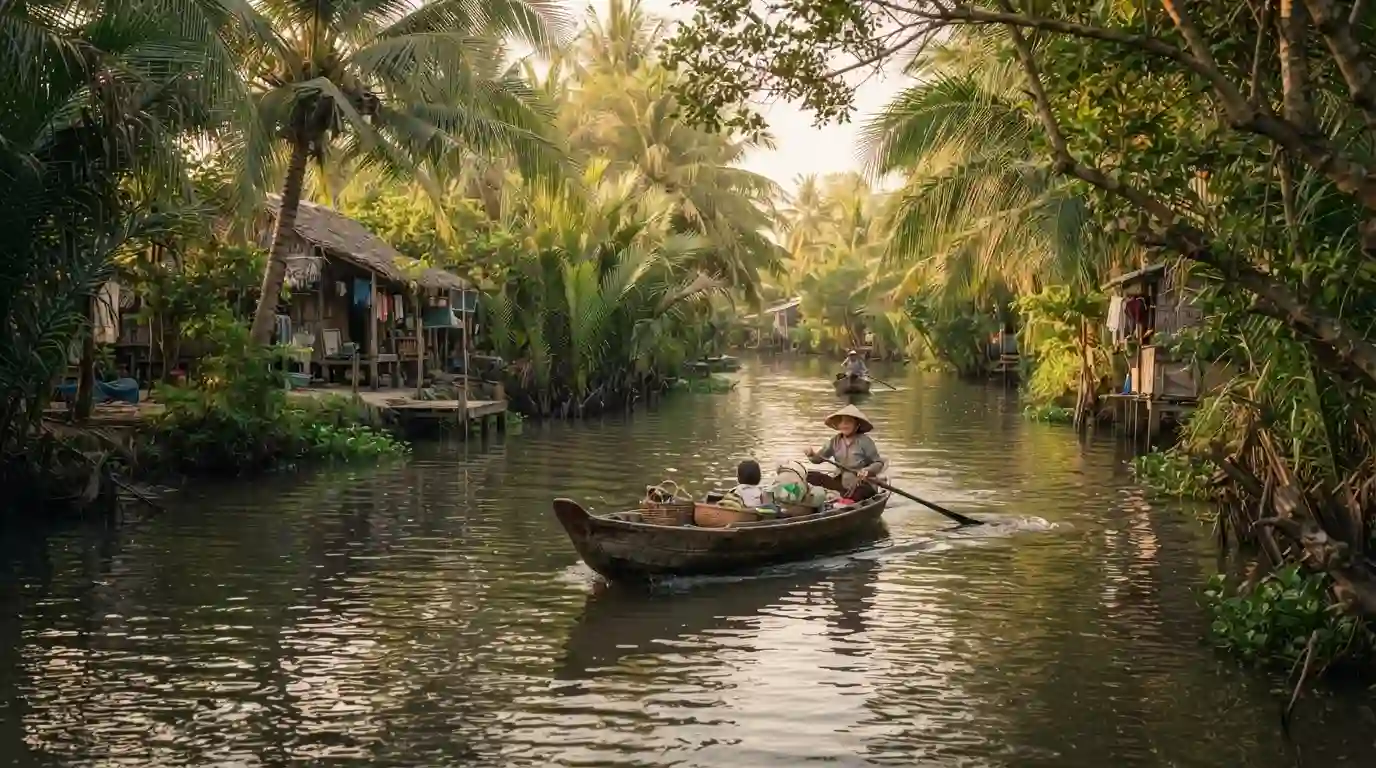
For travelers looking beyond Vietnam’s major cities, the delta offers a slower and more immersive way to experience local life. Boat trips reveal communities built around the water, while cycling routes, fruit gardens, pagodas, food markets, and peaceful countryside provide plenty of opportunities to explore at a relaxed pace.
This guide covers the best places to visit in Mekong Delta, including the region’s most interesting cities, river destinations, cultural attractions, nature experiences, and practical ideas for planning a memorable trip.
Why Visit the Mekong Delta?
The Mekong Delta is ideal for travelers who enjoy combining culture, nature, food, and outdoor exploration. Instead of focusing on a single landmark, a trip through the delta is about experiencing an entire landscape shaped by rivers and waterways.
Visitors can travel by small boat through narrow canals, explore colorful local markets, sample tropical fruits directly from orchards, visit historic religious sites, and cycle through rural communities. The region also provides a different perspective on Vietnam compared with the country’s larger urban destinations.
If you are planning a wider Southeast Asian itinerary, you can also compare the region with other destinations through guides such as the best places to visit in Indonesia, top places to visit in Japan, and the best places to visit in the Philippines.
1. Can Tho
Can Tho is one of the best bases for exploring the Mekong Delta and is often the first major destination travelers consider when planning a delta itinerary. Located along the Hau River, the city combines convenient accommodation and transportation with easy access to surrounding waterways and rural communities.
The city’s biggest attraction is its floating-market culture. Early-morning boat trips allow visitors to see vendors selling fruit, vegetables, drinks, and other products directly from their boats. The experience is especially rewarding when combined with a smaller canal tour away from the busiest areas.
Can Tho is also a good place to experience local food, riverside walks, traditional markets, and everyday southern Vietnamese life.
2. Cai Rang Floating Market
Cai Rang Floating Market is one of the most recognizable attractions in the Mekong Delta. Located near Can Tho, the market is best experienced in the morning when boats gather along the river to trade produce and prepared food.
One of the most interesting aspects of the market is the way merchants advertise what they are selling. Large poles or displays on boats can indicate the type of produce available, making it possible for buyers to identify sellers from a distance.
Arriving early is important because the market’s atmosphere is closely connected to the morning trading cycle. A private or small-group boat tour can also make it easier to explore surrounding waterways afterward.
3. Ben Tre
Ben Tre is an excellent choice for travelers looking for a quieter and more rural side of the delta. The province is particularly associated with coconut cultivation, narrow waterways, tropical gardens, and traditional cottage industries.
Boat rides through Ben Tre can take travelers along smaller canals surrounded by coconut palms and greenery. Depending on the itinerary, visitors may also see local workshops producing coconut-based products and traditional foods.
Cycling is another rewarding way to explore the area. Quiet roads pass through villages, orchards, small bridges, and agricultural landscapes, offering a much slower experience than traveling between destinations by road.
4. My Tho
My Tho is one of the most accessible Mekong Delta destinations from Ho Chi Minh City. Its location makes it popular for travelers who want to experience the delta without spending several nights in the region.
The city provides access to river excursions, islands, fruit gardens, and traditional villages. Boat trips can introduce visitors to the network of waterways surrounding the area while short stops provide opportunities to sample local foods and tropical fruit.
Because My Tho can be visited as a day trip, it works particularly well for travelers with limited time. However, staying overnight can provide a more relaxed experience and allow additional time for exploring nearby rural areas.
5. Vinh Long
Vinh Long sits in a strategic location between several important waterways and provides access to the peaceful river-island landscapes that define the delta.
One of the area’s highlights is visiting small islands where orchards, homestays, gardens, and traditional homes create a glimpse into rural life. Boat transportation remains an important part of exploring these communities.
Vinh Long is particularly appealing to travelers who want to slow down rather than simply check attractions off a list. It can also be combined with nearby destinations as part of a multi-day delta itinerary.
6. An Binh Island
An Binh Island, located near Vinh Long, offers a more intimate experience of the Mekong Delta. The island is known for its fruit orchards, narrow paths, waterways, and rural atmosphere.
Visitors can explore gardens, sample seasonal fruit, cycle through the countryside, and experience local hospitality through homestay-style accommodation. The island is a strong option for travelers who want to spend time away from larger towns.
Its compact scale also makes it easy to combine cycling and boating in the same day.
7. Chau Doc
Chau Doc sits in the western part of the Mekong Delta near the Cambodian border. The city has a distinctly multicultural atmosphere and offers a combination of waterways, religious sites, markets, and nearby natural scenery.
One of the area’s major attractions is Sam Mountain, which rises above the surrounding landscape and contains several religious and cultural sites. The viewpoint also provides a broader perspective over the flat delta countryside.
Chau Doc is especially useful for travelers creating an itinerary that connects southern Vietnam with Cambodia.
8. Tra Su Cajuput Forest
For nature lovers, the Tra Su Cajuput Forest is one of the most rewarding places to visit in the Mekong Delta. The protected wetland landscape contains waterways surrounded by cajuput trees and rich vegetation.
Small boats provide an atmospheric way to explore the forest. Narrow channels pass through dense greenery, creating a peaceful environment that feels very different from the busy floating markets.
The forest is also an excellent destination for travelers interested in birdwatching and wetland ecosystems. Visiting with a guide can make it easier to understand the area’s wildlife and environmental importance.
9. Soc Trang
Soc Trang is a culturally diverse destination where Vietnamese, Khmer, and Chinese influences can be seen in local architecture, food, festivals, and religious traditions.
The province is known for its impressive Khmer Buddhist temples, making it an interesting addition to a Mekong Delta itinerary for travelers interested in history and culture.
Exploring Soc Trang also provides an opportunity to move beyond the region’s standard floating-market experience and discover some of the cultural diversity that has shaped southern Vietnam.
10. Bac Lieu
Bac Lieu offers another perspective on the southern delta. The province combines coastal landscapes, local traditions, historical attractions, and agricultural communities.
Travelers interested in exploring beyond the more frequently visited destinations can use Bac Lieu as part of a longer route through the southern Mekong region.
The area is particularly suitable for travelers who prefer less hurried journeys and want to experience destinations that receive fewer international visitors.
11. Ca Mau
At the southern end of Vietnam, Ca Mau is known for its extensive wetlands, waterways, mangrove forests, and coastal environment. It is one of the most geographically distinctive destinations in the Mekong Delta.
Ca Mau Cape is a major attraction for travelers interested in reaching the southernmost part of mainland Vietnam. Nearby wetlands and mangrove ecosystems also make the province appealing to nature-focused travelers.
Because Ca Mau is farther from Ho Chi Minh City and the delta’s central destinations, it works best as part of a longer itinerary rather than a quick day trip.
12. Phu Quoc as a Delta Add-On
Although Phu Quoc is not part of the Mekong Delta itself, travelers with additional time may consider combining the southern delta with Vietnam’s famous island destination.
The contrast can make for an excellent itinerary. The delta offers rivers, canals, orchards, villages, and cultural experiences, while an island extension provides beaches, coastal scenery, and opportunities for relaxation.
This type of combination is particularly useful for travelers who want both cultural exploration and a tropical beach experience during the same trip.
Best Things to Do in the Mekong Delta
Take a Boat Ride Through the Canals
Boat travel is one of the defining experiences of the Mekong Delta. Large rivers connect to smaller canals where narrow boats can move through villages, gardens, and wetlands.
For a more memorable experience, consider combining a larger river journey with a smaller sampan-style boat ride through narrow waterways.
Visit a Floating Market
Floating markets demonstrate how closely commerce and transportation have historically been connected to the river. Arrive early in the morning for the liveliest atmosphere and the best opportunity to observe local trading activity.
Cycle Through Rural Villages
Cycling is one of the easiest ways to appreciate the quieter side of the delta. Rural roads pass through fruit orchards, coconut groves, rice fields, small bridges, and local communities.
Explore Tropical Fruit Orchards
The delta’s warm climate and fertile landscape support a wide range of tropical fruits. Orchard visits can be combined with cycling or boat trips, allowing travelers to see how local agriculture contributes to everyday life.
Try Mekong Delta Cuisine
Food is an essential part of the region’s travel experience. Local specialties often reflect the abundance of freshwater fish, tropical produce, herbs, rice, coconut, and other ingredients produced throughout southern Vietnam.
Travelers who enjoy exploring destinations through food may also enjoy expanding their wider Asia itinerary with Asian food and culinary experiences.
Best Time to Visit the Mekong Delta
The Mekong Delta can be visited throughout much of the year, but the experience varies depending on rainfall, water levels, agricultural activity, and seasonal fruit production.
The dry season is generally convenient for travelers who want easier transportation and more predictable outdoor conditions. The wetter months can bring greener landscapes and different river conditions, although rain can affect some activities.
If tropical weather and seasonal travel are important to your itinerary, it can also be useful to compare the delta with other warm-weather destinations such as Fiji and the Big Island of Hawaii.
How Many Days Do You Need in the Mekong Delta?
A one-day trip can provide a brief introduction to the Mekong Delta, especially when visiting My Tho or nearby attractions from Ho Chi Minh City. However, two to four days allows travelers to experience the region at a much more comfortable pace.
A short itinerary could focus on Can Tho and Cai Rang Floating Market. A longer trip can include Ben Tre, Vinh Long, Chau Doc, Tra Su Cajuput Forest, and more remote southern destinations.
Travelers building a longer international trip can also compare the delta with Hong Kong travel, the Philippines, and Malaysia when planning a broader Southeast Asian route.
Where to Stay in the Mekong Delta
Accommodation options vary considerably depending on the destination. Can Tho offers the widest selection of hotels and is convenient for travelers who want easy access to restaurants and transportation.
Ben Tre, Vinh Long, and smaller rural communities provide more intimate stays, including guesthouses, eco-lodges, and homestays. These can be a better choice for travelers who want to experience the countryside rather than remain in a city center.
When choosing accommodation, consider how much time you want to spend traveling between attractions. Staying closer to the waterways you want to explore can reduce transportation time and make early-morning excursions easier.
Tips for Exploring the Mekong Delta
- Start early: Many river and market experiences are best in the morning.
- Pack lightweight clothing: The region can be warm and humid.
- Carry insect repellent: Rural waterways and wetlands can have more mosquitoes.
- Bring sun protection: A hat, sunscreen, and sunglasses are useful during boat and cycling excursions.
- Allow extra travel time: River crossings, rural roads, and boat transfers can make journeys slower than expected.
- Carry small cash: Smaller vendors and rural businesses may not accept cards.
- Respect local communities: Ask permission before photographing people, homes, or private activities.
- Choose responsible tours: Smaller groups and locally operated experiences can provide a more personal experience while supporting local communities.
Mekong Delta vs. Other Southeast Asian Destinations
The Mekong Delta is particularly appealing because it offers a type of travel experience that is difficult to replicate in major cities or traditional beach destinations. Its strongest attractions are the waterways, agricultural landscapes, markets, villages, and everyday local culture.
Travelers interested in comparing different Asian destinations can explore places to visit in Japan, Indonesia travel destinations, the Philippines, and Munnar and southern India’s natural destinations.
For travelers who enjoy nature-based trips, broader comparisons can also include the Amazon rainforest, while those interested in cultural and urban combinations may consider Mumbai or Madrid and Barcelona as completely different travel experiences.
Final Thoughts
The best places to visit in Mekong Delta are not limited to one city or attraction. Can Tho and Cai Rang provide the classic floating-market experience, Ben Tre and Vinh Long reveal the quieter side of river life, Chau Doc adds cultural and border-region character, while Tra Su Cajuput Forest and Ca Mau showcase the delta’s remarkable natural environment.
The best way to experience the region is to slow down and allow time for its waterways, villages, markets, food, orchards, and landscapes to become part of the journey. Whether you have one day or several, the Mekong Delta can add an authentic and memorable dimension to a Vietnam itinerary.
As travelers seek to immerse themselves in unique cultural experiences, the Mekong Delta stands out as a captivating destination that showcases Vietnam’s rich heritage and natural beauty. However, for those who crave the vibrant pulse of urban life, exploring the diverse landscapes of bustling metropolises can be equally rewarding. In this regard, opportunities abound for travelers to juxtapose the serene waterways of the delta with the dynamic energy found in major cities around the world. For instance, if you’re considering a trip that combines nature and urban exploration, look no further than the eclectic offerings of New York City. A comprehensive guide to NYC travel reveals iconic landmarks and hidden gems that make New York an essential stop on any global itinerary. Balancing these contrasting experiences enriches the travel narrative, allowing for a deeper appreciation of the diverse lifestyles that define our world.