Vermont Country Trip: Farms, Villages and Mountain Roads
If you love the open road, a Vermont country trip belongs on your travel list. This route is not just about getting from one place to another. It is about green mountains, farm fields, covered bridges and village greens, friendly towns, good food and the freedom to stop whenever something catches your eye. In this guide, you will find a practical day-by-day plan, the best time to go, where to stay and eat, and simple driving tips that make the trip easier.
Many travellers enjoy this route because it works for couples, families and friends alike. You can drive it slowly, add extra nights where you fall in love with a town, or shorten it if you have less time. Before you set off, it helps to read our best budget travel apps and our best hostels in the USA, so you pack well and plan your stops with confidence.
Why this route is worth the drive
The Vermont country trip stands out because the scenery changes often. One day you may be driving beside water or mountains, and the next you are in a small town with a completely different feel. That variety keeps the trip fresh, even on a longer drive, and it gives every traveller something to enjoy, from short walks to long viewpoints and local food.
This route also suits different travel styles. You can stay in comfortable hotels, try a cabin or a small inn, or mix both. You can plan every night in advance, or leave a few nights open and choose as you go. Either way, a little planning helps. Our guide to best places to visit in fall in the US can help you choose the right stays, while our notes on best places to visit in California in summer are useful if you want to keep costs down.
Best time for a Vermont country trip
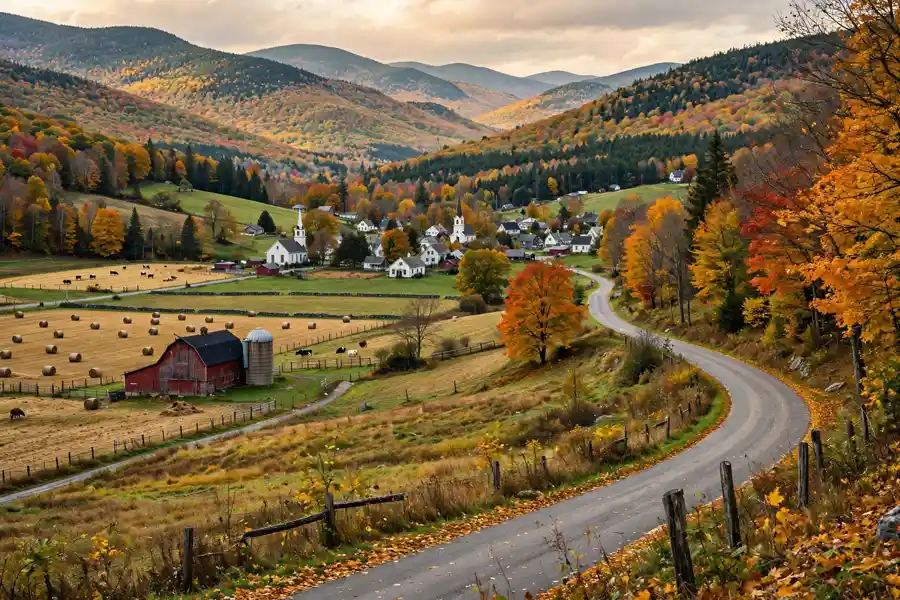
The best season for this trip is fall for foliage, or summer for farms and swimming holes. That said, every season has its own charm. Summer brings long days and lively towns, while spring and fall often bring quieter roads and softer light for photographs. Winter can be beautiful too, but check road conditions, daylight hours and opening times before you travel, especially in mountain or desert areas.
Try to avoid the busiest holiday weekends if you prefer quiet roads, and book popular hotels early if you travel in peak season. If you are flexible, a weekday start often means easier parking, calmer viewpoints and a more relaxed pace. For seasonal ideas, see our guide to the best places to visit in Texas and our list of the best places to visit in the USA this summer.
Day-by-day itinerary for your Vermont country trip
This plan starts in Burlington and ends in Woodstock. It is designed as a relaxed six-day trip, but you can stretch it to a week or more by adding extra nights. Drive times are kept reasonable, so you have time to walk, eat and enjoy each stop rather than spending all day in the car.
Day 1: Burlington
Start on Lake Champlain, with a walkable downtown and farm-to-table food. Take your time here, stop for photos, and enjoy a local meal before you drive on.
Day 2: Stowe
Drive mountain roads, visit farms and enjoy views of Mount Mansfield. Walk around, talk to locals, and let the place set the pace for the rest of your day. If you are new to long drives, our guide to a best travel credit cards is a helpful place to start planning.
Day 3: Smugglers Notch
Drive the narrow mountain pass, with cliffs and forest all around. Keep the drive short, arrive before sunset, and enjoy an easy evening in town.
Day 4: Montpelier
Visit America’s smallest capital, with local shops and a relaxed pace. Bring water, wear comfortable shoes, and plan a picnic stop if the weather is good.
Day 5: Woodstock
Walk a classic village green, see covered bridges and farm country. This is a good place to slow down, so do not rush past it just to reach the next town. For money planning, check our notes on best US cities for food lovers before you book hotels.
Day 6: Quechee Gorge
Finish at Vermont’s deepest gorge, with trails and a lovely village nearby. End the day with a relaxed dinner, then rest well for the next stretch of road.
What to see and do along the way
Beyond the main stops, look for farmers markets, local museums, river walks and viewpoints that are not in every guidebook. These small discoveries often become the best memories of a road trip. Take short detours when you can, but keep fuel, water and phone charging in mind, especially on rural stretches.
Food is a big part of this route. Expect maple syrup, cheddar cheese, farm dinners and apple cider. Try at least one local speciality in each town, and ask locals for recommendations. They often know the best breakfast spot, the quietest viewpoint and the cafe that visitors usually miss. For more food ideas, read our guide to the budget national parks trip ideas.
Where to stay and eat
For lodging, country inns, farm stays and bed-and-breakfasts work well on this route. Book the first and last nights in advance, and keep middle nights flexible if you like freedom. In popular towns, a small inn or a family-run hotel often gives a warmer welcome than a large chain, and it puts you closer to local restaurants and walks.
For meals, mix sit-down restaurants with casual cafes, food trucks and picnic lunches. Carry snacks and water for long stretches, and try to eat at least one dinner in a town centre, where you can walk, shop and enjoy the evening atmosphere. Our tips on ways to save money on USA trips can help you plan a comfortable trip without overspending.
Driving tips and budget for a Vermont country trip
Before you leave, check your car, tyres, lights and oil, and make sure your phone has offline maps for rural areas. Fill up when you see a station on a long stretch, and take regular breaks. Share driving if you can, and never drive when you are tired. Keep a paper map as a backup, because phone signal can disappear in mountains and deserts.
Budget depends on your hotels, food and activities, but you can control costs by mixing hotels with simpler stays, cooking some meals and choosing free viewpoints and walks. Set a daily budget, track spending as you go, and leave room for one special meal or tour. For safety and planning, our cheap family vacations in the USA explains why cover matters on a long drive, and our guide to Hawaii trip costs helps you estimate total costs.
Sample daily rhythm and packing checklist
A good road trip day starts early, especially if you want quiet viewpoints and easy parking. Leave after breakfast, drive to your first stop, and take a short walk before the midday heat or crowds build up. Break the drive into two or three parts, with a cafe stop, a viewpoint and a lunch break in between. That rhythm keeps everyone fresh, and it leaves room for unplanned stops that often turn out to be the highlight of the day.
In the afternoon, aim to arrive at your overnight town with time to spare. Walk around, find dinner, and check the next day’s route while you still have good phone signal. Pack a small day bag for each stop, so you do not need to unpack the whole car every time. Include water, snacks, sunscreen, a hat, a light jacket, a phone charger and a first aid kit. Keep valuables out of sight, lock the car at viewpoints, and store a spare key in a safe place separate from your main key.
Finally, think about comfort as well as sightseeing. A playlist or podcast makes long stretches more enjoyable, while regular stops help the driver stay alert. If you travel with children, add games, books and frequent playground breaks. If you travel as a couple, build in at least one slow morning with no fixed plan. The best road trips balance structure and freedom, and this route gives you plenty of both.
Frequently asked questions about a Vermont country trip
How many days do I need?
Six days works well, but seven to ten days is better if you want extra hikes, beach time or city stops. Do not try to rush the whole route in three days, because you will miss the small towns that make it special.
Is this route good for families?
Yes, families enjoy this route because stops are varied, drives are manageable and there are parks, beaches or museums along the way. Plan shorter driving days for young children and book family rooms early in peak season.
Do I need to book everything in advance?
Book the first night, the last night and any popular park lodging early. Other nights can often be booked a day or two ahead, except in peak season or festival weekends, when early booking is safer.
What should I pack?
Pack layers, comfortable walking shoes, sun protection, a refillable water bottle, snacks and a car charger. Add rain gear for coastal or mountain sections, and warm layers for early mornings, even in summer.