Nashville, Tennessee, is a destination where live music, Southern food, historic landmarks, creative neighborhoods, and outdoor escapes come together. Known as Music City, Nashville attracts visitors with its legendary country music venues, lively downtown streets, museums, beautiful parks, and distinctive local culture. Whether you are planning a weekend getaway, a family vacation, a romantic trip, or a longer Tennessee road trip, the city offers plenty of memorable experiences.
This guide highlights the top Nashville attractions, explains what makes each place worth visiting, and shares practical tips to help you organize your itinerary.
1. Broadway and Honky Tonk Highway
Broadway is one of the most recognizable destinations in Nashville. This busy downtown street is famous for its live music venues, neon signs, restaurants, rooftop spaces, and energetic nightlife. Visitors can hear country, rock, blues, and other musical styles while walking between venues.
Honky Tonk Highway is the stretch of Lower Broadway where many bars feature live performers throughout the day and evening. You do not need to enter every venue to enjoy the atmosphere. Simply walking along the street provides a glimpse of Nashville’s music culture.
Best for: First-time visitors, music lovers, nightlife, and groups of friends.
Travel tip: Visit in the afternoon for a more relaxed introduction, or return in the evening to experience the full nightlife scene. Check individual venue policies, age restrictions, and event schedules before visiting.
2. Ryman Auditorium
Ryman Auditorium is one of Nashville’s most celebrated historic music venues. Its connection to the Grand Ole Opry and generations of performers has made it an important part of American music history. The auditorium’s distinctive architecture, stained-glass windows, wooden pews, and intimate atmosphere give it a character that differs from modern concert arenas.
Visitors can book a tour to learn about the venue’s history or attend a performance when the schedule matches their travel dates. Even travelers who are not devoted country music fans may appreciate the building’s architecture and cultural significance.
Best for: Music history, architecture, live concerts, and cultural sightseeing.
Travel tip: Reserve tickets in advance for popular performances. Tour availability can change around concert dates, so confirm the schedule before making plans.
3. Grand Ole Opry
The Grand Ole Opry is a cornerstone of Nashville’s country music tradition. Famous for its live radio show and performances by established artists and emerging musicians, it offers an experience that connects visitors with the city’s musical heritage.
The Grand Ole Opry House is located in the Music Valley area, outside the immediate downtown entertainment district. Depending on the schedule, visitors can attend a live show or arrange a behind-the-scenes tour to learn about the performers, production, and history of the venue.
Best for: Country music enthusiasts, families with older children, and visitors seeking a signature Nashville experience.
Travel tip: Check the performance lineup and transportation options before booking. Allow additional travel time if you are staying downtown.
4. Country Music Hall of Fame and Museum
The Country Music Hall of Fame and Museum explores the development of country music through exhibits, recordings, photographs, instruments, costumes, and other artifacts. Its collections introduce visitors to influential performers, songwriting traditions, recording technology, and the genre’s changing sound.
The museum is especially worthwhile for travelers who want to understand why Nashville became such an important center for the music industry. Exhibitions can change, so repeat visitors may discover something new with each trip.
Best for: Music fans, history enthusiasts, and educational family outings.
Travel tip: Set aside several hours if you want to explore the galleries carefully. Check whether additional studio tours or special exhibitions are available during your visit.
5. The Parthenon at Centennial Park
Nashville offers an unexpected architectural attraction in Centennial Park: a full-scale replica of the Parthenon in Athens, Greece. The building was originally created for Tennessee’s 1897 Centennial Exposition and later became a permanent city landmark.
The structure gives visitors an opportunity to appreciate classical architecture without leaving Tennessee. Centennial Park also features open lawns, walking paths, shaded areas, and places to relax. The combination makes this an appealing stop for photographers, families, and travelers who want a break from downtown crowds.
Best for: Architecture, photography, outdoor recreation, and family outings.
Travel tip: Explore the surrounding park as well as the building. Check current admission details and museum hours if you plan to enter the Parthenon.
6. Johnny Cash Museum
The Johnny Cash Museum celebrates the life and career of one of country music’s most influential artists. Exhibits explore Cash’s musical development, recordings, performances, personal history, and lasting impact on American music.
Its downtown location makes the museum convenient to combine with Broadway, the Country Music Hall of Fame and Museum, and other nearby attractions. It is a particularly good choice for visitors interested in the stories behind famous songs and performers.
Best for: Johnny Cash fans, music history enthusiasts, and downtown sightseeing.
Travel tip: Check current opening hours and ticket availability before visiting, especially during busy weekends.
7. Music Row
Music Row is closely associated with Nashville’s recording, publishing, and music-production industries. The area contains historic studios, offices, and buildings connected with the people who helped shape country music and other American genres.
Rather than functioning like a conventional tourist attraction, Music Row is best approached as a cultural district. Visitors interested in songwriting, recording history, and the business behind the music may find it especially rewarding.
Best for: Songwriters, music-industry enthusiasts, and travelers interested in Nashville’s creative history.
Travel tip: Research guided tours and studio experiences before arriving. Many working businesses are not open for unrestricted public entry.
8. Tennessee State Capitol
The Tennessee State Capitol is an important historic and civic landmark overlooking downtown Nashville. Its architecture and location make it a worthwhile stop for visitors interested in government, state history, and the development of Tennessee.
The surrounding grounds provide a place to walk and appreciate the city’s historic landscape. The Capitol can also fit naturally into a downtown itinerary that includes other cultural landmarks.
Best for: History enthusiasts, architecture fans, and educational trips.
Travel tip: Check visitor access, tour availability, security requirements, and any restrictions before planning an interior visit.
9. Tennessee State Museum
The Tennessee State Museum presents the state’s history through exhibits covering Indigenous cultures, settlement, the Civil War era, industry, social change, art, and everyday life. It provides useful context for understanding Nashville beyond its reputation as Music City.
The museum is a strong option for travelers who want an indoor activity or who are visiting with children and students. Exhibitions and educational displays can help connect the city’s landmarks with broader Tennessee history.
Best for: Families, students, history enthusiasts, and rainy-day sightseeing.
Travel tip: Review the current exhibition schedule and visitor information before your trip.
10. Radnor Lake State Park
Radnor Lake State Park offers a quieter side of Nashville, with woodland scenery, wildlife habitats, and trails around a peaceful lake. It is a refreshing alternative to busy entertainment districts and provides opportunities to experience Middle Tennessee’s natural environment.
The park is especially appealing to hikers, birdwatchers, photographers, and travelers who want to spend time outdoors. Visitors should respect wildlife, remain on permitted trails, and follow posted park rules.
Best for: Nature lovers, peaceful walks, wildlife observation, and outdoor photography.
Travel tip: Wear comfortable walking shoes and bring water. Review trail conditions, parking information, and seasonal restrictions before setting out.
11. Nashville Zoo at Grassmere
The Nashville Zoo at Grassmere is a popular family attraction featuring animals, habitats, educational exhibits, and activities designed for different age groups. It can fill a substantial part of a day, making it a useful addition to an itinerary with children.
Allow time to walk between exhibits and take breaks, particularly during warm weather. The experience may vary by season, animal-care needs, and the availability of special programs.
Best for: Families, animal enthusiasts, and visitors planning a full-day activity.
Travel tip: Check admission prices, operating hours, accessibility information, and any scheduled animal or educational programs before visiting.
12. Adventure Science Center
Adventure Science Center makes science engaging through interactive exhibits, hands-on activities, and experiences focused on topics such as space, physics, biology, and technology. It is an excellent alternative for families looking for something educational beyond traditional sightseeing.
The center can be particularly useful on rainy days or when younger travelers need an activity that encourages participation rather than simply walking through galleries.
Best for: Children, curious adults, school-age visitors, and educational outings.
Travel tip: Check the current schedule for special exhibits, planetarium presentations, and admission requirements.
13. Frist Art Museum
The Frist Art Museum brings visual art into a distinctive historic building near downtown Nashville. Its exhibitions feature changing selections of art rather than relying exclusively on one permanent collection, which means the experience depends partly on what is on display during your visit.
It is a good choice for travelers interested in painting, photography, design, sculpture, and creative culture. The museum also adds variety to a trip otherwise focused on music and nightlife.
Best for: Art lovers, couples, cultural travelers, and indoor sightseeing.
Travel tip: Review current exhibitions, admission details, and opening hours before arriving.
14. Nashville Farmers’ Market
The Nashville Farmers’ Market is a useful stop for travelers who want to experience local food, regional products, and a more everyday side of the city. Depending on the vendors and season, visitors may find fresh produce, prepared meals, specialty products, and locally made goods.
It can be a convenient place to pause between historic downtown attractions and other nearby destinations. The market experience is often more enjoyable when you allow time to browse rather than treating it as a quick photo stop.
Best for: Food lovers, casual shoppers, and travelers interested in local culture.
Travel tip: Vendor schedules and operating hours can vary, so confirm current details before planning a visit around a particular stall or product.
15. Cumberland Riverfront and John Seigenthaler Pedestrian Bridge
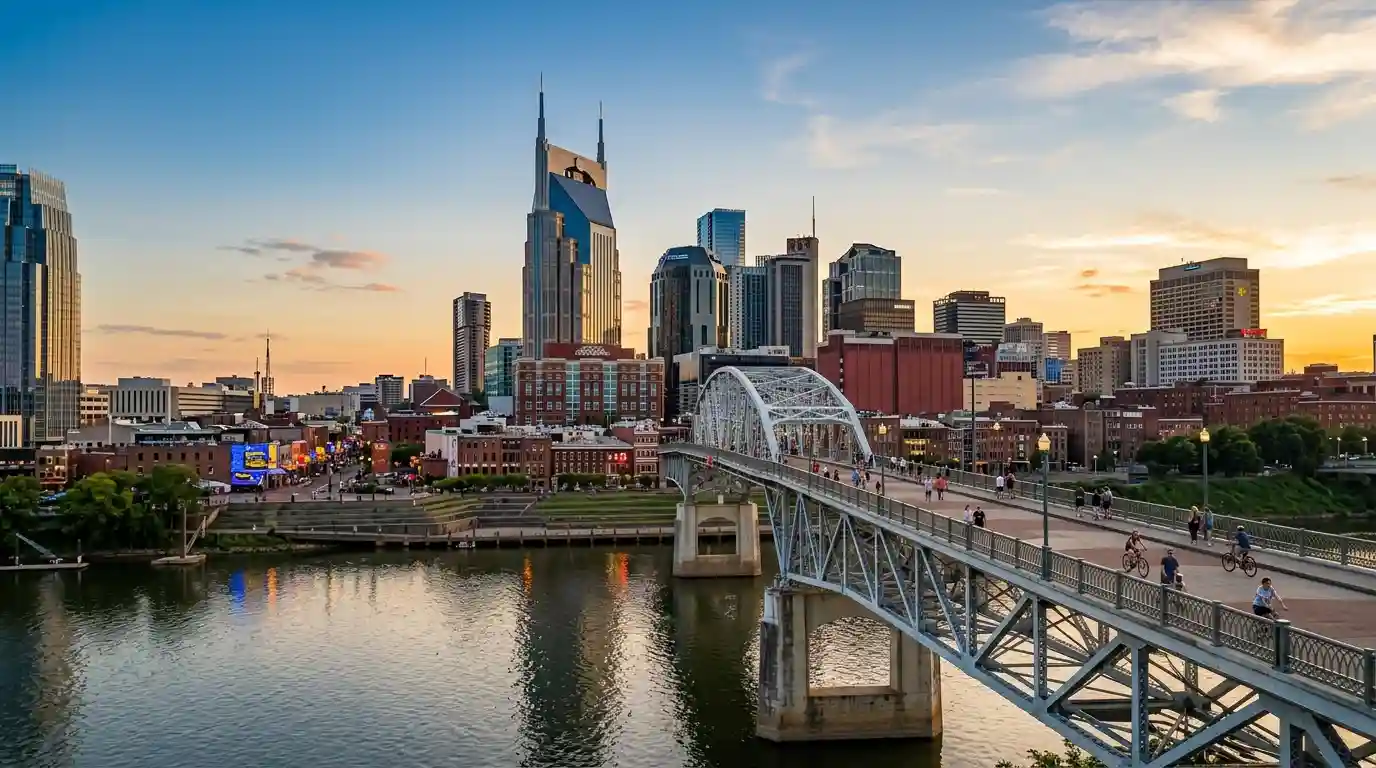
The Cumberland Riverfront provides open views of the river, downtown buildings, and the city’s changing skyline. The John Seigenthaler Pedestrian Bridge is a memorable place for walking, photography, and viewing Nashville from above the water.
The area is especially attractive around sunset, when the light changes across the skyline. It also provides a calmer contrast to the crowds and music venues of Lower Broadway.
Best for: Couples, photographers, walkers, and visitors looking for scenic city views.
Travel tip: Plan a walk around sunset when weather permits, and check local guidance if special events or temporary closures affect access.
16. Belle Meade Historic Site
Belle Meade Historic Site offers a look at the history of a former estate associated with Tennessee’s horse-breeding and racing heritage. Its historic buildings and grounds provide an opportunity to explore architecture, land use, and the complicated social history of the region.
As with other historic estates in the South, visitors should consider the experiences of enslaved people and other workers alongside the stories of prominent owners. Understanding that wider history gives the visit more depth than focusing only on the property’s architecture.
Best for: History enthusiasts, architecture fans, and travelers interested in regional heritage.
Travel tip: Check which tours and historic areas are open on your travel date, as access may vary by experience.
17. The Bluebird Cafe
The Bluebird Cafe is known for intimate songwriter performances that put the focus on original songs and the stories behind them. Instead of the large-stage atmosphere associated with some downtown venues, performances here tend to emphasize the craft of songwriting and the connection between artists and audiences.
For visitors who want to discover the creative side of Nashville, a songwriter round can be one of the most memorable experiences of the trip. The venue is small, and admission arrangements depend on the performance.
Best for: Songwriters, acoustic music fans, and visitors seeking an intimate live performance.
Travel tip: Review the official performance calendar and reservation rules well ahead of your visit. Do not assume walk-in seats will be available.
18. Explore Nashville’s Local Food Scene
Nashville’s food culture is an attraction in its own right. The city is widely associated with hot chicken, a spicy fried-chicken specialty, as well as Southern comfort food, barbecue, biscuits, and meat-and-three meals. Its restaurant scene also includes contemporary Southern cooking and a wide variety of international cuisines.
Trying a local specialty can make a trip feel more connected to the destination. Travelers who do not enjoy very spicy food can ask about heat levels or choose other dishes from the menu.
Best for: Food lovers, groups of friends, and travelers who enjoy exploring regional cuisine.
Travel tip: Popular restaurants may have long waits during weekends and major events. Check menus and dietary options before choosing a restaurant.
19. Discover Nashville’s Street Art and Creative Neighborhoods
Nashville’s creative identity extends beyond recording studios and concert stages. Murals, independent shops, galleries, cafés, and neighborhood businesses offer another way to explore the city. Areas such as The Gulch and East Nashville are worth considering for visitors interested in contemporary culture and photography.
Rather than trying to see every neighborhood in one day, choose one area and explore it at a comfortable pace. This approach leaves time to discover local businesses and enjoy the atmosphere between planned stops.
Best for: Photographers, art enthusiasts, shoppers, and repeat visitors.
Travel tip: Check current neighborhood guides for mural locations and remember that some artwork is on private property or may change over time.
20. Bicentennial Capitol Mall State Park
Bicentennial Capitol Mall State Park combines green space, walking paths, memorials, and features that interpret Tennessee’s history and geography. Its location near the state government district makes it an easy addition to a day of downtown sightseeing.
The park is a good place to take a break between museums and historic landmarks. Visitors can enjoy the open space while learning more about the state’s identity and development.
Best for: History lovers, walkers, families, and budget-conscious travelers.
Travel tip: Wear comfortable shoes and check for public events or temporary access restrictions that may affect your visit.
Best Time to Visit Nashville, Tennessee
Spring and fall are popular seasons for visiting Nashville because temperatures are often more comfortable for walking, outdoor dining, and sightseeing. Spring brings fresh greenery and seasonal events, while fall offers changing foliage and pleasant conditions for exploring the city’s parks and neighborhoods.
Summer can be hot and humid, so plan outdoor activities for earlier in the day and allow breaks between attractions. Winter can provide a quieter city experience, although weather, holiday events, and venue schedules may affect individual plans.
Music festivals, major concerts, sporting events, and conventions can increase hotel prices and visitor numbers at any time of year. Check event dates before booking flights or accommodation.
How Many Days Do You Need in Nashville?
A two-day visit can cover several downtown highlights, while three days provides more room for museums, parks, food, and a major live performance. Travelers who want to explore historic estates, the zoo, and outdoor areas without rushing may prefer four days or longer.
- One day: Walk Broadway, visit a major music attraction, explore the riverfront, and enjoy a local meal.
- Two days: Add the Country Music Hall of Fame and Museum, Ryman Auditorium, and Centennial Park.
- Three days: Include the Grand Ole Opry, a nature outing, a historic site, or a family attraction.
- Four days or more: Explore additional neighborhoods, visit more museums, and build in time for a relaxed food and music itinerary.
Practical Tips for Visiting Nashville
- Plan by neighborhood: Group nearby attractions together to reduce unnecessary travel across the city.
- Book major performances early: Popular shows and intimate songwriter venues can sell out.
- Balance indoor and outdoor activities: Keep a museum or other indoor attraction in mind if the weather changes.
- Budget for transportation: Downtown is walkable in places, but attractions outside the central area may require a car, rideshare, or public transportation.
- Check opening hours: Museum schedules, tours, and seasonal activities can change.
- Choose accommodation strategically: Staying near the attractions you most want to visit can save time, especially on a short trip.
- Respect local spaces: Follow park rules, respect residential neighborhoods, and check venue policies before taking photographs or entering private areas.
Plan More Trips Around the United States
Nashville can also be part of a broader American travel itinerary. If you are comparing destinations or planning a seasonal road trip, explore our guides to Kentucky’s tourist attractions and scenic places to visit in Pigeon Forge, Tennessee for more ideas in the wider region.
For trips farther afield, our guides to the coolest places to visit in the United States, the best places to visit in the USA during summer, and the best places to visit in the US in fall can help you compare destinations by season and travel style.
You can also explore the best places on the US East Coast, New England summer destinations, New Jersey in fall, and the best places to visit in New York State for other regional travel ideas.
If you prefer warmer-weather itineraries, consider places to visit in Texas during summer, California summer destinations, places to visit in New Mexico during summer, or Florida’s popular travel destinations.
Other guides worth exploring include Midwest summer destinations, places to visit in Texas, things to see in San Antonio, unique places to visit in Oklahoma City, the Florida Keys, and family-friendly places in Maryland.
Frequently Asked Questions
What are the top places to visit in Nashville, TN, for first-time visitors?
Start with Broadway, Ryman Auditorium, the Country Music Hall of Fame and Museum, and the Grand Ole Opry. If you have extra time, visit Centennial Park and the Parthenon or take a walk along the Cumberland Riverfront.
What can you do in Nashville besides listening to country music?
Nashville also offers art museums, historic landmarks, parks, hiking trails, family attractions, street art, shopping, and a diverse food scene. Radnor Lake State Park, the Frist Art Museum, and the Tennessee State Museum are good alternatives to music-focused activities.
Is Nashville a good destination for families?
Yes. Families can choose from the Nashville Zoo, Adventure Science Center, Centennial Park, the Parthenon, the Tennessee State Museum, and outdoor walking areas. Check age requirements and event schedules when selecting live music venues.
What are some free places to visit in Nashville?
Options can include walking along Broadway, exploring Centennial Park, viewing the Parthenon from outside, visiting public park spaces, walking the John Seigenthaler Pedestrian Bridge, and exploring Bicentennial Capitol Mall State Park. Confirm current access rules and admission details for specific attractions.
When is the best time to visit Nashville?
Spring and fall are often comfortable for outdoor sightseeing. Summer is suitable for travelers who plan around heat and humidity, while winter can offer a quieter visit. Your ideal dates depend on weather preferences, concerts, festivals, and accommodation prices.
How many days should I spend in Nashville?
Two or three days is a practical starting point for major attractions, live music, and local food. Add more time if you want to explore several museums, visit the zoo, hike at Radnor Lake, or tour destinations outside downtown.
Final Thoughts
The top places to visit in Nashville, TN, combine iconic music venues, historic landmarks, cultural attractions, outdoor spaces, and distinctive Southern food. From the energy of Broadway to the peaceful trails at Radnor Lake, Music City offers different experiences for first-time visitors and returning travelers alike.
For the best trip, choose attractions that match your interests, group nearby stops together, and check opening hours and performance schedules before leaving home. With a little planning, you can experience Nashville’s music heritage while also discovering the parks, museums, neighborhoods, and local flavors that make the city unique.