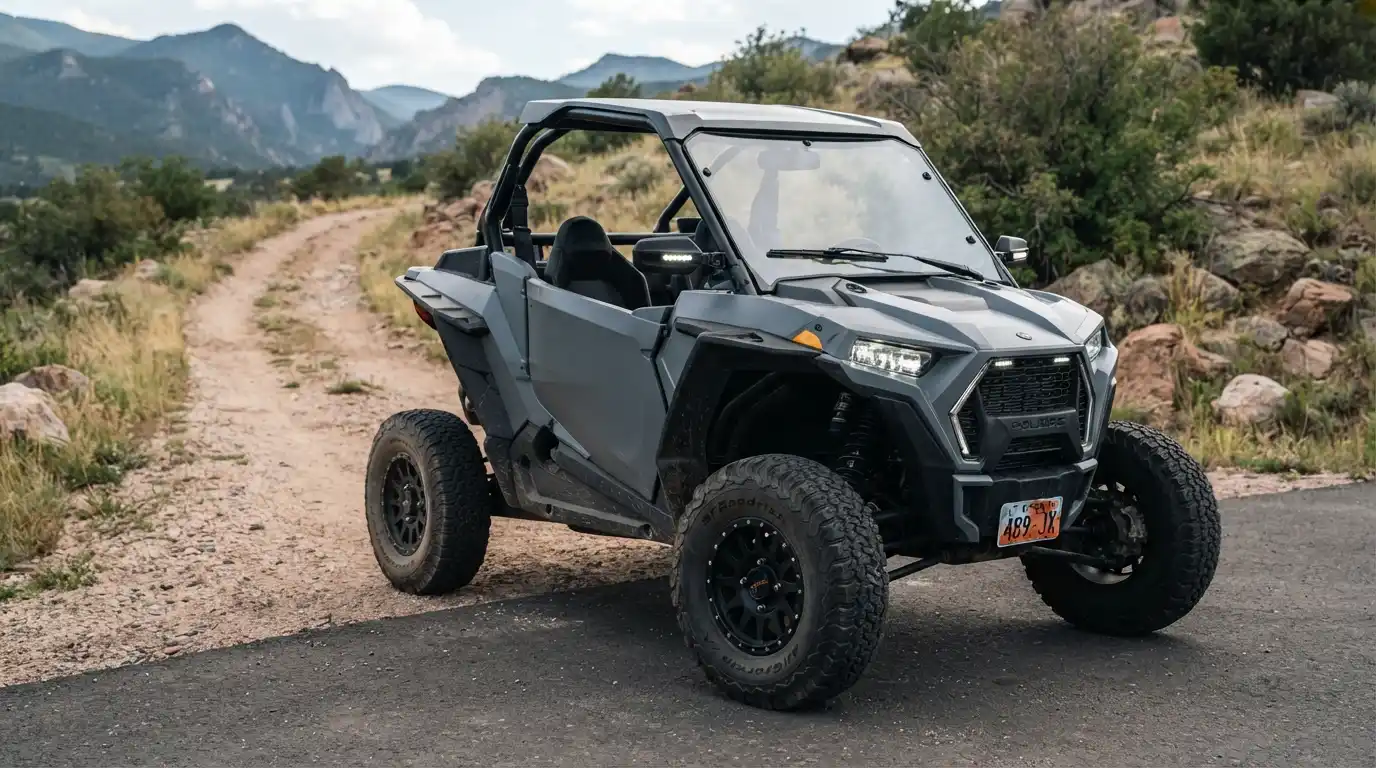
Whether you drive a Polaris RZR, Ranger, General, Honda Pioneer, Yamaha YXZ, Kawasaki, Can-Am, or another compatible side-by-side, choosing the correct kit is an important first step. Vehicle compatibility, installation quality, visibility, wiring, and local requirements can all affect whether an off-road vehicle is properly prepared for public-road use.
This guide explains what a Ryco Street Legal Kit can provide, what to check before purchasing one, how installation generally works, and why road compliance should be treated as a complete vehicle setup rather than a single accessory.
What Is a Ryco Street Legal Kit?
A Ryco Street Legal Kit is an aftermarket conversion package intended for compatible UTVs and side-by-sides. Depending on the vehicle-specific kit, the package can provide equipment such as turn signals, a horn, wiring harnesses, a flasher system, and license-plate lighting.
The goal is straightforward: add important road-use controls and visibility equipment without creating an unnecessarily complicated electrical installation.
For UTV owners who are also interested in performance tuning, a street-oriented lighting and signaling system can complement a broader vehicle setup. However, performance modifications and legal requirements should always be considered separately.
Why Street-Legal Equipment Matters for UTV Owners
UTVs are built primarily for utility, recreation, trails, farms, work sites, and off-road environments. Once an owner wants to operate one on public roads, additional equipment may be required.
Requirements vary by jurisdiction, so a kit should never be viewed as an automatic guarantee that a vehicle is legal everywhere. Local authorities may have additional requirements involving lighting, mirrors, windshield equipment, registration, insurance, safety equipment, vehicle identification, or other road-use conditions.
This is one reason it is useful to approach a conversion systematically. Similar to maintaining a regular vehicle through reliable auto service, a street-legal UTV should be inspected as a complete system rather than relying on one installed component.
Common Components in a Ryco Street Legal Kit
The exact contents depend on the specific Ryco model and the UTV it is designed to fit. Nevertheless, several components commonly appear in these conversion packages.
1. Turn Signals
Turn signals provide other road users with a clear indication of the driver’s intended direction. LED signal lights can provide a compact and visible solution while keeping the installation relatively clean.
Correct placement matters just as much as having the lights installed. Signals should be securely mounted and positioned where they can be seen by other road users.
2. Turn-Signal and Horn Switch
A steering-column-mounted combination switch can make the controls feel more familiar to drivers accustomed to conventional automobiles. Depending on the kit, the switch may combine turn-signal operation, horn activation, and hazard-light control.
This type of integration can make the converted UTV easier to operate when moving between trails, private property, and permitted public roads.
3. Horn
A functional horn is an important communication and safety feature. It allows the driver to alert other road users when necessary and can make a UTV feel more complete as a road-oriented vehicle.
4. Flasher System
An electronic flasher helps control the turn-signal system. Some vehicle-specific kits use self-canceling functionality, while others may rely on the driver’s operation of the switch.
5. License-Plate Lighting
License-plate illumination is another common component in street-legal conversion packages. The light is intended to improve visibility of the plate during low-light conditions while keeping the installation integrated with the rest of the vehicle.
6. Wiring Harnesses and Connectors
Electrical installation can become frustrating when every wire has to be measured, cut, terminated, and routed independently. Vehicle-specific wiring harnesses and connectors can simplify this process and help produce a cleaner installation.
For owners interested in broader technology maintenance, the same principle applies here: a properly planned system is generally easier to inspect and troubleshoot than an improvised setup.
Choosing the Correct Ryco Kit for Your UTV
One of the biggest mistakes an owner can make is purchasing a street-legal kit based only on the brand name. Ryco produces different kits for different vehicle platforms, model years, and configurations.
Before ordering, identify the following:
- Vehicle manufacturer
- Exact UTV model
- Model year
- Two-seat or four-seat configuration
- Existing lighting configuration
- Steering and dashboard configuration
- Any factory accessories that could affect installation
Compatibility should be confirmed using the specific kit’s application information. A kit designed for one UTV platform should not automatically be assumed to fit another model simply because the vehicles appear similar.
Owners who frequently switch between recreational driving and practical vehicle use may also benefit from understanding how transportation systems and vehicle configurations differ according to their intended purpose.
Ryco Street Legal Kit Installation
Installation varies according to the UTV and kit number, but the overall process typically involves mounting the required lighting and controls, connecting the wiring, installing the horn, and setting up license-plate illumination.
Start With the Battery
Before performing electrical work, disconnect the battery according to the vehicle and kit instructions. This reduces the risk of accidental electrical shorts while wiring components.
Plan Component Locations
Before drilling or permanently mounting anything, determine where the turn signals, switch, horn, wiring, and license-plate light will be positioned.
A good installation should avoid unnecessary wire exposure, sharp edges, moving components, hot surfaces, and areas where mud or water can easily damage electrical connections.
Install the Controls
The steering-column switch should be securely mounted in a location that is comfortable to operate without interfering with normal steering. The horn and hazard controls should also remain easy to access.
Connect the Wiring
Follow the wiring diagram supplied with the specific kit. Do not assume that wiring colors or connector locations are identical across different UTV models.
After installation, inspect every connection before reconnecting power. Loose grounds, poorly protected connections, and incorrectly routed wires can create intermittent electrical problems.
Test Everything
Test the turn signals, hazard lights, horn, brake lights, license-plate light, and dashboard indicators where applicable. Testing should happen before the vehicle is used on the road.
If the electrical system behaves unexpectedly, stop troubleshooting before repeatedly cycling the system. A qualified technician can help identify wiring or compatibility issues.
How a Street Legal Kit Can Improve the Driving Experience
A properly installed street-legal conversion does more than add individual components. It can make a UTV feel more intuitive when transitioning between off-road recreation and permitted road use.
Clear signaling gives surrounding drivers better information. A properly positioned horn provides another method of communication. Integrated controls can reduce driver distraction because important functions remain within easy reach.
The result is a more organized vehicle setup rather than a collection of disconnected aftermarket accessories.
This approach is especially valuable for enthusiasts who also follow sports and performance equipment, where proper fit, reliable operation, and appropriate use are equally important.
Does a Ryco Kit Make a UTV Street Legal Everywhere?
No. Installing a street-legal kit does not automatically make every UTV legal on every public road.
Street-use rules can vary significantly between states, counties, municipalities, and road classifications. Some jurisdictions may allow certain UTVs on designated roads, while others may impose restrictions or require additional equipment and documentation.
Before using a converted UTV on public roads, check the applicable requirements in your area. Consider registration, insurance, lighting requirements, mirrors, windshield requirements, safety equipment, licensing, and any restrictions on where the vehicle can legally operate.
This distinction is important because a high-quality aftermarket kit and legal road operation are related but not identical concepts.
Performance vs. Compliance: Finding the Right Balance
Many UTV owners want more than basic transportation. They may also be interested in acceleration, suspension upgrades, tires, exhaust systems, engine tuning, or other performance modifications.
However, modifications should be evaluated individually. An upgrade that improves off-road performance may create additional noise, emissions, handling, or safety considerations depending on the vehicle and jurisdiction.
The smartest approach is to build the vehicle around its intended use. If public-road operation is important, prioritize equipment and modifications that support predictable handling, visibility, safety, and compliance.
For enthusiasts interested in broader performance topics, the performance optimization concept is surprisingly similar: individual upgrades matter, but the complete system determines the final experience.
Maintenance After Installation
Installing a street-legal kit is not the end of the process. Electrical and lighting components should be inspected periodically, particularly if the UTV is frequently exposed to mud, dust, rain, vibration, or rough terrain.
Check for:
- Loose mounting hardware
- Damaged wiring
- Corroded connectors
- Cracked lights
- Loose grounds
- Non-functioning indicators
- Damaged license-plate lighting
- Horn operation
Routine inspection is particularly important after aggressive trail use. Components that appear secure in the garage can loosen after repeated vibration.
Regular vehicle care also connects naturally with professional auto service and vehicle repair practices, especially when electrical problems require professional diagnosis.
Common Mistakes to Avoid
Buying Without Checking Compatibility
Never choose a kit simply because it is marketed for a similar UTV. Confirm the exact model and year before purchasing.
Assuming Installation Equals Legal Compliance
A complete kit can provide important equipment, but local regulations determine whether the vehicle can legally operate on a particular road.
Ignoring Wiring Quality
Electrical components are only as reliable as their connections. Protect wiring from abrasion, heat, water exposure, and unnecessary movement.
Skipping the Final Inspection
Every light and control should be tested before the UTV is used on public roads. A single failed signal can undermine the safety benefits of the entire installation.
Overlooking Existing Vehicle Equipment
Some kits are designed to work with factory headlights or taillights. Others may require additional components. Understand how the aftermarket kit interacts with the UTV’s original equipment before installation.
Owners performing extensive modifications can also benefit from understanding the importance of reliable vehicle care and servicing.
Who Should Consider a Ryco Street Legal Kit?
A Ryco Street Legal Kit can be worth considering for UTV owners whose vehicles are compatible with a particular kit and who want to add practical road-use equipment in a more organized package.
It can be especially useful for owners who:
- Use their UTV for mixed recreational and practical purposes
- Need integrated turn signals and horn controls
- Want a cleaner electrical installation
- Frequently ride in areas where permitted road use is available
- Prefer vehicle-specific components over improvised wiring
- Want to prepare their UTV for applicable registration and inspection requirements
It may not be the right solution for every vehicle or every jurisdiction. Compatibility and local regulations should always be checked first.
Ryco Street Legal Kit vs. Building a Custom Setup
A custom setup can provide flexibility, but it can also require more planning, wiring, component selection, and troubleshooting.
A vehicle-specific kit offers the advantage of bringing several components together around a particular application. That can reduce the number of individual purchasing decisions and potentially simplify installation.
On the other hand, experienced builders may prefer a custom approach when they have unusual vehicle configurations or specific design requirements.
The best choice depends on technical skill, vehicle configuration, budget, intended use, and the local rules that apply to the vehicle.
Final Checklist Before Road Use
Before taking a converted UTV onto a permitted public road, perform a complete inspection:
- Confirm the kit matches the exact UTV model and year.
- Check all turn signals.
- Test the hazard lights.
- Test the horn.
- Check brake-light operation.
- Confirm license-plate illumination works.
- Inspect wiring and connectors.
- Secure loose wires and hardware.
- Verify that controls do not interfere with steering.
- Review the applicable local road-use requirements.
- Complete any required registration or inspection steps.
- Confirm insurance requirements before road operation.
For owners who want to keep their vehicle dependable beyond the initial conversion, ongoing inspection should become part of normal maintenance rather than something performed only before an inspection.
Final Thoughts
The Ryco Street Legal Kit can provide a practical foundation for adding important road-oriented equipment to compatible UTVs. Turn signals, horn controls, wiring, flasher components, and license-plate illumination can create a cleaner and more functional setup when installed correctly.
However, the most important point is that street-legal equipment and legal road use are not the same thing. Vehicle compatibility, installation quality, registration, insurance, required safety equipment, and local regulations all need to be considered together.
If your goal is to enjoy your UTV beyond the trail, start with the right vehicle-specific kit, install it carefully, test every component, and verify the rules that apply where you intend to ride. That approach gives you a much better foundation for a reliable, practical, and responsible road-ready setup.