
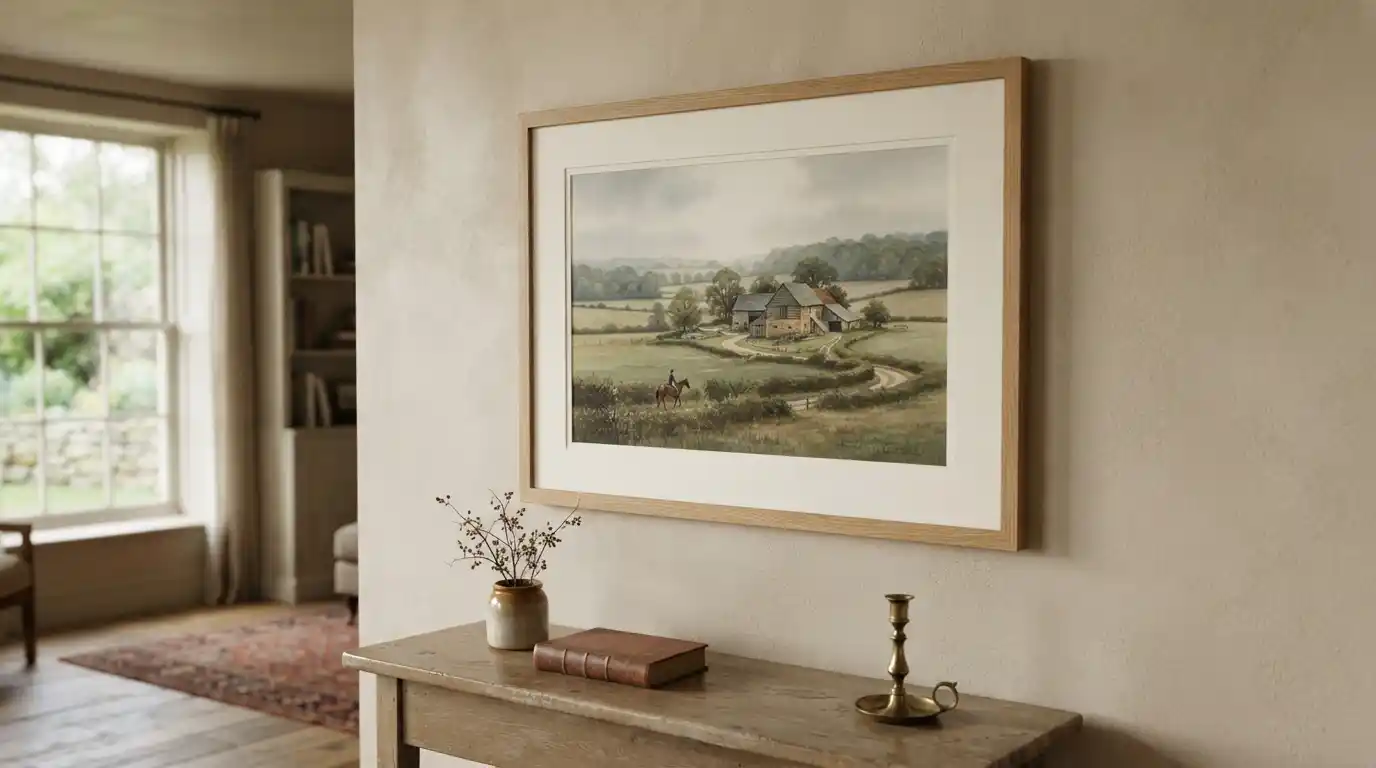
For someone discovering his work for the first time, collecting a Sculthorpe print involves more than choosing an attractive image. Edition size, signature, condition, provenance, medium, subject, framing, and the relationship between a print and the artist’s broader body of work can all influence how a collector evaluates it.
This guide explores what makes Peter Sculthorpe prints distinctive, what collectors should examine before buying, and why limited-edition artwork can be an interesting addition to a broader collection.
Who Is Peter Sculthorpe?
Peter Sculthorpe is an American artist born in 1948 whose work is strongly associated with landscape and rural subjects. His artwork is particularly recognized for scenes featuring the countryside, stone architecture, barns, fields, water, horses, and atmospheric skies.
His visual language gives everyday rural environments a sense of permanence. Instead of relying on complicated compositions, many of his works emphasize natural light, seasonal atmosphere, architectural character, and carefully placed subjects.
That approach can make his artwork especially appealing to people who enjoy traditional landscape painting, American regional imagery, and collectible works that can complement a home or private collection.
What Makes Peter Sculthorpe Prints Appealing?
The appeal of Peter Sculthorpe prints comes largely from their combination of recognizable landscapes and a restrained artistic atmosphere. A viewer may notice a farmhouse, a horse, a shoreline, or a group of trees immediately, but the overall mood is often created through the relationship between those elements.
Collectors may also appreciate the fact that editioned artwork provides an opportunity to own a work associated with an established artist without necessarily purchasing a unique original painting.
For readers interested in the wider relationship between creativity, learning, and visual culture, our article on scholarly articles about art education provides another perspective on how art connects with education and intellectual exploration.
Understanding Limited-Edition Peter Sculthorpe Prints
One of the first things a prospective collector should understand is the meaning of an edition. A limited-edition print is produced in a defined quantity, with individual impressions commonly identified by numbers such as 12/96 or 45/300.
Edition size matters because it tells you how many impressions belong to that particular edition. It should not, however, be treated as the only measure of desirability or financial value.
Collectors should consider the entire work: the image, condition, medium, signature, edition information, provenance, demand, and relevance to the artist’s career.
This broader approach is useful when evaluating other collectible categories as well. For example, collectors interested in luxury objects may also explore our guide to choosing a display for a collection, where presentation and preservation are important considerations.
Popular Subjects in Peter Sculthorpe’s Work
Rural Landscapes
Rural scenery is central to Sculthorpe’s visual identity. Open fields, distant hills, country roads, farms, and changing skies create compositions that can work particularly well in traditional and transitional interiors.
Stone Architecture
Stone barns and rural structures are another recurring visual element. Their texture, age, and relationship to the surrounding landscape give the compositions a strong sense of place.
Horses and Equestrian Scenes
Horses can become the focal point of a Sculthorpe composition or serve as smaller elements within a broader landscape. These works can appeal to collectors with an interest in equestrian art and countryside imagery.
Water and Coastal Landscapes
Some works extend beyond farmland into coastal and waterside environments. These compositions often create a different atmosphere while retaining the artist’s emphasis on landscape, light, and space.
Examples of Peter Sculthorpe Prints
Collectors researching his work may encounter titles such as In the Shallows, Foaling Moon, Broken Water, Winter Huntsmen, Returning, Wind Rows, Black Duck Cove, After the Harvest, and Hilltop Farm.
Other works associated with his print market include Buck and Doe Run, Turkey Hill, Cross Country, Creek House, Moonscape, and December Moonrise.
Edition sizes can vary considerably between works, so collectors should always examine the specific edition information for the individual print rather than assuming every Peter Sculthorpe print was produced in the same quantity.
What Should You Look for When Buying?
1. Edition Information
Check the edition number and total edition size. A smaller edition can be an important characteristic, but it should be considered alongside the artwork itself and its condition.
2. Artist Signature
A signed print can have a different collecting profile from an unsigned reproduction. Examine the signature carefully and compare the documentation supplied with the work.
3. Medium
Pay attention to whether the work is identified as a giclée, lithograph, reproduction, or another printmaking format. The production method is an important part of understanding what you are buying.
4. Condition
Inspect the paper, image surface, margins, mounting, matting, and frame. Look for discoloration, foxing, tears, creases, fading, water damage, or other issues that may affect presentation.
5. Provenance
When available, documentation showing where a work came from can provide useful context. Keep invoices, certificates, gallery documentation, and other purchase records with the artwork.
Why Condition Matters
Condition is particularly important with works on paper. A beautiful image can lose some of its visual impact when the paper has suffered from poor storage, excessive sunlight, moisture, or improper framing.
For long-term ownership, consider archival-quality materials and protection from direct sunlight. Stable environmental conditions can also help reduce unnecessary deterioration.
The same principle applies to other collectible objects: preservation is part of ownership. If your interests extend beyond art, you may also enjoy our coverage of historical fashion and collectible design and timeless jewelry design.
Peter Sculthorpe Prints as Decorative Art
Not every collector approaches art primarily from an investment perspective. Many buyers choose artwork because they want to live with it.
Sculthorpe’s landscapes can work particularly well in rooms where natural materials, traditional furniture, neutral colors, or countryside themes are already present. A wide landscape print can create a visual focal point above a sofa, console, fireplace, or dining area.
Vertical works may work better in narrower spaces, while panoramic compositions can complement long walls and open rooms.
Collectors interested in luxury-oriented interiors may also find inspiration in our articles covering luxury lifestyle and style, modern luxury and everyday elegance, and exclusive lifestyle experiences.
Are Peter Sculthorpe Prints a Good Investment?
It is important to separate collecting artwork from treating artwork as a guaranteed financial investment. No individual print should be assumed to appreciate simply because it is signed, limited, or associated with a recognized artist.
A more useful approach is to consider a print from several perspectives: artistic appeal, rarity, condition, documentation, historical relevance, market availability, and your own collecting objectives.
Collectors interested in investment strategy can also explore our article on investment strategy and long-term assets for a broader discussion of how different types of assets can be evaluated.
Luxury purchases also require careful consideration of financing and total ownership costs. Our coverage of luxury purchase financing provides a related example of why acquisition cost and long-term value should be considered separately.
How to Display Peter Sculthorpe Artwork
Presentation can significantly affect how a print is experienced. A quality frame should complement the artwork without competing with it.
For traditional landscapes, wood frames and understated neutral mats can create a natural visual connection with the subject. More contemporary interiors may benefit from cleaner frame profiles.
Where possible, avoid placing valuable works on paper in locations exposed to intense direct sunlight or excessive humidity. Professional framing can also help ensure that the artwork is appropriately mounted and protected.
Building a Peter Sculthorpe Collection
A collection does not have to begin with several expensive works. Starting with one print that genuinely appeals to you can be a more practical approach.
Over time, collectors can develop themes. One group might focus on rural architecture, another on horses, while another could emphasize coastal scenes or changing seasons.
Keeping records of acquisition dates, edition numbers, dimensions, signatures, purchase prices, and documentation can make the collection easier to manage as it grows.
Collectors who enjoy building themed collections may also appreciate our coverage of collector-focused experiences and the broader world of collectible objects.
Peter Sculthorpe Prints vs. Original Paintings
Original paintings and prints serve different purposes within a collection. An original is a unique artwork, while an editioned print belongs to a defined group of impressions.
That distinction does not automatically make one format preferable. Some collectors value uniqueness, while others appreciate the accessibility, format, and visual qualities of editioned artwork.
The right choice depends on the collector’s budget, available space, artistic preferences, and long-term goals.
Questions to Ask Before Buying
- What is the exact title of the work?
- What medium was used?
- What is the total edition size?
- Is the print signed and numbered?
- What is the condition of the paper and image?
- Has the artwork been professionally framed?
- Is documentation available?
- Can the seller provide clear photographs of the artwork and markings?
- Does the purchase price make sense compared with comparable examples?
- Would you still want the artwork if you were not considering resale?
Final Thoughts on Peter Sculthorpe Prints
Peter Sculthorpe prints offer collectors an opportunity to engage with atmospheric American landscape art through editioned works featuring countryside scenery, stone architecture, wildlife, horses, fields, and water.
The most sensible collecting approach is to look beyond the word “limited edition.” Study the individual artwork, verify its edition and signature, inspect its condition, preserve its documentation, and choose pieces that genuinely fit your collecting interests.
Whether your goal is to decorate a home, develop an art collection, or learn more about editioned artwork, Sculthorpe’s landscapes provide a distinctive subject area worth exploring carefully.
For anyone interested in expanding their understanding of collectible art, design, and luxury objects, the wider topics covered throughout WayfareHub can provide additional reading across related lifestyle and collecting subjects.