Brevard County is a large area that includes communities such as Melbourne, Palm Bay, Cocoa, Titusville, Rockledge, Merritt Island, and surrounding neighborhoods. That means a missing pet can travel farther than expected, particularly if it becomes frightened or follows food, another animal, or a familiar scent.
What to Do Immediately After Your Pet Goes Missing
Do not wait until the next day to begin searching. Start close to home and work outward systematically.
- Search your home, yard, garage, sheds, and nearby hiding places.
- Walk or drive around the immediate neighborhood.
- Ask neighbors to check garages, porches, yards, sheds, and other enclosed spaces.
- Carry a flashlight even during daylight because frightened pets may hide in dark or sheltered areas.
- Bring familiar treats, food, a favorite toy, or another item with your pet’s familiar scent.
- Keep your phone available so you do not miss a call or message from someone who has spotted your pet.
For cats, check surprisingly small and quiet spaces. Indoor cats that escape may remain close to home but hide because the unfamiliar outdoor environment makes them nervous. Dogs may cover a much larger area, especially if they were frightened by traffic, fireworks, storms, or another sudden event.
Create a Clear Lost Pet Notice
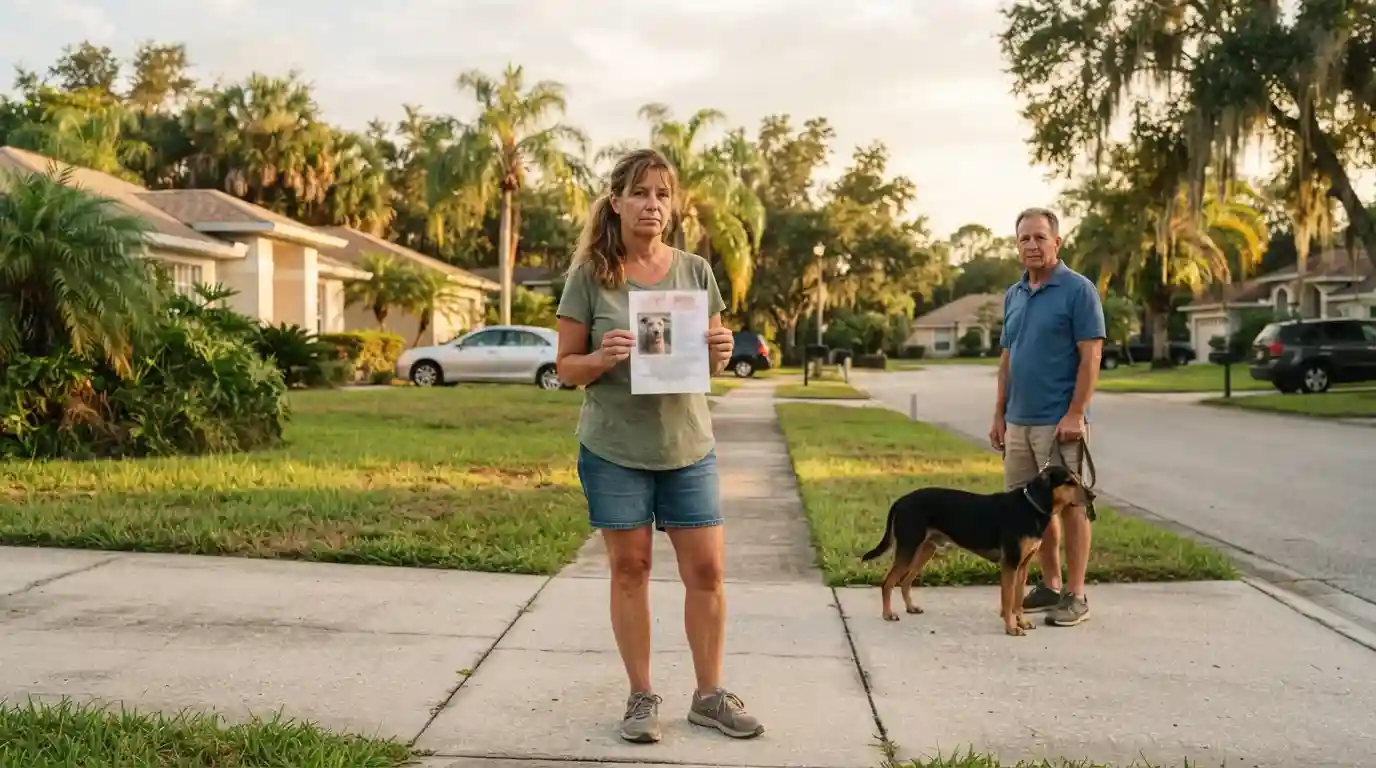
A good lost pet notice should allow someone to identify your animal quickly. Use a recent, clear photograph rather than a distant or heavily edited picture.
Include your pet’s name, species, breed or general appearance, color, sex, approximate age, distinctive markings, collar information, microchip information when appropriate, last known location, and a reliable contact method.
Keep the message short enough that people can understand it at a glance. If your pet is nervous or may run from strangers, clearly state that people should not chase the animal and should instead contact you with the location and direction of travel.
Search the Area Methodically
Instead of repeatedly covering the same streets without a plan, divide the search area into sections. Start with the location where your pet was last seen and expand outward.
Check roads, sidewalks, parks, drainage areas, wooded edges, vacant lots, parking areas, apartment complexes, and places where food or water may be available. Ask people who work outdoors, walk dogs, deliver packages, maintain properties, or spend time in the neighborhood because they may notice an animal during their normal routines.
If your search extends beyond your immediate neighborhood, keep a written record of locations that have already been checked. This prevents duplicated effort and helps volunteers concentrate on new areas.
Contact Local Animal Services
One of the most important steps in a Brevard County lost pet search is contacting the appropriate local animal-services resources. A found animal may be reported or brought to an animal facility even if the finder does not know who owns it.
When contacting local authorities or animal-services personnel, provide a recent photograph and accurate identifying details. If your pet has a microchip, make sure your registration information and phone number are current.
Also check whether your community has local animal-rescue groups, neighborhood organizations, shelters, or lost-and-found pet communities. A wider notification network gives more people an opportunity to recognize your pet.
Use Social Media and Neighborhood Networks
Online community groups can be particularly useful when a missing pet is seen by several people in different neighborhoods. Post the same accurate information across relevant local groups rather than creating different versions that contain conflicting details.
Ask people to report sightings with the exact location, time, direction of travel, and a photograph if one is safely possible. Avoid encouraging large groups of people to chase a frightened animal. A scared dog or cat can run farther when surrounded by unfamiliar people.
Check Nearby Properties and Safe Hiding Places
A missing pet may become trapped somewhere rather than deliberately traveling long distances. Ask nearby residents to inspect garages, sheds, fenced yards, porches, crawl spaces, and other areas where an animal could become stuck.
For cats, search after dark when the neighborhood is quieter. Use a flashlight to look beneath vehicles and into sheltered spaces. Calling softly and then waiting quietly can sometimes be more productive than continuously shouting a pet’s name.
Use Familiar Scents Carefully
Familiar scents can help create a recognizable point near your home. Consider placing a recently worn item of clothing or another familiar-smelling object in a safe location where your pet might encounter it.
If you leave food or water outside, monitor the area rather than assuming your missing pet is the animal visiting it. Other animals may also be attracted to food, particularly overnight.
What If Someone Spots Your Missing Pet?
A sighting is useful information, but it does not necessarily mean you should immediately run toward the animal. A frightened pet may interpret sudden movement as a threat and run again.
Ask the person reporting the sighting to remain at a safe distance if possible. Record the exact location and direction the pet was traveling. If you have a trusted person nearby, coordinate the approach instead of sending several people into the area at once.
Keep Identification Information Updated
Identification can make the difference between a long search and a quick reunion. Make sure your pet wears appropriate identification and that the contact information connected with its microchip is current.
Keep several recent photographs of your pet on your phone. It is also useful to have photographs showing distinctive markings from different angles. These can help distinguish your pet from similar-looking animals.
Consider How Weather and Local Conditions Affect the Search
Weather can influence where a missing animal chooses to shelter. During heat, pets may seek shade, water, or cooler enclosed spaces. During rain or storms, they may move toward covered areas. After a stressful event, an animal may remain hidden for longer than expected.
Brevard County residents can also benefit from having a broader emergency plan for household pets. Pet owners should identify animal-friendly sheltering options and keep essential pet supplies ready before an emergency occurs.
If You Travel With Your Pet in Florida
Pet identification and preparation become even more important when traveling. An unfamiliar environment can make it easier for a dog or cat to become disoriented if it escapes.
If your household travels around Florida, resources covering destinations such as the Florida Keys, Florida travel destinations, and summer destinations in the USA can be useful when planning trips. Keep your pet’s identification information with you whenever you travel.
Travel planning may also involve destinations such as Fort Lauderdale, San Diego County, Southern California, or Texas. Wherever you go, keep your pet secured and make sure identification details are current.
For broader trip planning, travelers may also explore cool places to visit in the US, East Coast destinations, fall destinations in the US, and Midwest summer destinations. These travel resources are separate from a lost-pet search, but they can be useful when planning future trips with pets.
Keep Searching Even After the First Day
Do not assume that a missing pet is gone permanently simply because you did not find it during the first search. Cont