
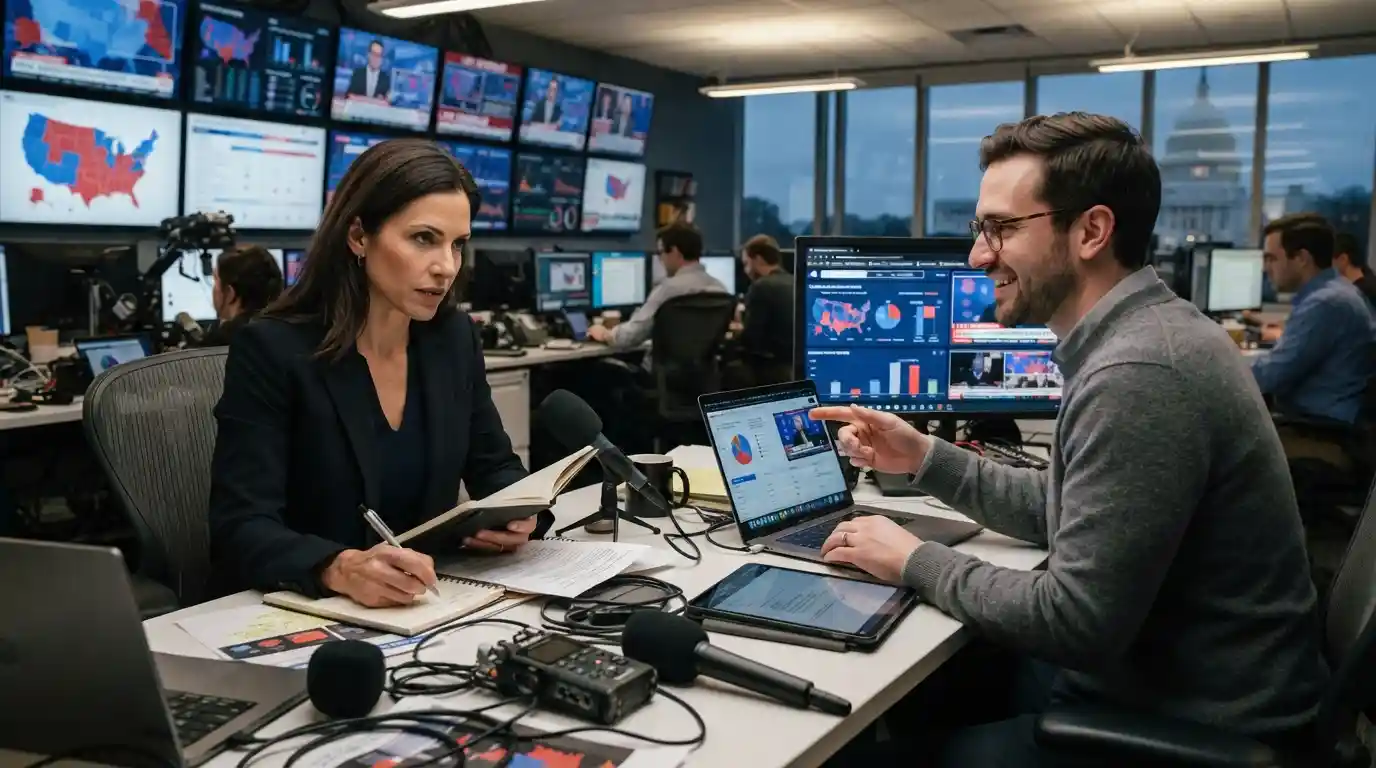
Although they have developed different professional paths, both journalists represent a modern approach to political reporting that combines traditional reporting skills with digital storytelling. Alemany has built a career around political, congressional, and White House reporting, while Hamby has become known for political journalism that reaches audiences across television, digital media, social platforms, podcasts, and video.
Their careers also provide a useful way to understand how political journalism has evolved. Today’s reporters are expected not only to uncover information but also to understand audiences, communicate across formats, and follow political stories as they develop in real time.
Who Is Jacqueline Alemany?
Jacqueline Alemany is an American political journalist whose career has included work at CBS News and The Washington Post. She joined The Washington Post in 2018 after several years at CBS, where she worked in digital journalism and covered presidential politics and the White House.
Her work at The Washington Post expanded into congressional investigations and major political stories. She also helped develop early-morning political newsletter coverage, demonstrating how traditional reporting could be adapted into a concise digital format for readers who wanted important developments at the beginning of the day.
Alemany’s reporting experience reflects the increasingly broad responsibilities of political correspondents. Rather than concentrating on a single traditional medium, modern political reporters frequently move between breaking news, investigations, newsletters, interviews, digital analysis, and live coverage.
Her career is particularly relevant to readers interested in how political reporting has adapted to the digital news cycle. For broader context, readers can also explore U.S. election coverage and political developments as well as the wider WayfareHub blog.
Who Is Peter Hamby?
Peter Hamby is an Emmy Award-winning political journalist whose career has crossed traditional television journalism, digital reporting, social media, and modern media companies. He began his professional career at CNN and later became a national political reporter and correspondent for CNN Digital.
Hamby became particularly associated with digital-first political journalism after moving from CNN to Snapchat in 2015. There, he helped develop news programming designed for audiences consuming journalism primarily through mobile devices and social platforms.
He also became the host of Good Luck America, a political program created for Snapchat. His work demonstrated how political reporting could be presented in a format designed around the habits of younger digital audiences rather than simply transferring television news onto a phone screen.
Today, Hamby’s work continues to span politics, media, and technology. His career illustrates how political journalists can build audiences across multiple platforms while maintaining a strong focus on political reporting and analysis.
Jacqueline Alemany and Peter Hamby: Two Different Paths
At first glance, Jacqueline Alemany and Peter Hamby may appear to have very different journalism careers. Alemany has become strongly associated with congressional investigations, White House reporting, newsletters, and political enterprise journalism. Hamby has moved between television, digital journalism, social media, video, podcasts, and media analysis.
However, their careers share an important characteristic: both have adapted to changes in the way audiences consume political information.
Alemany demonstrates how established news organizations can use newsletters and digital reporting to deliver political information quickly and directly. Hamby demonstrates how journalists can build political programming for audiences who may rarely consume traditional television news.
This difference is important because modern journalism is no longer defined by a single distribution channel. A political story can begin with a reported scoop, appear in a newsletter, become a television discussion, spread through social media, and later develop into a podcast or video analysis.
The Evolution of Political Journalism
Political journalism has always required speed, accuracy, sourcing, and persistence. What has changed is the environment in which journalists perform those responsibilities.
In earlier decades, audiences often depended on newspapers, evening television broadcasts, magazines, and radio for political information. Today, readers can encounter political news through websites, mobile notifications, newsletters, social networks, podcasts, streaming video, and search engines.
That transformation has created both opportunities and challenges. Journalists can reach audiences directly and publish information quickly, but they also face a much faster news cycle and intense competition for attention.
The broader technological environment surrounding journalism can be seen in developments such as AI and emerging technology. Digital tools increasingly influence how information is discovered, produced, distributed, and consumed.
Why Digital-First Reporting Matters
Peter Hamby’s career offers a particularly clear example of the rise of digital-first journalism. His move into social media journalism showed that political reporting could be redesigned around mobile audiences rather than simply reproduced from traditional television.
The significance of this shift goes beyond one platform. It reflects a larger change in audience behavior. Younger readers and viewers may encounter political information through short videos, social posts, newsletters, podcasts, and digital conversations before they ever watch a conventional news broadcast.
For journalists, that means storytelling must work across different formats. A reporter may need to explain a complicated political development in a written article, summarize it in a newsletter, discuss it on television, and then provide additional context through a podcast or video.
This cross-platform approach is closely connected to broader changes in digital communication. Readers interested in the business side of online communication can also explore the global impact of digital marketing, advanced digital marketing and business growth, and digital transformation in advertising and marketing.
The Importance of Investigative Political Reporting
While digital distribution has transformed journalism, the foundation of high-quality political reporting remains reporting itself.
Jacqueline Alemany’s career demonstrates the continuing importance of investigative and enterprise journalism. Congressional investigations, White House reporting, government accountability, and political oversight require journalists to develop sources, verify documents, understand complex institutions, and identify information that matters to the public.
That work cannot be replaced simply by publishing quickly. Political journalism still depends on verification, context, editorial judgment, and the ability to distinguish meaningful developments from the constant stream of political commentary.
This distinction matters especially in an environment where breaking political information can spread almost instantly. A fast headline may attract attention, but accurate reporting determines whether that information remains valuable after the initial news cycle has passed.
Newsletters and the Return of Direct Audience Relationships
One of the most interesting developments associated with modern journalism is the growth of newsletters.
A newsletter gives a journalist or publication a direct relationship with readers. Instead of requiring readers to visit a homepage repeatedly or wait for a scheduled television broadcast, important information can arrive directly in an inbox.
Alemany’s experience with political newsletters illustrates why this format became attractive to news organizations. A well-designed newsletter can combine original reporting, curated developments, context, and links into a focused product that helps readers understand what matters.
This approach also fits the broader movement toward personalized digital information. Modern audiences increasingly expect content to be accessible when they want it and in formats that fit their daily routines.
Social Media Changed Political Reporting
Social media has fundamentally changed the relationship between journalists, politicians, campaigns, and audiences.
Political figures can now communicate directly with voters, reporters can monitor public conversations in real time, and breaking stories can gain national attention within minutes. At the same time, journalists must determine which online claims deserve verification and which are simply noise.
Peter Hamby’s professional work has been particularly connected to this transformation. His research and reporting have explored how social platforms changed political journalism and how journalists can reach audiences through new technologies.
The broader impact of digital platforms can also be understood through topics such as digital marketing and media, digital media in arts and entertainment, and information technology and digital marketing.
What Makes Their Work Relevant Today?
The significance of Jacqueline Alemany and Peter Hamby is not simply that both have reported on major political stories. Their careers show how journalism itself is changing.
Alemany represents the continuing value of detailed political reporting within major news organizations while also embracing newsletters and digital distribution. Hamby represents the journalist as a cross-platform communicator working across politics, technology, social media, video, podcasts, and digital audiences.
Together, these career paths demonstrate that modern journalism requires flexibility. Reporters must understand both the substance of a story and the environment in which audiences will consume it.
Traditional Journalism Still Matters
The rise of digital media does not mean traditional journalism has become irrelevant. In many ways, the opposite is true.
As information becomes easier to publish, reliable reporting becomes more valuable. Audiences need journalists who can investigate claims, verify information, explain complicated issues, and provide context.
The challenge for modern journalism is therefore not choosing between traditional and digital media. It is combining the strongest principles of traditional reporting with the distribution capabilities of modern technology.
This is also why broader developments in technology and society matter to journalism. Coverage of global economic changes, climate and extreme weather, and other major public issues requires journalists to connect specialized information with audiences who may not have time to study complex subjects independently.
The Future of Political Journalism
The next generation of political journalism will likely continue to become more visual, interactive, personalized, and platform-independent.
Newsrooms will need journalists who can investigate stories while understanding how audiences discover information through search, social platforms, newsletters, podcasts, video, and emerging technologies.
Artificial intelligence may also change newsroom workflows, from research assistance and transcription to data analysis and content distribution. However, technology does not eliminate the need for human judgment. Determining whether information is accurate, significant, ethical, and worth publishing remains a fundamentally editorial responsibility.
For that reason, the future of journalism will probably depend on a combination of strong reporting and smart use of technology rather than technology alone.
Why the Alemany-Hamby Comparison Is Interesting
Looking at Jacqueline Alemany and Peter Hamby together provides a useful snapshot of journalism’s transition from traditional newsrooms toward a broader digital ecosystem.
Alemany’s work highlights investigative reporting, political accountability, White House coverage, congressional reporting, and newsletter journalism. Hamby’s career highlights television reporting, digital-first journalism, social media, mobile video, podcasts, and political analysis.
Neither path represents the only successful model for journalism. Instead, their careers demonstrate that there are multiple ways for journalists to remain relevant as audience behavior changes.
The same principle applies to media organizations. Successful digital publishers increasingly need to understand content strategy, audience behavior, technology, and distribution. Readers interested in this broader business environment may also find digital marketing ROI and strategic analysis, digital marketing benchmarking, and digital marketing strategies for high-growth businesses useful for understanding the wider digital ecosystem.
Final Thoughts
Jacqueline Alemany and Peter Hamby represent two compelling versions of the modern political journalist.
Alemany’s career demonstrates the continued importance of investigative reporting, political accountability, and direct audience communication through digital formats. Hamby’s career demonstrates how political journalism can move beyond traditional television and newspapers into social media, mobile video, podcasts, and digital-first programming.
Their paths ultimately point toward the same larger conclusion: journalism is changing, but the core value of credible reporting remains.
As audiences continue to move between websites, newsletters, social platforms, video, and emerging technologies, journalists who can combine rigorous reporting with effective digital storytelling will remain essential to the public conversation.
For readers following the wider relationship between technology, media, and communication, related coverage on IT and digital marketing, digital marketing across industries, and digital