
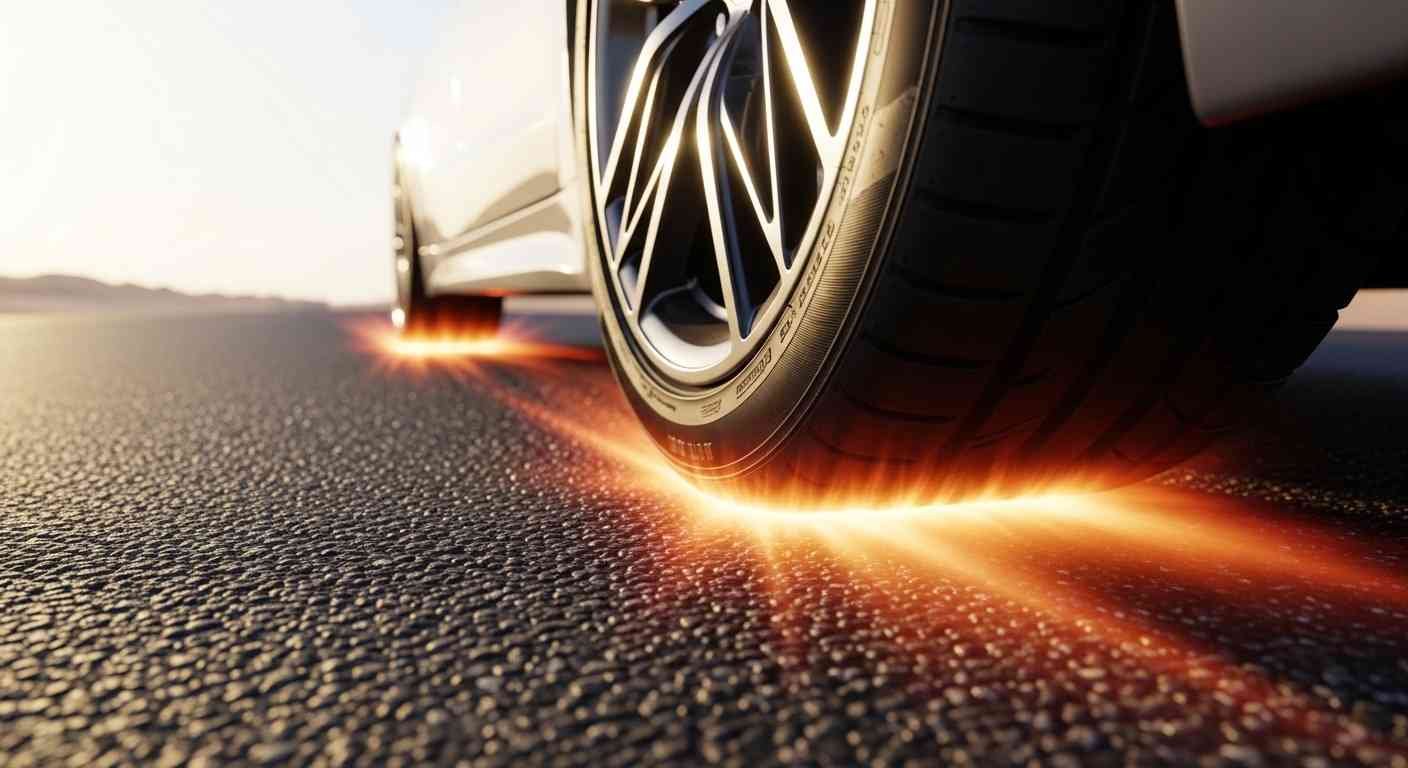
Car tyres don’t wear out at the same speed everywhere. Some tracks and roads seem to destroy tyres unusually fast, even when the tyres are new and well-maintained. This is especially noticeable on racing circuits, desert highways, and high-temperature regions like the UAE.
Some tracks car tyre wear because they combine abrasive surfaces, extreme heat, and high driving loads. In hot regions like the UAE, this effect is magnified.
Choosing the right tyre, maintaining correct pressure, and adjusting driving habits can dramatically extend tyre life, even on harsh desert roads.
In this beginner-friendly guide, we will explain why certain tracks accelerate car tyre wear, focusing on surface type, heat levels, and driving behaviour, and what drivers in hot climates can do to protect tyre life.
Understanding Car Tyre Wear
Car tyre wear is the gradual loss of tread rubber caused by:
- Friction between tyre and road
- Heat generation
- Mechanical stress from braking, acceleration, and cornering
When these factors increase beyond normal limits—as they do on certain tracks—tyre lifespan drops dramatically.
1. Track Surface: The Biggest Tyre Killer
Rough vs Smooth Asphalt
Not all roads are created equal.
- Smooth asphalt (new highways, premium circuits)
→ Slower, more even tyre wear - Rough or abrasive asphalt (desert roads, older tracks)
→ Faster rubber loss
In the UAE, many roads use coarse aggregate to improve grip under extreme heat. While this increases safety, it also acts like sandpaper on tyres.
Why Do Abrasive Surfaces Wear Tyres Faster?
- Sharp stones cut into rubber
- Increased friction raises tyre temperature
- Rubber is physically torn away (rubber shearing)
Result: Accelerated tread loss, especially on budget or soft-compound tyres.
2. Heat: The Silent Tyre Destroyer (UAE Reality)
High Track Temperatures
In hot climates, road temperatures can reach:
- 60–70°C on summer UAE highways
- Even higher on racing circuits
Heat softens tyre rubber. Soft rubber:
- Loses strength
- Deforms more under load
- Wears away faster
Heat Cycles & Tyre Degradation
Each time a tyre heats up and cools down, it goes through a heat cycle.
- Too many heat cycles → rubber hardens and cracks
- Excessive heat → blistering and chunking
This is why tyres that survive years in cooler countries may wear out in months in desert conditions.
3. Driving Style: How You Accelerate Wear Without Realising
Aggressive Driving Multiplies Damage
On abrasive, hot tracks:
- Hard acceleration tears rubber
- Late braking overheats tread blocks
- High-speed cornering increases lateral forces
Even on normal UAE roads, fast lane changes and sudden braking significantly increase tyre wear.
Track vs Street Driving
| Driving Type | Tyre Wear Impact |
| Smooth cruising | Minimal |
| Aggressive street driving | Moderate–High |
| Track-day driving | Extremely high |
On racing circuits, tyres experience constant load transfer, accelerating wear far beyond everyday use.
4. Tyre Compound Matters More on Harsh Tracks
Soft vs Hard Compounds
- Soft compound tyres
- Excellent grip
- Wear very fast in heat
- Hard compound tyres
- Less grip
- Much better lifespan in hot climates
For UAE drivers, heat-resistant touring or performance-touring tyres usually outperform ultra-soft tyres in real-world durability.
5. Why Are Desert Tracks Especially Destructive?
Desert tracks combine three tyre-killing forces:
- Coarse asphalt
- Extreme surface temperatures
- High sustained speeds
This leads to:
- Rapid tread flattening
- Shoulder wear
- Increased risk of blowouts on worn tyres
How to Reduce Tyre Wear on Harsh Tracks?
1. Maintain Correct Tyre Pressure
- Underinflation → overheating & shoulder wear
- Overinflation → reduced contact but uneven wear
Check pressure monthly and before long desert drives.
2. Choose UAE-Suitable Tyres
Look for:
- Heat-resistant rubber compounds
- High temperature ratings
- Reinforced sidewalls
3. Drive Smoothly
- Gentle acceleration
- Early braking
- Controlled cornering
4. Rotate & Inspect Regularly
- Rotate tyres every 8,000–10,000 km
- Inspect for cracking, blistering, or uneven wear
When Faster Wear Is Normal (And Not a Defect)
Tyres wearing quickly on:
- Racing circuits
- Track days
- Extremely hot roads
…does not automatically mean poor tyre quality. It often means:
“The tyre is doing its job under extreme conditions.”
FAQs
1. Why do tyres wear faster on racing tracks than normal roads?
Racing tracks have abrasive surfaces, high speeds, constant cornering, and extreme heat buildup, all of which accelerate tyre degradation.
2. Do UAE roads cause faster tyre wear?
Yes. High temperatures and coarse asphalt designed for heat resistance increase friction and rubber wear compared to cooler regions.
3. Are soft tyres bad for hot climates?
Not bad—but they wear much faster in heat. Harder or heat-resistant compounds are usually better for daily driving in hot climates.
4. Can correct tyre pressure really reduce wear?
Absolutely. Correct pressure prevents overheating, uneven tread loss, and premature tyre failure.
5. Is fast tyre wear a sign of poor-quality tyres?
Not always. On harsh tracks or in extreme heat, even premium tyres can wear quickly due to environmental conditions.