Hawaii Road Trip: Island Driving, Beaches and Volcano Views
If you love the open road, a Hawaii road trip belongs on your travel list. This route is not just about getting from one place to another. It is about volcanic coasts, rainforests, waterfalls and black sand beaches, friendly towns, good food and the freedom to stop whenever something catches your eye. In this guide, you will find a practical day-by-day plan, the best time to go, where to stay and eat, and simple driving tips that make the trip easier.
Many travellers enjoy this route because it works for couples, families and friends alike. You can drive it slowly, add extra nights where you fall in love with a town, or shorten it if you have less time. Before you set off, it helps to read our how to visit US national parks on a budget and our solo road trip in the USA, so you pack well and plan your stops with confidence.
Why this route is worth the drive
The Hawaii road trip stands out because the scenery changes often. One day you may be driving beside water or mountains, and the next you are in a small town with a completely different feel. That variety keeps the trip fresh, even on a longer drive, and it gives every traveller something to enjoy, from short walks to long viewpoints and local food.
This route also suits different travel styles. You can stay in comfortable hotels, try a cabin or a small inn, or mix both. You can plan every night in advance, or leave a few nights open and choose as you go. Either way, a little planning helps. Our guide to solo travel destinations in the USA can help you choose the right stays, while our notes on epic USA road trip routes are useful if you want to keep costs down.
Best time for a Hawaii road trip
The best season for this trip is spring and fall, when weather is pleasant and visitor numbers are lower. That said, every season has its own charm. Summer brings long days and lively towns, while spring and fall often bring quieter roads and softer light for photographs. Winter can be beautiful too, but check road conditions, daylight hours and opening times before you travel, especially in mountain or desert areas.
Try to avoid the busiest holiday weekends if you prefer quiet roads, and book popular hotels early if you travel in peak season. If you are flexible, a weekday start often means easier parking, calmer viewpoints and a more relaxed pace. For seasonal ideas, see our guide to the travel insurance guide for US travelers and our list of the USA road trip costs.
Day-by-day itinerary for your Hawaii road trip
This plan starts in Honolulu, Oahu and ends in Maui and Big Island. It is designed as a relaxed six-day trip, but you can stretch it to a week or more by adding extra nights. Drive times are kept reasonable, so you have time to walk, eat and enjoy each stop rather than spending all day in the car.
Day 1: Honolulu and Waikiki
Start with beaches, surf culture and a walk along the famous shoreline. Take your time here, stop for photos, and enjoy a local meal before you drive on.
Day 2: North Shore Oahu
Drive to big-wave beaches, shrimp trucks and laid-back surf towns. Walk around, talk to locals, and let the place set the pace for the rest of your day. If you are new to long drives, our guide to a best places to visit in San Diego County is a helpful place to start planning.
Day 3: Road to Hana, Maui
Take the winding coastal road, with waterfalls, rainforest and ocean views. Keep the drive short, arrive before sunset, and enjoy an easy evening in town.
Day 4: Haleakala
Watch sunrise above the clouds, then drive down through farm country. Bring water, wear comfortable shoes, and plan a picnic stop if the weather is good.
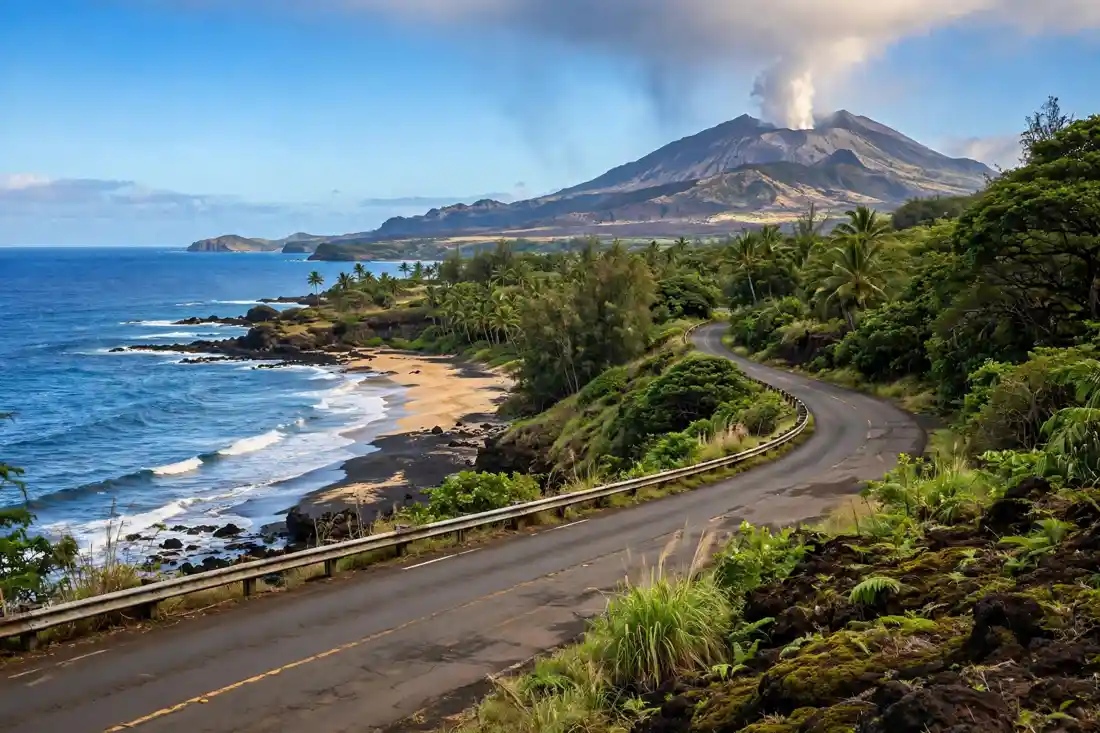
Day 5: Volcanoes National Park
See lava landscapes, steam vents and black sand beaches on the Big Island. This is a good place to slow down, so do not rush past it just to reach the next town. For money planning, check our notes on best Florida beaches for a vacation before you book hotels.
Day 6: Kona Coast
Finish with coffee farms, snorkelling and relaxed west-coast sunsets. End the day with a relaxed dinner, then rest well for the next stretch of road.
What to see and do along the way
Beyond the main stops, look for farmers markets, local museums, river walks and viewpoints that are not in every guidebook. These small discoveries often become the best memories of a road trip. Take short detours when you can, but keep fuel, water and phone charging in mind, especially on rural stretches.
Food is a big part of this route. Expect poke bowls, shave ice, plate lunches and tropical fruit. Try at least one local speciality in each town, and ask locals for recommendations. They often know the best breakfast spot, the quietest viewpoint and the cafe that visitors usually miss. For more food ideas, read our guide to the best places to visit in Lincoln City, Oregon.
Where to stay and eat
For lodging, beach resorts, condos and small island hotels work well on this route. Book the first and last nights in advance, and keep middle nights flexible if you like freedom. In popular towns, a small inn or a family-run hotel often gives a warmer welcome than a large chain, and it puts you closer to local restaurants and walks.
For meals, mix sit-down restaurants with casual cafes, food trucks and picnic lunches. Carry snacks and water for long stretches, and try to eat at least one dinner in a town centre, where you can walk, shop and enjoy the evening atmosphere. Our tips on places to visit near Olympic National Park can help you plan a comfortable trip without overspending.
Driving tips and budget for a Hawaii road trip
Before you leave, check your car, tyres, lights and oil, and make sure your phone has offline maps for rural areas. Fill up when you see a station on a long stretch, and take regular breaks. Share driving if you can, and never drive when you are tired. Keep a paper map as a backup, because phone signal can disappear in mountains and deserts.
Budget depends on your hotels, food and activities, but you can control costs by mixing hotels with simpler stays, cooking some meals and choosing free viewpoints and walks. Set a daily budget, track spending as you go, and leave room for one special meal or tour. For safety and planning, our best national parks to visit in the USA explains why cover matters on a long drive, and our guide to essential packing tips for travelers helps you estimate total costs.
Sample daily rhythm and packing checklist
A good road trip day starts early, especially if you want quiet viewpoints and easy parking. Leave after breakfast, drive to your first stop, and take a short walk before the midday heat or crowds build up. Break the drive into two or three parts, with a cafe stop, a viewpoint and a lunch break in between. That rhythm keeps everyone fresh, and it leaves room for unplanned stops that often turn out to be the highlight of the day.
In the afternoon, aim to arrive at your overnight town with time to spare. Walk around, find dinner, and check the next day’s route while you still have good phone signal. Pack a small day bag for each stop, so you do not need to unpack the whole car every time. Include water, snacks, sunscreen, a hat, a light jacket, a phone charger and a first aid kit. Keep valuables out of sight, lock the car at viewpoints, and store a spare key in a safe place separate from your main key.
Finally, think about comfort as well as sightseeing. A playlist or podcast makes long stretches more enjoyable, while regular stops help the driver stay alert. If you travel with children, add games, books and frequent playground breaks. If you travel as a couple, build in at least one slow morning with no fixed plan. The best road trips balance structure and freedom, and this route gives you plenty of both.
Frequently asked questions about a Hawaii road trip
How many days do I need?
Six days works well, but seven to ten days is better if you want extra hikes, beach time or city stops. Do not try to rush the whole route in three days, because you will miss the small towns that make it special.
Is this route good for families?
Yes, families enjoy this route because stops are varied, drives are manageable and there are parks, beaches or museums along the way. Plan shorter driving days for young children and book family rooms early in peak season.
Do I need to book everything in advance?
Book the first night, the last night and any popular park lodging early. Other nights can often be booked a day or two ahead, except in peak season or festival weekends, when early booking is safer.
What should I pack?
Pack layers, comfortable walking shoes, sun protection, a refillable water bottle, snacks and a car charger. Add rain gear for coastal or mountain sections, and warm layers for early mornings, even in summer.