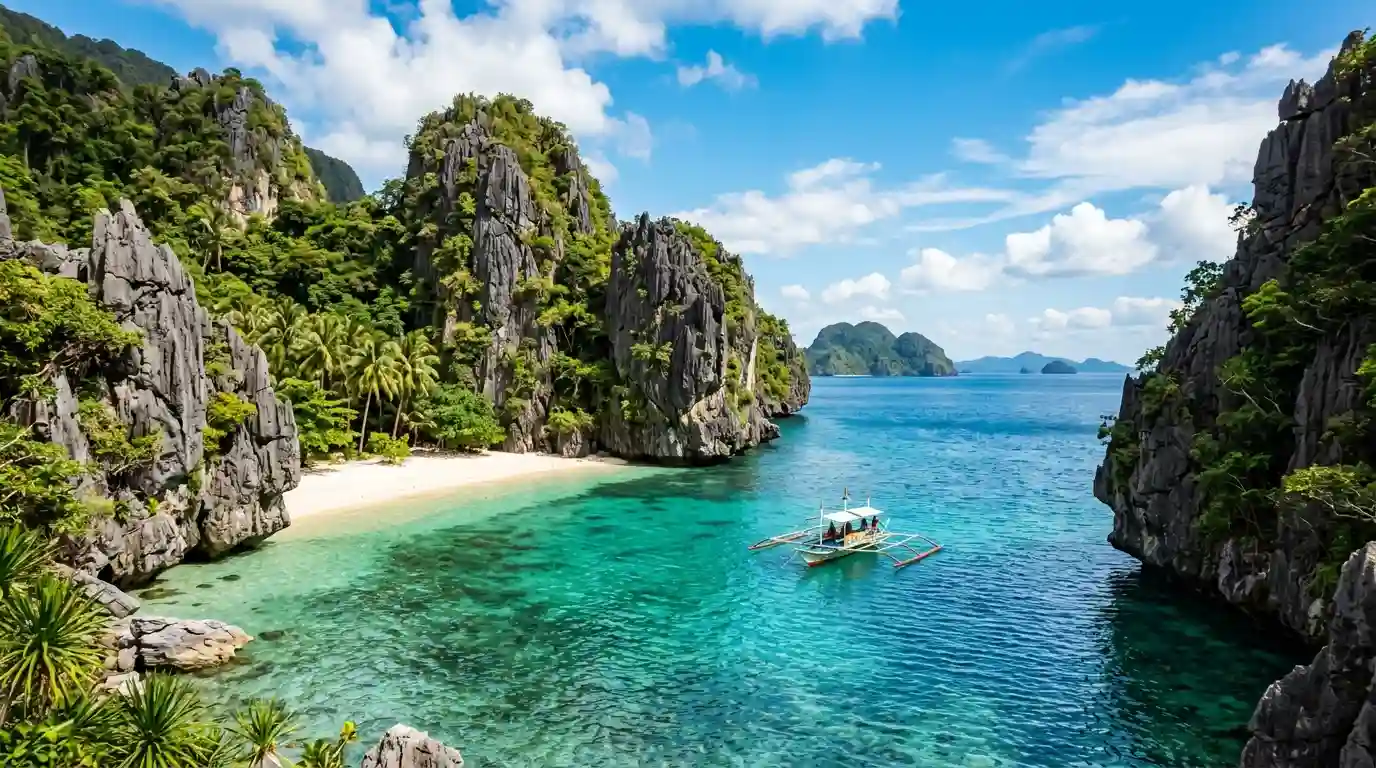
Whether you are planning a romantic getaway, a family vacation, an outdoor adventure, or a longer journey through Southeast Asia, choosing the right destinations can make your trip more rewarding. This guide to the best places to visit in the Philippines in 2025 highlights memorable islands, scenic landscapes, cultural attractions, and practical planning tips to help you build an itinerary that suits your interests.
1. Palawan: Dramatic Landscapes and Crystal-Clear Lagoons
Palawan is one of the Philippines’ most celebrated destinations, attracting travelers with its limestone cliffs, sheltered lagoons, coral reefs, and clear tropical waters. It is an excellent choice for visitors who want a combination of natural scenery, boat excursions, and relaxed island life.
Top Things to Do in Palawan
- Explore El Nido: Take a boat tour through limestone formations, hidden beaches, and beautiful lagoons.
- Visit Coron: Discover scenic lakes, snorkeling locations, and shipwreck diving sites suitable for different experience levels.
- Experience Puerto Princesa: Use the city as a base for exploring nearby coastal attractions and the famous underground river area.
- Enjoy island hopping: Spend a day visiting beaches and snorkeling spots with a licensed local operator.
Palawan works particularly well for couples, photographers, nature lovers, and travelers who want outdoor experiences. Allow several days if you plan to visit more than one area because transfers between towns and islands can take time.
2. Boracay: White-Sand Beaches and Sunset Views
Boracay is famous for White Beach, a long stretch of pale sand lined with resorts, restaurants, and beachside activities. Its compact size makes it convenient for travelers who want a beach holiday without organizing complicated transfers between multiple islands.
Visitors can swim in suitable conditions, enjoy sunset walks, try paddleboarding, arrange boat excursions, or relax at a beachfront restaurant. Water sports are also available, depending on weather and local operating conditions.
For a more relaxed experience, explore quieter parts of the island and consider visiting outside peak holiday periods. Book accommodation early during busy seasons, and follow local environmental rules to help protect the beaches and surrounding marine life.
3. Cebu: Beaches, Waterfalls, and Cultural Attractions
Cebu combines urban conveniences with coastal scenery and outdoor adventures. Cebu City provides access to historic landmarks, local food, shopping, and transport connections, while other parts of the island offer waterfalls, marine activities, and scenic coastal communities.
Experiences Worth Adding to Your Itinerary
- Explore historic sites and heritage landmarks in Cebu City.
- Visit Kawasan Falls and learn about responsible access to the surrounding natural area.
- Arrange snorkeling or diving with reputable operators who prioritize marine safety.
- Explore coastal towns and nearby islands if you have enough time.
Cebu is a practical option for first-time visitors who want several types of experiences in one trip. Check journey times before combining attractions, as driving between different parts of the island may take longer than expected.
4. Bohol: The Chocolate Hills and Countryside
Bohol is an appealing destination for travelers who want to experience more than beaches. The island is known for the Chocolate Hills, countryside landscapes, river cruises, and opportunities to learn about local culture and wildlife.
The Chocolate Hills are especially distinctive when viewed from an authorized viewpoint. Their appearance changes with the seasons, often becoming greener during wetter periods and brown during drier months.
Other activities include visiting selected heritage sites, exploring the Loboc River area, and learning about the Philippine tarsier through responsible wildlife experiences. Avoid touching, feeding, or disturbing wild animals, and choose conservation-conscious facilities.
Bohol can be paired with Cebu if ferry schedules and your available travel days align. Allow enough time for road transfers and excursions rather than trying to fit every attraction into a single day.
5. Siargao: Surfing and Laid-Back Island Life
Siargao has developed a strong reputation among surfers and travelers seeking a relaxed island atmosphere. General Luna is a popular base, with cafes, accommodation, surf schools, and access to excursions around the island.
Surfing is a major attraction, but visitors can also explore mangrove areas, coastal viewpoints, natural pools, and nearby islands. Conditions vary with tides and weather, so follow local guidance before swimming or entering natural pools.
Siargao is best suited to travelers who enjoy outdoor activities and do not mind a slower pace. It can be less convenient for a very short trip because reaching the island and coordinating onward transfers requires planning.
6. Manila: History, Food, and City Experiences
Manila is often the starting point for an international trip to the Philippines. Although traffic can be challenging, the capital offers historical landmarks, museums, markets, shopping areas, and a diverse food scene.
Explore Intramuros to discover Spanish colonial-era architecture and important historical sites. Rizal Park provides an additional stop for travelers interested in national history, while the city’s restaurants introduce visitors to Filipino dishes and regional influences.
Plan city visits around traffic conditions, and allow extra time when traveling between the airport, accommodation, and major attractions. Manila is especially useful for understanding the country’s history before continuing to its islands.
7. Baguio: A Cooler Mountain Retreat
Baguio offers a different atmosphere from the tropical beaches associated with the Philippines. Located in the Cordillera region of northern Luzon, the city is known for its cooler climate, pine-covered surroundings, markets, gardens, and access to mountain scenery.
Visitors can explore Burnham Park, browse local markets, visit cultural attractions, and sample regional produce. The surrounding highlands also appeal to travelers interested in scenic drives and learning about the traditions of northern Luzon.
Baguio is a good option for travelers who want a change of pace after spending time along the coast. Weekends and holidays can be busy, so consider accommodation availability and road conditions when planning your visit.
8. Banaue: Mountain Landscapes and Rice Terraces
Banaue is known for spectacular mountain scenery and rice terraces shaped by generations of agricultural knowledge. The wider Cordillera region provides opportunities to learn about Indigenous communities, traditional farming, and the relationship between people and the landscape.
Travelers can visit established viewpoints, arrange guided walks, and explore nearby communities with respect for local customs. The condition of walking routes can change with rain, and some excursions involve steep or uneven terrain.
Spend time researching transport connections and local guides before traveling into the mountains. Banaue is better suited to a flexible itinerary than a rushed stop between distant destinations.
9. Vigan: Spanish Colonial Architecture and Heritage
Vigan, in Ilocos Sur, is one of the Philippines’ most distinctive heritage destinations. Its historic streets, traditional houses, and preserved architecture offer a glimpse into the country’s layered history and cultural influences.
Calle Crisologo is a popular area for walking, photography, and discovering heritage buildings. Travelers can also explore local museums, try regional dishes, and learn about traditional crafts.
Vigan suits visitors interested in history and architecture as much as those looking for outdoor scenery. Combine it with other destinations in northern Luzon if you have sufficient time for the road journey.
10. Siquijor: Quiet Beaches and Natural Attractions
Siquijor is a smaller island known for its beaches, forested interior, coastal viewpoints, and local traditions. It can be attractive to travelers who prefer a quieter setting than the Philippines’ busiest resort areas.
Depending on local conditions, visitors can explore Cambugahay Falls, visit selected coastal areas, and discover communities known for traditional healing practices. Ask permission before photographing people or private properties, and respect local beliefs.
Transport is an important consideration because reaching individual attractions may require a motorbike, hired vehicle, or local guide. Choose a safe option suited to your experience, and never ride without the appropriate license and protective equipment.
11. Camiguin: Waterfalls, Volcanoes, and Island Scenery
Camiguin is a compact island province with volcanic landscapes, hot and cold springs, waterfalls, and coastal attractions. Its smaller scale makes it appealing for travelers who enjoy nature and want to explore at a relaxed pace.
Visitors can plan stops around established waterfalls, scenic viewpoints, and suitable swimming areas. White Island, a sandbar near the main island, is another popular excursion when sea conditions allow boat travel.
Because Camiguin is volcanic, follow local advisories and obey restrictions around volcanic or geothermal areas. Weather and sea conditions can affect boat trips, so keep some flexibility in your schedule.
12. Davao: Nature, Local Culture, and Urban Comforts
Davao, on Mindanao, offers a mix of city amenities, local markets, regional food, and access to natural attractions. It can suit visitors who want to experience a different part of the country rather than focusing exclusively on the most heavily promoted beach destinations.
Explore the city’s public spaces and food scene, and research nearby nature excursions based on your interests and available time. Mount Apo, the country’s highest mountain, is a major regional landmark, but climbing it requires careful preparation, appropriate permissions, and attention to current conditions.
Before traveling around Mindanao, check current official travel advisories and local guidance for your intended route. Conditions can vary significantly by area.
13. Batanes: Remote Islands and Dramatic Coastal Views
Batanes, the northernmost island province of the Philippines, is known for rolling green hills, rugged coastlines, traditional stone houses, and a distinctive local culture. Its scenery is quite different from the country’s familiar tropical beach imagery.
Travelers can explore approved viewpoints, visit heritage sites, and learn about Ivatan traditions. Because the islands are remote and weather can affect flights, it is sensible to allow extra time and avoid scheduling a tight onward connection.
Batanes is especially rewarding for photographers and visitors who value quiet landscapes and cultural experiences. Respect private property and local rules, particularly around historic buildings and community spaces.
14. Dumaguete and Nearby Coastal Destinations
Dumaguete, in Negros Oriental, is known for its relaxed city atmosphere, university community, waterfront, and access to nearby nature and marine attractions. It can serve as a convenient base for travelers who want to combine a small city with day trips.
Visitors can walk along Rizal Boulevard, explore local restaurants, and arrange excursions to nearby waterfalls or coastal areas. Diving and snorkeling trips may also be available through established operators, depending on conditions.
Plan day trips around transport availability and the time needed to return to your accommodation. If you are combining several islands, check ferry schedules and transfer arrangements in advance.
15. Iloilo: Heritage, Food, and Regional Culture
Iloilo offers a strong mix of heritage architecture, religious landmarks, regional cuisine, and urban comforts. It is an excellent destination for travelers who want to understand Filipino culture through food, history, and everyday city life.
Explore historic churches and heritage districts, sample local specialties such as La Paz batchoy, and consider day trips to nearby cultural and coastal destinations. Travelers who enjoy architecture can also research established heritage routes before arriving.
Iloilo can be a useful stop on a broader Western Visayas itinerary. Allow enough time to explore the city rather than treating it only as a transport connection.
16. Tubbataha Reefs Natural Park: A Marine Conservation Destination
Tubbataha Reefs Natural Park, in the Sulu Sea, is internationally recognized for its marine biodiversity. Its remote reef systems attract experienced divers interested in coral ecosystems, reef fish, and larger marine species.
Access is generally organized through liveaboard diving trips during the permitted operating season. This destination requires more advance planning than an ordinary beach visit, and it is not suitable for travelers looking for an easy day trip from a major city.
Choose a reputable operator, follow marine park regulations, and avoid touching coral or disturbing wildlife. Visitors should confirm seasonal access, safety requirements, and current operating arrangements before booking.
17. How to Choose the Best Places to Visit in the Philippines
The best destination depends on the type of experience you want. Rather than trying to cover the entire country in one trip, select a few locations that fit your available days, budget, and preferred travel pace.
- For beaches and island hopping: Consider Palawan, Boracay, Siargao, or Siquijor.
- For first-time visitors: Manila combined with Cebu or Palawan can provide a varied introduction.
- For culture and history: Explore Manila, Vigan, and Iloilo.
- For mountain scenery: Consider Baguio and Banaue.
- For diving and marine life: Research Cebu-area dive sites and specialized trips to Tubbataha.
- For quieter landscapes: Look into Camiguin and Batanes, while accounting for transport limitations.
Travelers interested in other Asian destinations can also explore our guides to the top ten places to visit in the Philippines, the best places to visit in Indonesia, and places to visit in Japan. These guides can help you compare different travel styles across the region.
18. Best Time to Visit the Philippines
The Philippines has a tropical climate, and weather varies by region. Many travelers prefer the generally drier months, often from around November to May, but local conditions differ and rain can occur at any time.
The wet season commonly brings heavier rainfall and the possibility of tropical cyclones in affected areas. This can disrupt flights, ferries, outdoor activities, and beach conditions. Check local forecasts and transport notices close to departure rather than relying only on typical seasonal patterns.
If your plans depend on sunshine and island-hopping, keep backup activities available and avoid making every transfer time-critical. For additional seasonal inspiration, see our guide to the Philippines’ top travel destinations alongside broader travel ideas such as places to visit in spring and less crowded places to visit in summer.
19. Practical Travel Tips for Visiting the Philippines
Plan Island Transfers Carefully
The country’s geography means that some journeys require a combination of flights, ferries, and road transfers. Compare the complete journey rather than just the flight time, and leave a buffer between separate bookings.
Book Popular Destinations in Advance
Accommodation and excursions can fill up during major holidays and peak travel periods. Reserve essential transport and activities early when availability is limited, while checking cancellation conditions.
Pack for Heat, Rain, and Outdoor Activities
Bring lightweight clothing, sun protection, insect repellent, a reusable water bottle, and suitable footwear. A waterproof bag can help protect electronics during boat transfers and sudden showers.
Respect Local Communities and Natural Environments
Follow local guidance, respect cultural practices, and choose operators that support responsible tourism. Avoid littering, touching coral, feeding wildlife, or visiting restricted areas.
Check Entry Requirements and Travel Advisories
Entry requirements depend on nationality, passport validity, trip length, and current government rules. Confirm the applicable requirements before departure, and check official safety guidance for each region you plan to visit.
20. Sample Seven-Day Philippines Itinerary
If you have one week, focus on one main region rather than trying to visit distant islands. The following example combines a city arrival with Palawan’s well-known coastal scenery, subject to flight availability and local conditions.
- Day 1: Arrive in Manila, rest, and explore a nearby historic district if time permits.
- Day 2: Travel to Puerto Princesa or El Nido, depending on your preferred starting point and available transport.
- Day 3: Enjoy an organized island-hopping excursion or explore local beaches.
- Day 4: Visit additional lagoons or coastal attractions, following operator guidance.
- Day 5: Take a slower day for kayaking, swimming where safe, or exploring the town.
- Day 6: Enjoy another planned excursion or use the day as a buffer for weather-related changes.
- Day 7: Return toward your departure airport with sufficient time for transfers and check-in.
This is a flexible outline, not a fixed schedule. If you prefer a different style of trip, you could build a separate itinerary around Cebu and Bohol or focus on northern Luzon’s cultural and mountain destinations.
Final Thoughts
The Philippines offers an extraordinary variety of travel experiences, from Palawan’s limestone lagoons and Boracay’s famous beach to Baguio’s mountain atmosphere, Vigan’s historic streets, and Batanes’ dramatic coastal landscapes. Each destination has its own character, and the most rewarding itinerary is one that leaves enough time to appreciate it.
For a successful trip, choose destinations based on your interests, account for the time needed to move between islands, and remain flexible when weather affects transport. With thoughtful planning, the Philippines can deliver a memorable combination of natural beauty, cultural discovery, and relaxed island experiences.